


 English
 中文简体
中文简体 русский
Content
Two black rubber sheets can carry the same hardness rating, the same thickness and the same color, and still fail in opposite ways. A general-purpose SBR sheet left on an outdoor conveyor cover will chalk and crack under ozone attack within a season or two, while an EPDM sheet of identical hardness lasts a decade in the same spot. Submerge both in hydraulic oil and the ranking reverses completely. The difference is never on the surface; it sits in the polymer structure and the compound recipe. That is why comparing synthetic rubber properties, not price tags or appearance, is the only dependable way to select material before committing to a purchase.
The Properties That Decide Whether a Compound Survives
Every datasheet tells its story through a short list of measured values. Hardness, expressed in Shore A from roughly 40 for soft seal compounds up to 90 for hard wear surfaces, tells you stiffness but not strength. Tensile strength and elongation at break, tested under ASTM D412, show how much stress a compound survives before tearing and how far it stretches first. Compression set, measured by ASTM D395, is the number buyers skip most often: a gasket that keeps more than about 25 percent of its compression after 22 hours at working temperature will leak long before the equipment warranty ends.
Environmental values matter just as much. Continuous service temperature marks the ceiling at which a compound keeps its elasticity for years instead of hours. Oil swell, determined by ASTM D471 immersion, predicts whether a seal grows soft and dimensionally unstable in fuel or lubricant. Ozone and UV resistance set the outdoor service life, and low-temperature flexibility decides whether a part survives a winter start-up without cracking.
For quick reference, these are the properties that most often decide success or failure in the field:
- Hardness (Shore A): stiffness under load; wrong values lead to extrusion through flange gaps or insufficient sealing force.
- Tensile strength and elongation (ASTM D412): resistance to tearing during installation and to flexing in service.
- Compression set (ASTM D395): whether a seal recovers after months of compression; high set means permanent leakage paths.
- Oil and fluid swell (ASTM D471): dimensional stability in contact with oils, fuels and process chemicals.
- Heat aging and ozone resistance (ASTM D573 and D1149): surface cracking and embrittlement outdoors or near hot equipment.
- Gas permeability and dielectric behavior: air retention for pneumatic parts and insulation performance for electrical uses.
No single number crowns a rubber as best; every property trades against another, and the chemistry behind each polymer family fixes where those trade-offs fall.
How the Major Synthetic Rubber Families Compare
All of the values above trace back to polymer chemistry. Materials with unsaturated backbones, such as SBR and NBR, cure easily and reinforce well, but the same double bonds that assist vulcanization also invite ozone attack. Saturated backbones, such as EPDM and butyl, shrug off weathering yet swell badly in petroleum oils. Polarity adds a third layer: acrylonitrile units in NBR and fluorine in FKM give the polymer an affinity for non-polar oils, which is exactly what a seal needs when it must sit in oil without dissolving. The table condenses the resulting trade-offs.
| Polymer | Typical continuous service temperature | Oil and fuel resistance | Ozone and weathering | Best suited for |
|---|---|---|---|---|
| SBR | Up to about 100 °C | Poor | Poor | Tires, conveyor covers, general-duty sheet |
| NBR | 100 to 120 °C | Excellent | Poor | Oil seals, fuel handling, hydraulic gaskets |
| CR (polychloroprene) | About 100 °C | Fair to good | Good | Flame-retardant sheets, outdoor gaskets |
| EPDM | 130 to 150 °C | Poor | Excellent | Outdoor seals, steam hose, electrical insulation |
| Butyl (IIR) | About 120 °C | Poor | Excellent | Inner tubes, air-tight bladders, vibration damping |
| Silicone (VMQ) | -60 to 200 °C | Fair | Excellent | High-temperature gaskets, food and medical contact |
| FKM | Up to about 200 °C | Excellent | Excellent | Chemical plant seals, fuel systems, hot oil |
Treat the table as a first filter rather than a verdict. When one part faces both oil and sunlight, neither NBR nor EPDM wins alone, so designers either step up to FKM, add a protective layer, or split the duty between two materials. A hose with an EPDM cover and an NBR inner tube is a common result of exactly that reasoning.
Why Two Batches of the Same Polymer Behave Differently
A polymer name guarantees less than buyers expect. Two NBR compounds can start from the same raw polymer and still differ sharply in oil swell, abrasion life and heat aging, because the recipe around it controls the final network. Carbon black type and loading raise tensile strength and abrasion resistance by multiples; plasticizer choice shifts both oil swell and low-temperature flexibility; and a sulfur cure versus a peroxide cure changes heat resistance and compression set. The base polymer sets the ceiling, but compounding decides how close the part gets.
Process quality then decides whether the recipe survives into the finished part. Oils and plasticizers must disperse evenly through the batch, or the sheet leaves the line with soft spots and inconsistent swell behavior; the way a rubber kneader machine incorporates oils and plasticizers into a batch directly shapes these property distributions. Cure state matters just as much: undercured parts stay gummy and set badly under compression, while overcured parts harden, lose elongation and crack in early service.
This is why disciplined buyers ask about process control rather than price alone: Mooney viscosity windows per batch, cure rheometer curves on every mix, and documented temperature discipline during mixing and curing all resurface later as property consistency in the delivered part.
Matching Polymer Properties to the Job
Three scenarios cover most industrial sheet, gasket and seal purchases, and each rewards a different trade-off.
Oil and fuel contact: NBR and its acrylonitrile dial
NBR is the default wherever parts live in oil, and acrylonitrile content lets you tune it. Grades run from roughly 18 to 50 percent ACN: higher ACN improves oil and fuel resistance but stiffens the compound in cold weather, so a seal for an outdoor hydraulic system in a cold region usually takes a mid-range grade rather than the most oil-resistant one. For workshop, plant and pipeline gasket stock, that balance of oil resistance and cost explains why NBR sheet dominates general industry.
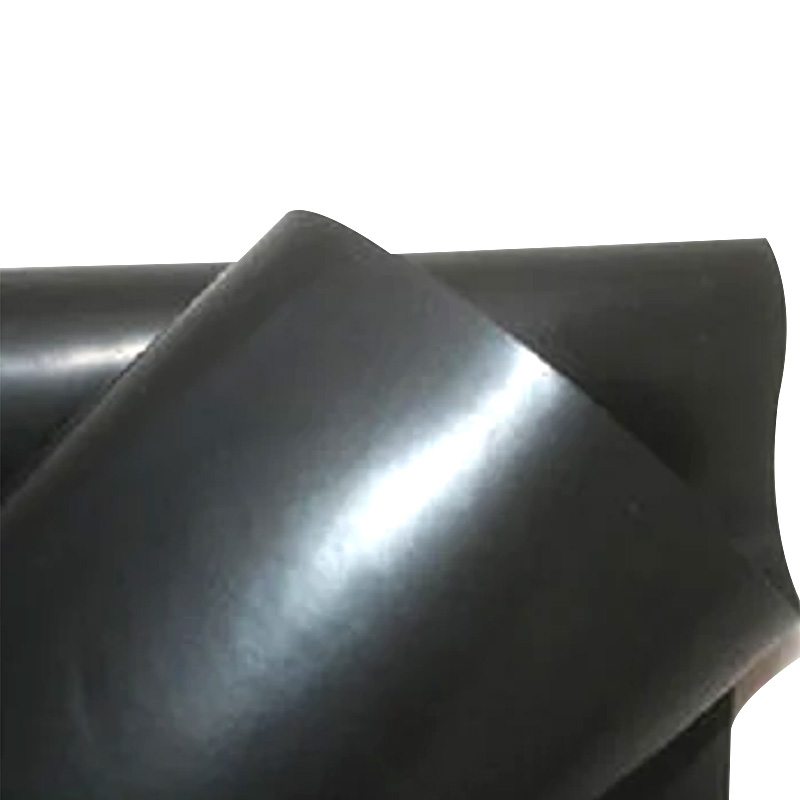 Neoprene (CR) Rubber Sheet for Balanced Oil, Flame and Weather ResistanceChloroprene rubber sheet offers moderate oil tolerance, self-extinguishing flame retardancy and strong UV and ozone resistance. A practical middle ground when applications need some oil exposure plus outdoor durability without nitrile's cost.View Product →
Sunlight, ozone and steam: EPDM
EPDM carries a fully saturated backbone, so ozone and ultraviolet light barely touch it, and the material handles steam and hot water up to around 150 °C. That combination explains its grip on roofing membranes, outdoor electrical insulation and weather-exposed gaskets. Its weakness is petroleum oil: an EPDM gasket beside a lubricated bearing swells and degrades. Where weathering dominates and oil is absent, EPDM compounds deliver the longest service life per unit of cost.
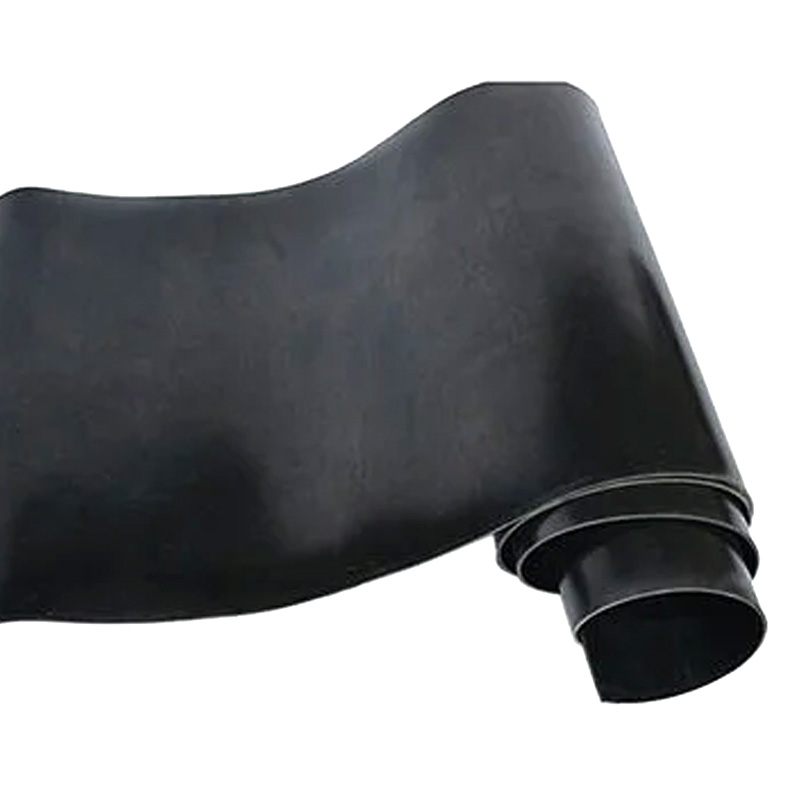 EPDM Rubber Sheet for Outdoor and Steam ExposureEPDM sheet withstands ozone, UV and temperatures to about 150 °C, making it ideal for roofing, outdoor gaskets and steam lines. Its saturated backbone resists weathering but swells in petroleum oils, so it suits oil-free environments.View Product →
Sustained heat and aggressive media: FKM
When continuous temperatures pass 150 °C or fluids attack everything cheaper, FKM justifies its price. Standard grades run about 200 °C continuously while resisting oils, fuels and a wide range of chemicals, and specialty grades extend the cold end of the range where low-temperature starts matter. Chemical processing plants, fuel systems and aerospace lines keep FKM in service despite the premium, because replacing a failed seal usually costs far more than the material itself.
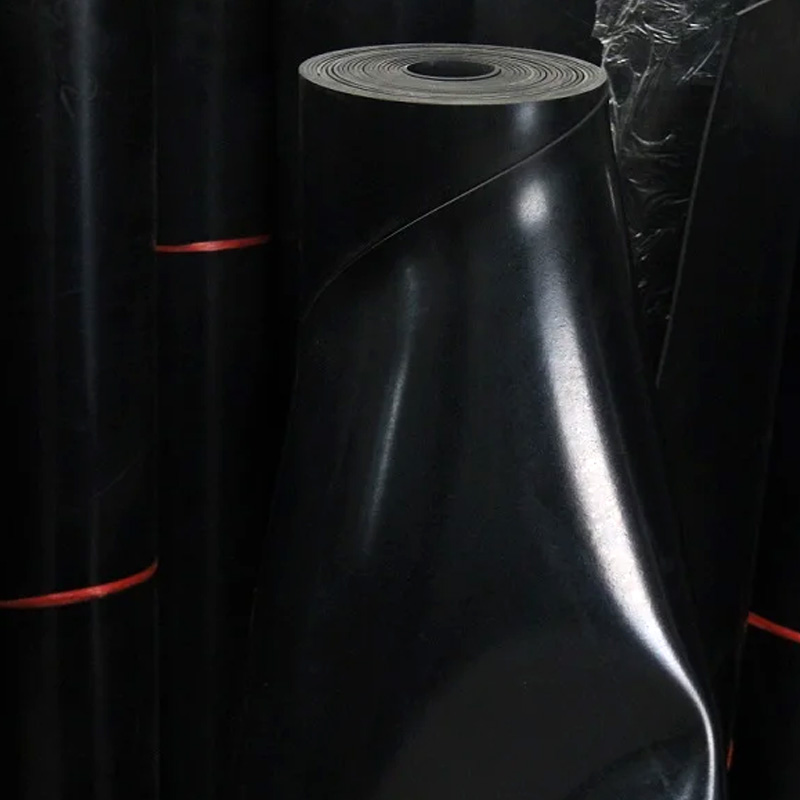 FKM Rubber Sheet for High Temperature and Chemical ServiceFluoroelastomer sheet handles continuous heat near 200 °C while resisting oils, fuels and aggressive chemicals. When cheaper elastomers fail in chemical plants or fuel systems, FKM's durability justifies its premium price.View Product →
What to Check Before You Buy
Datasheets are easy to inflate, so verification matters as much as the printed numbers. A disciplined purchase runs through this checklist:
- Ask for the full datasheet with test methods and conditions, not headline values: tensile per ASTM D412, hardness per ASTM D2240, compression set per ASTM D395 at your actual working temperature, and fluid exposure per ASTM D471 in your actual fluid.
- Request an ASTM D2000 line callout or an equivalent written specification, so every future batch can be compared against the same requirements.
- For static gaskets, treat compression set as pass or fail; values above roughly 25 percent after 22 hours usually predict early leakage.
- Test sample material under real conditions, including full temperature cycles and mechanical load, before releasing volume orders.
- Discuss batch consistency with the supplier: Mooney viscosity windows, cure curves from each mix, and documented temperature control during mixing and curing.
Suppliers who run their own mixing, calendering and vulcanizing equipment can usually answer these questions with process data instead of assurances. Our rubber products industry solutions page outlines how the mixing, forming and curing stages connect to the properties discussed here, and it is a reasonable starting point for that conversation.
Synthetic rubber properties operate as a system, not as a single number. Temperature limits, oil swell, ozone resistance and compression set trade against one another, and the right compound is the one whose trade-offs match the dominant stress in your application. Compare materials on measured values, buy against written specifications, and remember that properties on paper only become real when the compound is mixed, formed and cured under control. That pairing of chemistry and process discipline is what separates a part that lasts its full service life from one that fails early.
 Previous