


 English
 中文简体
中文简体 русский
Content
Rubber products are ordered by numbers, not names: a 3 mm EPDM sheet at 70 Shore A, a 10 mm antistatic mat rated to 10^6 ohm, or a two-ply belt that has to survive 120 C on a kiln line. The polymer is chosen after the number, not before it.
That is why the phrase products of rubber covers so much ground. It takes in calendered sheet, molded gaskets, ribbed floor mats, conveyor belts and extruded silicone profiles, each bought against a different set of tolerances. A quotation that only says rubber sheet tells you almost nothing.
This guide splits the category the way it is traded, matches polymers to applications, and lists the checks worth completing before a purchase order is released.
Three answers narrow almost every rubber product enquiry: which polymer, which hardness in Shore A, and which thickness with what tolerance. The rest of the datasheet follows from those three.
What Counts as a Product of Rubber?
A product of rubber is a finished or semi-finished article whose performance comes from a cross-linked elastomer compound rather than from a metal, textile or thermoplastic substrate. The definition matters commercially, because it decides which standards apply and which suppliers can quote.
In trade the category breaks into five families:
- Sheet and roll goods: calendered or press-cured flat rubber, commonly 1 mm to 50 mm thick, sold as cut sheets, rolls or die-cut pads.
- Mats and flooring: ribbed, studded, checker, willow and bubble patterns for grip, drainage and animal comfort.
- Belts and transmission goods: multi-ply conveyor belting, tangential belts and V-belts.
- Extruded and molded profiles: hose, seals, gaskets, bumpers, rollers and solid tyres.
- Laminated and coated goods: rubber sheet bonded to fabric, plus flexible PVC door curtain and PVC floor covering.
Natural and synthetic rubber both end up as products of rubber, but they are bought differently. A synthetic compound is specified by polymer grade and cure system, so two batches can be matched; natural rubber varies with plantation, season and grade.
Rubber Sheet Products by Polymer Grade
Comparing rubber sheet usually starts with the polymer, because the polymer fixes service temperature, fluid resistance and much of the price before any other decision is made.
| Polymer | Service temperature | Oil and fuel | Typical rubber product |
| NR, natural | minus 50 to 70 C | Poor | General purpose sheet, anti-vibration pads |
| SBR | minus 40 to 100 C | Poor | Cost-driven sheet and matting |
| EPDM | minus 40 to 120 C | Poor | Outdoor sheet, roofing, weather strip |
| CR, chloroprene | minus 30 to 120 C | Good | Flame-resistant sheet, industrial seals |
| NBR | minus 30 to 100 C | Excellent | Oil-resistant sheet, gaskets, fuel hose |
| IIR, butyl | minus 50 to 100 C | Moderate | Damping pads, gas-tight linings |
| VMQ, silicone | minus 60 to 200 C | Moderate | High temperature sheet, food contact grades |
| FKM | minus 20 to 200 C | Excellent | Chemical and heat resistant seals |
Hardness is the second filter. Sheet is normally supplied between 40 and 90 Shore A, with the practical band for sealing work around 50 to 75. Below 40 Shore A a compound is difficult to calender to a consistent thickness, and above 85 it behaves more like a hard plastic than an elastomer.
Thickness tolerance is where quotations separate. A 3 mm calendered sheet is commonly held to plus or minus 0.2 mm, while a 20 mm molded pad may only be guaranteed to plus or minus 5 percent of nominal. If the drawing calls for a tight tolerance, say so before the price is fixed.
Hardness is quoted in Shore A and is normally held to plus or minus 5 points. A 65 Shore A sheet that arrives at 58 is not a cosmetic issue: compression set, sealing force and wear life all move at the same time.
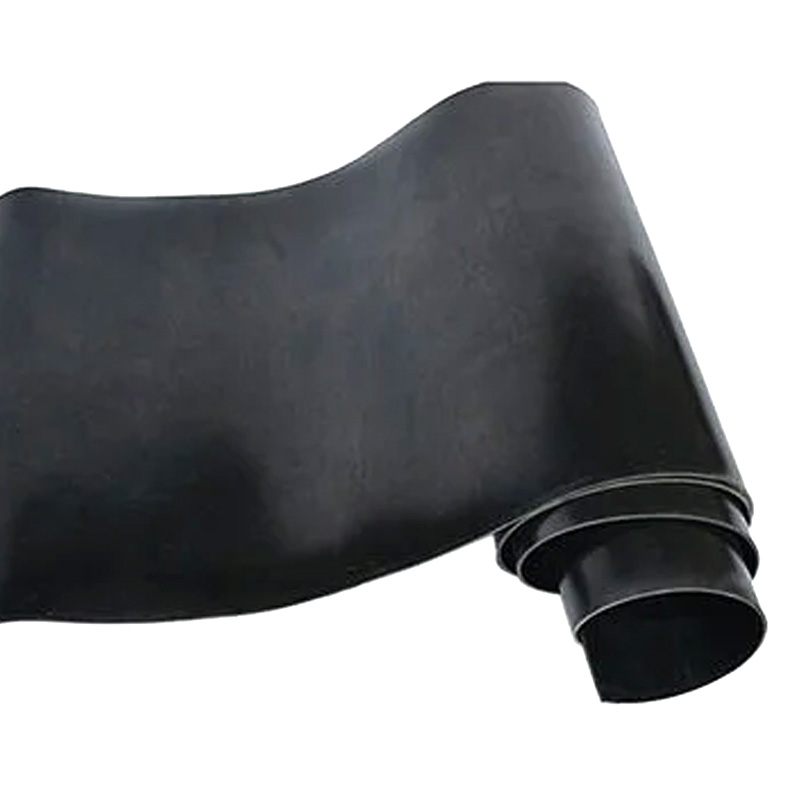 EPDM Rubber Sheet for Sealing and Outdoor ProtectionEPDM rubber sheet with weather, ozone, and temperature resistance, offered in multiple thicknesses and colors; review specifications before fixing close thickness tolerances.View Product →
Mats, Flooring and Livestock Products
Antislip mats, livestock mats and PVC flooring are sold by pattern and compound, and in most projects the pattern decides whether the product works.
Two products that look similar on a sample board behave very differently on site:
Industrial antislip mat
Livestock cow mat
Checker, fine rib or wide rib surface for grip under oil or water
Bubble or cobblestone surface for hoof grip and drainage
Typically 3 to 12 mm thick, 40 to 70 Shore A
Typically 17 to 25 mm thick, softer compound for standing comfort
NBR or SBR where oil resistance is required
EPDM or SBR chosen for resistance to urine and ammonia
Fixed flat with adhesive or edge trim, antistatic grades common
Laid loose or clipped, cleaned by scraper and hose
PVC door curtain and PVC floor covering sit in the same commercial family but not the same chemistry. They are thermoplastic, they soften when hot, and they are welded or hung rather than vulcanized.
Antistatic and static-dissipative mats are specified by surface resistance, not by colour or pattern. If the requirement is 10^6 to 10^9 ohm, ask which test method and conditioning time were used, because a reading taken straight off the pallet will not match one taken after 24 hours at controlled humidity.
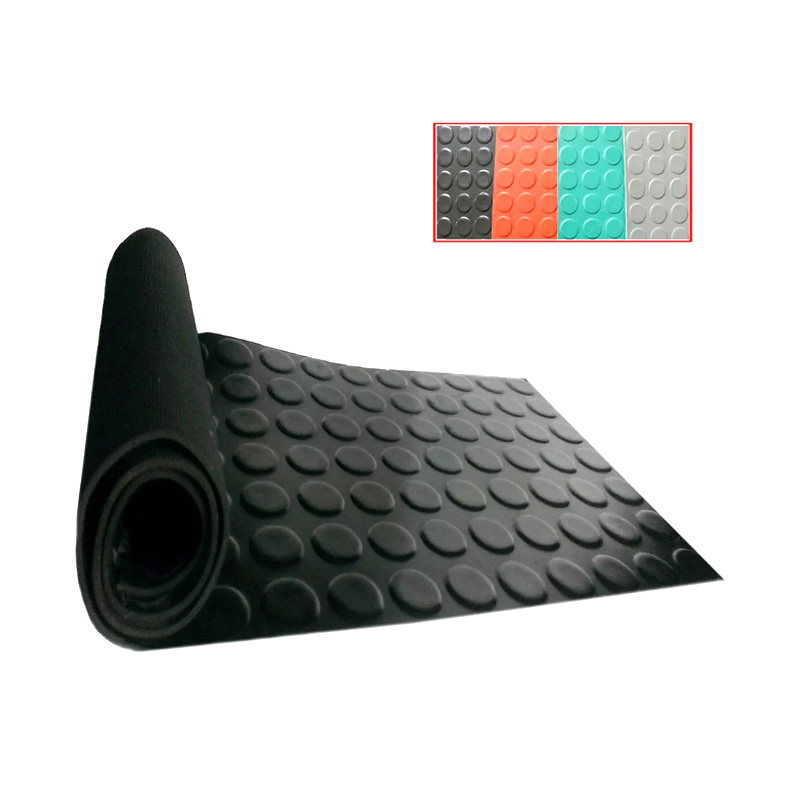 Antistatic Rubber Mat for Static Control in Sensitive AreasAntistatic rubber mat for electronics, medical, and clean-room use, with conductive fillers and varied thickness options; no exact figures are listed.View Product →
Belts and Transmission Products
Conveyor belts and V-belts are the two rubber product families where the fabric, not the rubber, sets the load rating.
A belt specification needs five values before two quotations can be compared: ply count, fabric type, cover grade and thickness, splice method, and temperature rating.
- Ply count sets tensile strength and the load per unit of width.
- Cover thickness and compound set abrasion life and heat resistance.
- Splice method sets the weakest point of the entire run.
- Width and troughability set how the belt tracks over the idlers.
V-belts work the same way in a different geometry. The tensile cord carries the load while the compound controls grip, heat build-up and slip under shock loads, which is why V-belt production usually combines a vulcanizing machine, a winding unit and a wrapping unit in a single cell. How plies, skim compound and covers are combined is covered in this guide to belt construction and ply selection.
A two-ply and a three-ply belt can carry the same load and fail at completely different points. Ply count sets the tensile rating; cover thickness and compound set abrasion and heat life. A quotation that lists only the ply number is half a specification.
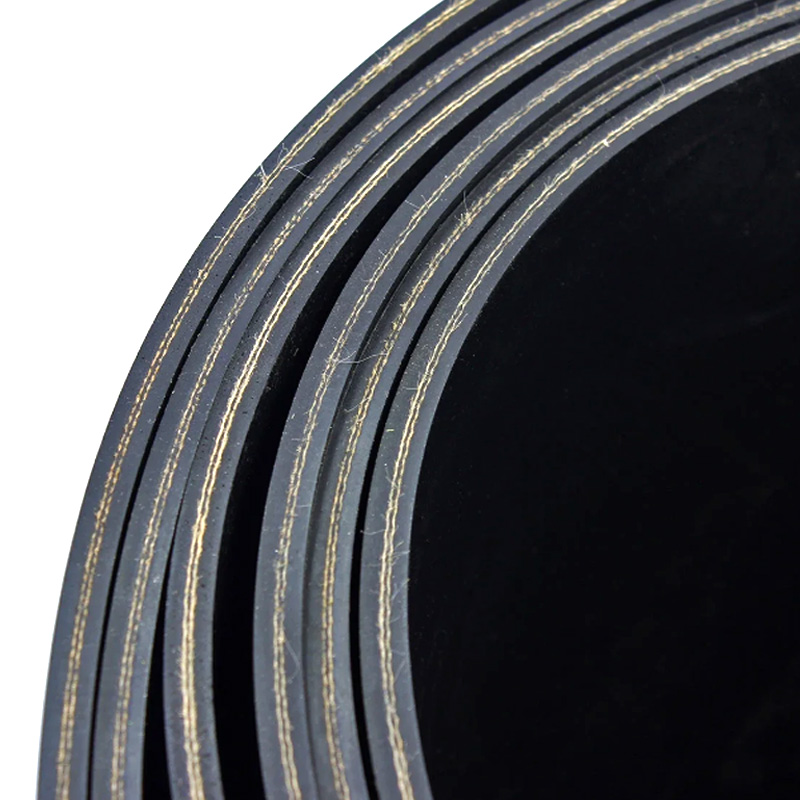 Rubber Conveyor Belts for Bulk Material HandlingRubber conveyor belts with fabric reinforcement for mining, ports, chemicals, and grain; page includes selection and maintenance guidance for conveyor systems.View Product →
How Rubber Products Are Made: The Equipment Chain
Almost every rubber product passes through four steps: mixing, forming, curing and finishing. The equipment chosen at each step sets the tolerance that ends up on the packing list.
Mixing
An internal mixer, kneader or open mill blends polymer, carbon black, oil, plasticizer and the cure system. Mixing time and dump temperature control dispersion.
Forming
A two, three or four roll calender produces sheet of controlled thickness, hot feed or cold feed extrusion produces profiles and hose, and molding produces discrete parts.
Curing
Rotocure drums, plate presses, microwave hot air lines and V-belt vulcanizers hold temperature, pressure and time inside a window narrow enough to cure the core without overcooking the surface.
Finishing
Trimming, splicing, edge treatment, hardness and thickness checks, and surface resistance testing for antistatic grades.
A four-roll calender holds sheet thickness more tightly than a two-roll unit, because the extra rolls reduce the effect of roll deflection. A cold feed extruder holds profile dimensions better on long runs, while a hot feed machine is often more economical on shorter batches.
Thickness drift, surface blisters, under-cured cores and porosity are forming and curing failures, not warehouse problems. Machine capability, not storage, decides whether a sheet leaves the line inside tolerance.
Sourcing Checklist Before You Order
Six checks separate a rubber product quotation that works from one that produces a claim in month three.
- Polymer grade and cure system, stated in writing rather than assumed.
- Hardness with tolerance, for example 65 Shore A plus or minus 5.
- Thickness with tolerance, and whether it is measured free or under load.
- Continuous service temperature, not only the peak figure.
- Fluid and chemical exposure, including the cleaning agents used on site.
- Test method, conditioning and batch traceability for safety-related grades.
5Shore A points of normal hardness tolerance
0.2 mmTypical tolerance on thin calendered sheet
10^6Ohm, the lower limit for antistatic mat surface resistance
Sheet, mat, belt and molded parts are often needed on one project, and the same mixing, calendering and curing equipment feeds all of them, so a single manufacturer frequently covers several families. It is worth checking the full range on a rubber products solutions page before splitting an order across three vendors.
Ask for the cure system in writing. Sulfur-cured and peroxide-cured versions of the same polymer are not interchangeable: peroxide cure improves heat ageing and compression set in EPDM and silicone, while sulfur cure still dominates general purpose NR and SBR on cost.
Frequently Asked Questions
What are the main products of rubber?
The main traded products of rubber are sheet and roll goods, antislip and livestock mats, conveyor and V-belts, extruded profiles and hose, molded seals and gaskets, and coated goods such as fabric-reinforced sheet, PVC door curtain and PVC floor covering.
Which rubber sheet is best for outdoor use?
EPDM is the usual choice for outdoor sheet because it resists ozone, UV and weathering from roughly minus 40 to 120 C. Chloroprene is a reasonable second option when flame resistance also matters, while NBR and SBR perform poorly in permanent outdoor exposure.
How do I compare two rubber product quotations?
Compare polymer, hardness with tolerance, thickness with tolerance, cure system and test method. If any of those five items is missing from one quotation, the two prices do not describe the same product.
Do the same suppliers make rubber products and rubber machinery?
Often yes. Manufacturers that build mixing, calendering, extrusion and vulcanizing equipment frequently also produce sheet, mat and belt goods, so the process knowledge behind the product and the machine comes from the same place.
A price is only comparable when polymer, hardness, thickness tolerance and cure system are all stated. Four missing numbers turn a quotation into a guess.
 Previous