


 English
 中文简体
中文简体 русский
Content
A flooring plant that quotes 0.45 mm printed vinyl and ships 0.48 mm at the edges is giving away compound on every square meter it sells. A blister-packaging producer whose rigid PVC sheets wander in gauge will fight inconsistent sealing until the cause is found. In both cases the investigation usually ends at the same machine: the PVC film calender machine. This equipment turns a heated, gelled PVC compound into continuous film or sheet of a controlled thickness, and it sets the gauge, the surface and much of the economics of everything produced with it.
The conclusion for anyone evaluating a purchase is straightforward: roll count, roll width, temperature uniformity and gauge control decide what tolerance a line can hold long before price becomes relevant. The sections below explain how the machine works, where soft film and rigid sheet lines genuinely differ, how roll configuration affects thickness control, and which specifications deserve close reading before an order is signed.
What a PVC Film Calender Machine Actually Does
A calender is a train of heated, counter-rotating rolls. Compound prepared upstream, typically PVC resin blended with plasticizers, stabilizers, lubricants and fillers and then fluxed into a homogeneous gelled mass, is fed into the first nip. Each roll pair meters the material down further, and the final nip sets the gauge. The hot sheet is peeled from the last roll, embossed or finished if required, cooled on polished drums, edge-trimmed and wound.
Three process facts drive most of the quality discussion.
- Gauge bands: material below roughly 0.25 mm is generally classed as film, thicker material as sheet. Calendering is economically strongest from about 0.05 mm to 0.8 mm; below that band, extrusion-casting tends to take over, and above it, pressing or extrusion becomes more practical.
- Temperature windows: rolls are heated with circulating oil and controlled in zones. Compound that reaches the nip too cold shows cloudiness and trapped air; compound that runs too hot can stick to the roll face and risks degradation, which appears as discoloration and reduced impact strength, especially in rigid formulations.
- Friction ratio: running adjacent rolls at slightly different speeds shears the melt, which aids gelation and surface finish. The ratio needs to be adjustable, because soft and rigid compounds respond differently to shear.
Working width is another core specification. Film lines commonly offer 1.2 to 1.8 meters of working width, and it is the working width, not the overall roll length, that determines how much product can be run side by side.
Soft Film and Rigid Sheet Are Different Projects
The phrase PVC film covers two quite different manufacturing problems, and a supplier who treats them as one product will usually disappoint one of the two buyers.
Soft film lines handle compounds with heavy plasticizer loading, often in the range of 20 to 50 parts per hundred of resin. The melt is forgiving in the nip but demands attention to surface finish, embossing depth and plasticizer volatiles. Typical outputs include flooring layers, tablecloths, shower curtains, inflatable film, tapes and stationery film.
PVC plastic soft film calendering machine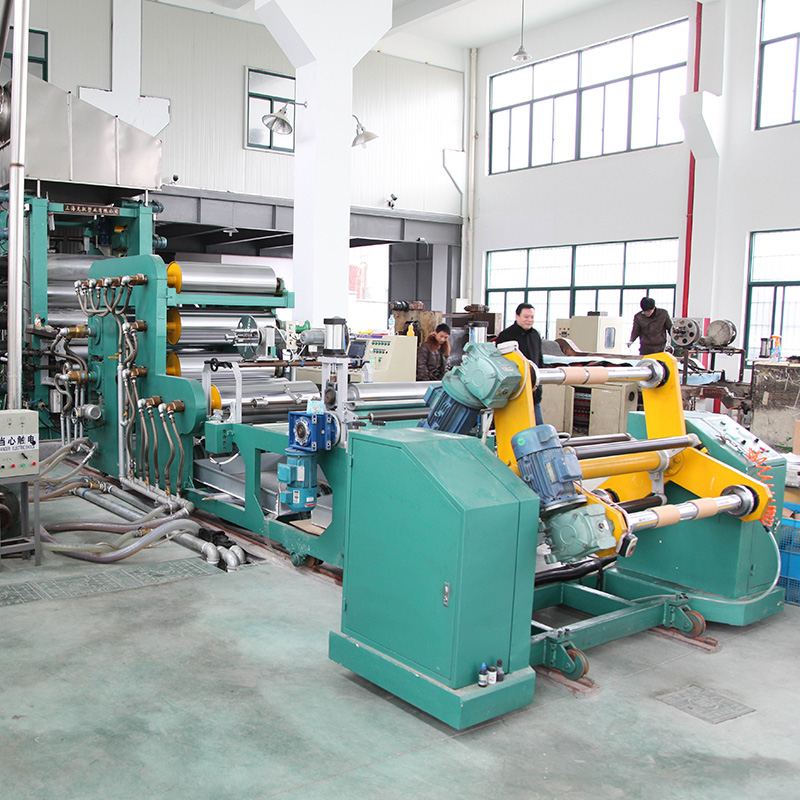 PVC Soft Film Calendering Machine for Flexible Film ProductionDesigned for heavily plasticized PVC compounds, this five-roll line produces soft and semi-hard film from 0.05 to 0.60 mm, suiting flooring layers, packaging film and banner applications described for soft film lines.View Product →
Rigid sheet lines run compounds with little or no plasticizer. The processing window is narrower: the material must be fully gelled but never overheated, so zone temperature control and residence time carry more weight. Typical outputs include blister and food packaging, card bodies, printing sheet and stationery.
PVC rigid sheet calendering line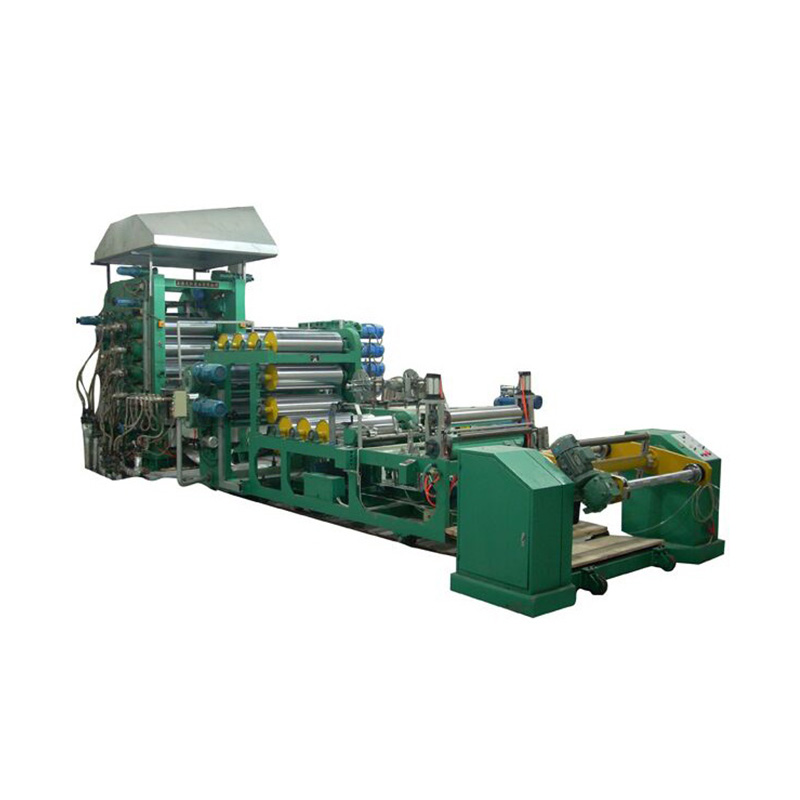 PVC Rigid Sheet Calendering Line for Packaging SheetBuilt for compounds with little or no plasticizer, this line makes rigid PVC sheet from 0.06 to 1.20 mm with tight tolerance, matching rigid applications like blister packaging, printing sheet and card bodies.View Product →
Because the two differ in compound behavior, roll temperature profiles, downstream equipment and operator habits, the intended product mix should be defined before a machine is quoted. How a manufacturer packages the same calendering principle for two product families is a useful indicator of its engineering depth.
| Aspect | Soft Film Line | Rigid Sheet Line |
|---|---|---|
| Plasticizer content | High, commonly 20 to 50 phr | Minimal to none |
| Processing window | Wider, forgiving melt | Narrower, overheating must be avoided |
| Typical gauge range | About 0.05 to 0.7 mm | About 0.1 to 0.8 mm |
| Representative products | Flooring, curtains, tablecloths, inflatable film | Blister packaging, cards, stationery sheet |
| Key downstream steps | Embossing, cooling, winding | Cooling, gauge verification, cutting |
Roll Configuration and Thickness Control
Roll count is the most quoted specification on any calender, and the logic behind it is simple: every additional nip improves metering.
Two-roll machines are essentially milling and sheeting units suited to coarse work. Three-roll machines add a second nip and remain common for moderate tolerances. The four-roll inverted-L arrangement became the industry workhorse because the extra nip meters the sheet from both sides. Five- and six-roll machines extend the principle further, which is why they dominate plastic film production at volume: more nips mean finer metering, thinner minimum gauges and higher line speeds.
Roll count alone does not hold thickness in tolerance. A set of supporting capabilities does:
- Deflection compensation: under load, rolls bow slightly and the sheet runs thicker in the middle. Roll bending and roll crossing counteract this so gauge stays flat across the working width.
- Automatic gauge measurement: a scanning thickness gauge feeding back to the gap adjustment closes the control loop. Without it, operators chase thickness by cutting samples, and the gauge profile across a jumbo roll suffers.
- Temperature uniformity: a few degrees of difference between roll ends and center changes melt behavior at the nip and shows up as a gauge or gloss profile.
- Surface condition: the roll face transfers directly to the sheet, so a worn or damaged face repeats itself on every meter of product. The relationship between roller surface finish and PVC film quality is specific enough that it deserves its own reading during supplier evaluation.
Precision lines that are properly maintained hold gauge within a few thousandths of a millimeter. The practical difference between suppliers shows up less in the center-point number and more in how flat that tolerance stays across the full width and across an entire wound roll.
For buyers planning film output at volume, the extra nips usually justify the investment once line speed and minimum gauge targets climb; workshops running heavier gauges, or combining rubber and plastics work, often find a four-roll layout the better value.
5/6 roller plastic calender machine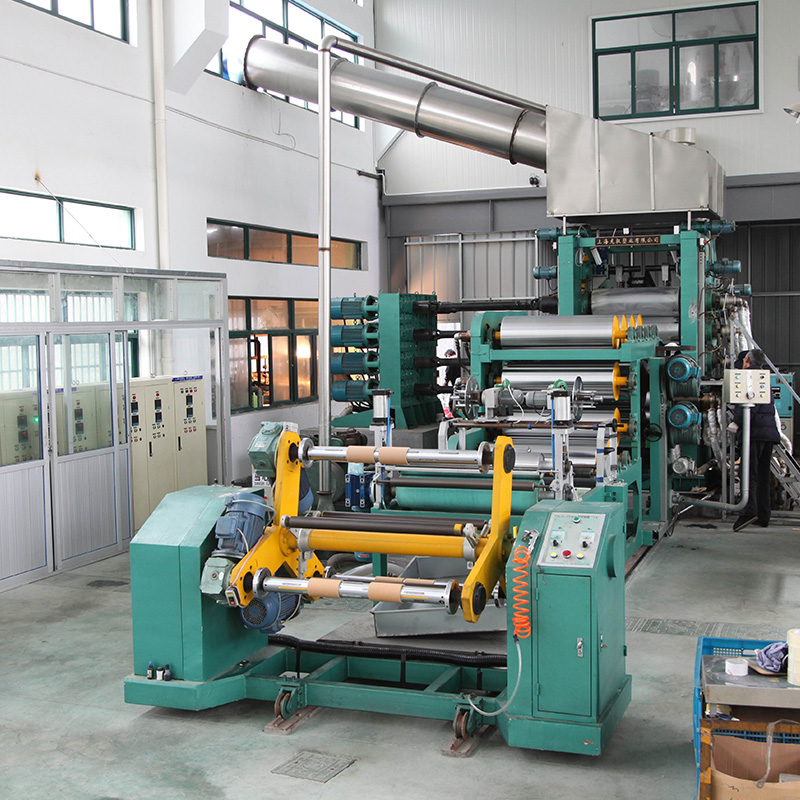 5/6 Roller Plastic Calender Machine for Precision Film and SheetWith five or six heated rolls and precise gap control, this calender handles PVC, TPU and EVA across rigid and flexible formats, offering higher nip counts when line speed and minimum gauge targets climb.View Product →
The Line Around the Machine
A calender is only as productive as the systems feeding and leaving it. Upstream, the mixing room must deliver a fully gelled, uniform compound at a rate that matches calender throughput; a starved calender runs inconsistently, and a variable compound changes gauge with every batch. Plants that also process rubber will recognize the same logic from internal mixing, where oils and plasticizers must be incorporated evenly before the material reaches the forming stage. Downstream, cooling drum temperature, tension control and winding quality determine whether a good sheet stays good until it ships.
Supplier experience with finished goods matters here too. A machinery builder that runs its own PVC floor and soft door curtain production understands how compound formulation, embossing and cooling interact in a way a pure equipment vendor cannot, and integrated suppliers usually publish plastic products manufacturing solutions alongside their equipment catalog. Reviewing those pages is a fast way to judge whether a vendor thinks in terms of whole production chains or single machines.
Specifications to Check Before You Order
Comparing quotations becomes far easier when the same requirements are written down for every vendor. The following checklist covers the items with the greatest influence on long-term performance.
- Product gauge range and working width: confirm both the minimum and maximum gauge your product mix requires, plus the film width you actually need to run.
- Roll configuration and dimensions: match roll count to tolerance and output targets, and verify roll face length against product width.
- Heating and zone control: oil-heated rolls with independently controlled zones, and a clear answer on how temperature uniformity across the face is tested at delivery.
- Gauge control package: scanning thickness measurement, automatic gap adjustment, roll bending and roll crossing. Decide which elements your tolerance genuinely requires rather than accepting a default.
- Drive and friction ratio: infinitely variable speed ratios between rolls, since soft and rigid compounds need different shear levels.
- Upstream capacity: mixing and feeding capacity that keeps the calender continuously fed, because the line performs at the level of its weakest stage.
- Commissioning and spares: installation support, operator training and guaranteed availability of wear parts such as bearings and seals.
The PVC film calender machine sits at the center of a film or sheet operation, and the decisions that matter most are made at the specification stage: soft film or rigid sheet duty, roll count matched to tolerance and speed, and a gauge control package that keeps the width flat, not just the center. Buyers who write those requirements down before comparing quotations tend to buy once and correctly; buyers who compare price first tend to rediscover the machine's importance one off-gauge roll at a time. An equipment partner that manufactures both rubber and plastic calendering lines, and runs finished PVC products itself, can usually help pressure-test a specification against real production conditions before the order is signed.
 Previous