


 English
 中文简体
中文简体 русский
Content
- 1 What Rubber Actually Is
- 2 Natural Rubber vs Synthetic Rubber
- 3 The Main Rubber Types and Where They Are Used
- 4 Vulcanization, the Step That Turns Gum into Rubber
- 5 How to Read a Rubber Spec Sheet
- 6 How Rubber Products Are Made
- 7 Matching a Rubber Grade to the Application
- 8 FAQ: Short Answers About Rubber
A tire sidewall, a forklift mat, a hydraulic seal and the gasket inside a food pump are all called rubber, yet no two of them use the same compound. That gap between one everyday word and dozens of engineering materials is what makes the question "what are rubbers" harder to answer than it looks.
Rubbers are elastic polymers, or elastomers: materials that stretch to at least twice their relaxed length and spring back without permanent deformation. In materials engineering the plural simply means more than one rubber compound. In everyday American English it usually means waterproof overshoes, which is why the same phrase returns two very different conversations.
Whether you are specifying a gasket or simply trying to understand the material, three things decide how a rubber part performs: the base polymer, the compound recipe built around it, and the cure. This guide works through all three.
What Rubber Actually Is
Rubber is an elastomer: a polymer network whose glass transition temperature sits below its service temperature, lightly joined by chemical cross-links or physical entanglements, so it deforms under load and recovers instead of flowing.
Elastomer: a polymer that can be stretched repeatedly to at least twice its original length and, once released, returns to approximately its original length.
That behaviour comes from very long, coiled molecular chains. Under strain the chains uncoil; when the load is removed they recoil, and a sparse network of cross-links stops them from sliding permanently out of position. Remove the cross-links and the material creeps like uncured gum. Add too many and it turns hard and brittle.
Very few rubber parts use raw polymer. A practical compound is a recipe:
- Base elastomer, usually written as 100 phr, meaning parts per hundred rubber.
- Reinforcing fillers such as carbon black or silica, commonly 30 to 70 phr, which raise tensile strength, tear resistance and hardness.
- Process oils and plasticizers that soften the compound and improve flow during mixing and molding.
- Curatives: sulfur with accelerators and activators, or organic peroxides for heat-resistant grades.
- Antidegradants such as antioxidants, antiozonants and waxes that slow ageing.
Filler loading changes hardness without changing the polymer, which is why two sheets with the same chemical name can behave like two different materials.
Natural Rubber vs Synthetic Rubber
Natural rubber is harvested as latex from the Hevea brasiliensis tree and is chemically cis-1,4-polyisoprene, while synthetic rubbers are polymerized in reactors from petroleum or gas feedstocks such as butadiene, styrene, isoprene and ethylene.
Supply volumes are close. Natural rubber runs around 14 to 15 million tonnes a year and synthetic rubber slightly more, and tire demand pulls both along.
Natural rubber (NR)
- Highest tensile and tear strength of the general-purpose grades
- Excellent fatigue and cut-growth resistance in dynamic parts
- Strong building tack, which is why tires still rely on it
- Swollen by oils, fuels and most solvents
- Degrades quickly under ozone, UV and prolonged heat
Synthetic rubber (SR)
- Consistent properties from batch to batch
- Grades engineered for oil, ozone, heat or flame resistance
- Lower price volatility than plantation rubber
- Wide cost spread, from inexpensive SBR to expensive FKM
- Usually lower rebound than NR unless reinforced
For general industrial sheeting, natural rubber sheet is still the choice when rebound and tear resistance matter more than oil resistance.
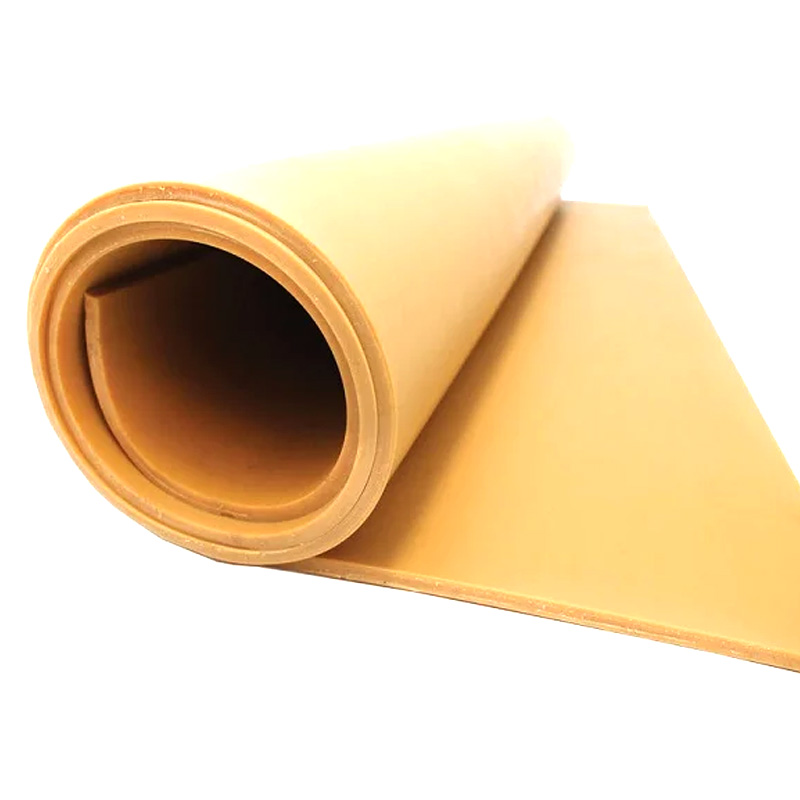 Natural Rubber SheetNatural rubber sheet is an elastic material made of natural rubber as the main raw material, with excellent physical properties and wide application value. Its notable...View Product →
Just under half of the world's rubber volume is natural, and tire makers take roughly 70 percent of it. That single buyer shapes natural rubber pricing more than any other industry.
The Main Rubber Types and Where They Are Used
Eight grades cover the large majority of industrial demand: NR, SBR, EPDM, NBR, chloroprene, butyl, silicone and FKM.
| Grade | Standout property | Typical parts | Hardness (Shore A) | Service temperature |
| NR | Best tensile and tear strength | Tires, mounts, matting | 30 to 90 | -50 to 100 C |
| SBR | Low cost, good abrasion resistance | Tire treads, conveyor covers | 40 to 90 | -40 to 100 C |
| EPDM | Ozone, UV and water resistance | Roofing sheet, weatherstripping | 40 to 90 | -50 to 150 C |
| NBR | Oil, fuel and grease resistance | Fuel hose, hydraulic seals | 30 to 90 | -30 to 120 C |
| CR | Balanced oil, weather and flame resistance | Industrial hose, cable jackets | 40 to 90 | -40 to 120 C |
| IIR | Very low gas permeability | Inner tubes, tire liners | 40 to 80 | -50 to 150 C |
| Silicone | Wide temperature range | O-rings, oven and medical seals | 20 to 80 | -60 to 200 C |
| FKM | Heat and chemical resistance | Automotive and pump seals | 60 to 90 | -20 to 200 C |
Read the table as a shortlist, not a specification. No grade wins on every line, and any of them can be supplied anywhere from about 30 to 90 Shore A depending on filler loading.
EPDM is the default answer for outdoor matting and weatherstripping because ozone and UV barely affect it, but it swells badly in mineral oil.
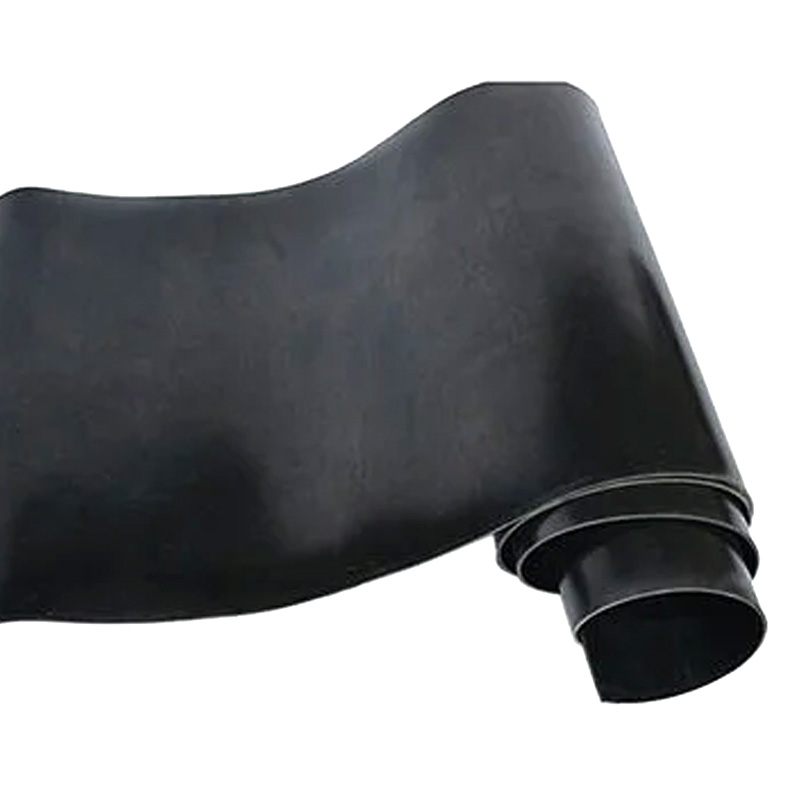 EPDM Rubber SheetEthylene propylene diene monomer rubber sheet (EPDM rubber sheet) is a high-performance rubber sheet made of EPDM rubber as the main raw material through calendering o...View Product →
Quick rule of thumb: oil contact points to NBR, weather exposure points to EPDM, and heat combined with chemicals pushes the choice toward FKM or another specialty grade.
Vulcanization, the Step That Turns Gum into Rubber
Vulcanization is the chemical cross-linking of rubber chains, normally with sulfur and accelerators or with peroxides, and it is the step that converts soft, sticky compound into a material that holds its shape and recovers after load.
- Compounding: the elastomer, fillers, oils and curatives are mixed in an internal mixer and discharged below roughly 120 to 140 C so the batch does not scorch.
- Forming: the compound is calendered into sheet, extruded into profile, or cut into preforms for molding.
- Curing: heat and pressure, typically 140 to 180 C. Thin sheet cures in 5 to 15 minutes while thick blocks may need an hour or longer.
- Finishing: cooling, trimming, deflashing, splicing and inspection before packing.
Cross-link density is the main lever behind hardness, modulus, compression set and swelling. Under-cured parts take a permanent set and age badly; over-cured parts lose elongation and, in natural rubber, can revert to a soft and tacky state.
Cured rubber is a thermoset. It will not melt and reflow, so the scrap trimmed at the finishing station cannot be remelted the way thermoplastic scrap can.
How to Read a Rubber Spec Sheet
Three blocks carry most of the decision: the base polymer and cure system, the mechanical values at a stated test temperature, and the resistance ratings for the fluids and weather the part will actually meet.
30 to 90Shore A range
7 to 25 MPaTensile strength
200 to 600%Elongation at break
15 to 30%Compression set target
Hardness is quoted on Shore A for soft compounds and on Shore D above roughly 95 Shore A. Tensile strength and elongation mean nothing without a test temperature and a test standard, so read the datasheet header before the numbers.
- FKM220 C
- Silicone200 C
- EPDM150 C
- NBR120 C
- NR100 C
How Rubber Products Are Made
Almost every rubber part passes through four stages: mixing, forming, vulcanizing and finishing, each with its own machines and tolerance limits.
- Mixing. An internal mixer builds the masterbatch, then an open two-roll mill or a kneader sheeting line cools and slabs it for the next step.
- Forming. Calenders produce sheet and coated fabric, extruders produce profiles and hose, and presses or injection machines produce discrete parts.
- Vulcanizing. Platen presses, autoclaves, rotocure drums for continuous sheet and belt, salt baths and microwave hot-air lines for extruded profiles.
- Finishing. Trimming, deflashing, buffing, splicing, printing and final inspection against the drawing tolerances.
Process control shows up in the tolerances. A calender line typically holds thickness within about 0.05 to 0.15 mm, while molded parts often run to about 0.25 mm or to a published tolerance class. For the first stage in more detail, this guide to how a rubber kneader machine works covers batch size, rotor geometry and discharge temperature.
When you buy rubber goods, ask for the cure system and the batch record, not only the hardness. Two suppliers can quote the same 70 Shore A and deliver parts with very different compression set.
Matching a Rubber Grade to the Application
Grade selection follows three questions in order: what temperature the part will see, what it will touch, and how much dynamic movement it will carry.
Temperature first
NR and SBR top out near 100 C, EPDM and butyl near 150 C, silicone near 200 C, and FKM beyond that. Heat resistance is usually the hardest limit to work around.
Chemistry second
NBR for oil and fuel, EPDM for water and weather, chloroprene for a balanced mix, FKM for aggressive chemicals and solvents.
Movement third
NR and SBR survive repeated flexing best. Silicone tears easily under sharp edge loading, which makes it a poor choice for abrasive duty.
Cost follows the same order. SBR sits at the bottom of the price range, EPDM and NBR near the middle, and FKM compounds can cost several times more per kilogram. Moving to a different grade also means re-qualifying the part, because hardness, swell and compression set move together.
Oil contact gaskets and protective pads usually start from NBR sheet, and our rubber products range covers sheets, mats, belts and molded goods built from these grades.
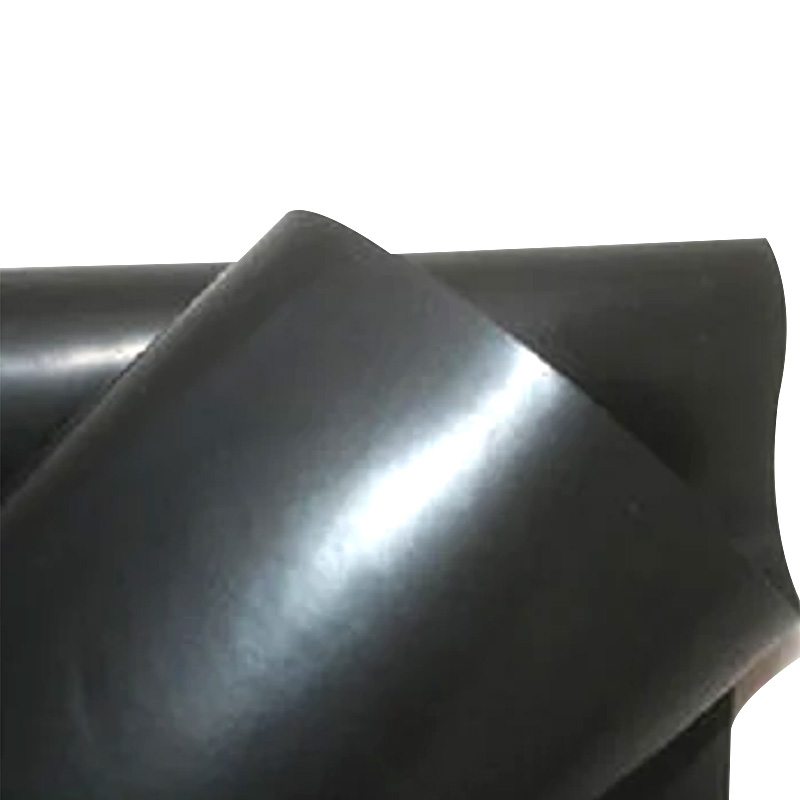 NBR Rubber SheetNeoprene Rubber Sheet is a high-performance rubber sheet made of chloroprene rubber (CR, Chloroprene Rubber) as the main raw material through calendering or molding vu...View Product →
Field example: a hydraulic return-line seal that failed every six weeks on a 90 C mineral-oil circuit was replaced with a peroxide-cured NBR part instead of a sulfur-cured SBR washer. Service life passed twelve months with no other change to the hardware.
FAQ: Short Answers About Rubber
Is rubber the same as an elastomer?
In practice, yes. Elastomer is the technical term for a polymer that recovers from large deformation, and rubber is the everyday name for the same class of material. Engineers usually say elastomer for the polymer and rubber for the finished compound.
Is silicone a rubber?
Yes. Silicone rubber, or VMQ, is an elastomer built on a silicon-oxygen backbone instead of a carbon chain. It works from roughly -60 C to 200 C, but its tensile strength and tear resistance are lower than NR or NBR.
How many types of rubber are there?
Commercially, a few dozen families and thousands of individual compounds. Most industrial demand is met by NR, SBR, EPDM, NBR, chloroprene and butyl, with silicone, FKM and polyurethane covering specialty duties.
What is the difference between rubber and plastic?
Cured rubber is a thermoset whose cross-linked network cannot be melted and reshaped. Most plastics are thermoplastics that soften on heating. Thermoplastic elastomers fall in between: they behave like rubber but can be reprocessed.
Bottom line: rubbers are a family of elastomers, not one material. Identify the base polymer, check hardness and compression set at the real service temperature, and confirm the cure system before comparing two quotations.
 Previous