


 English
 中文简体
中文简体 русский
Content
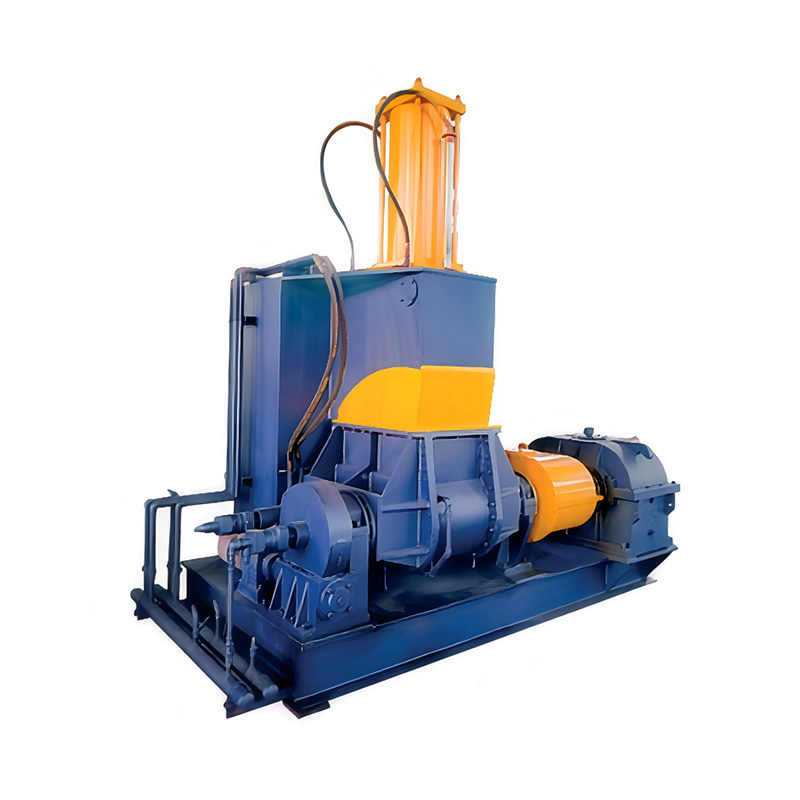
In the world of polymer processing, achieving a homogenous, high-quality rubber compound is both a science and an art. Central to this process is the strategic incorporation of additives—most notably, oils and plasticizers—which dramatically alter the compound’s workability, flexibility, durability, and cost. At the heart of this crucial mixing stage often sits a robust and specialized machine: the rubber kneader, also known as an internal mixer or Banbury® mixer.
Understanding the Key Components: Oils and Plasticizers
Before delving into the machine, it’s essential to understand what is being incorporated.
- Process Oils (Petroleum-based, Vegetable): Primarily used to soften the base polymer, reduce viscosity for easier processing, extend volume (reducing cost), and aid in the dispersion of fillers like carbon black or silica.
- Plasticizers (Phthalates, Adipates, etc.): Similar in function to oils but often specifically chosen to improve low-temperature flexibility, enhance specific elastic properties, or reduce glass transition temperature (Tg).
Both are typically low-viscosity liquids that must be transformed from a macroscopic, separate phase into a microscopically dispersed, intimate blend with solid rubber polymers and powdered fillers.
The Anatomy of a Rubber Kneader
A rubber kneader is a closed, high-shear mixing chamber. Its key components relevant to liquid incorporation are:
- Mixing Chamber: A rugged, jacketed housing that can be heated or cooled.
- Rotor Blades: Two counter-rotating, non-intermeshing rotors with complex wing-like designs. These are the heart of the machine, generating the necessary shear and elongational flow.
- Ram or Floating Weight: A hydraulically operated piston that seals the chamber from above, applying pressure (typically 3-7 bar) to the batch.
- Drop Door: Located at the bottom of the chamber for discharging the mixed compound.
The Step-by-Step Incorporation Process
The incorporation of oils and plasticizers is not a simple pouring step; it is a carefully orchestrated sequence of mechanical and thermal events.
Phase 1: Mastication and Polymer Engagement
The cycle begins with the addition of the base rubber (natural or synthetic). The rotors, turning at differential speeds, grab, tear, and deform the rubber bales. This mastication breaks down polymer chains temporarily, reducing molecular weight and increasing the rubber’s temperature through internal friction (viscous heat generation). This warming is critical, as it lowers the rubber’s viscosity, making it more receptive to accepting additives.
Phase 2: The Strategic Addition of Liquids
Timing is everything. Adding large volumes of oil at the very beginning can be detrimental. The standard best practice is:
- Split Addition: A portion (often 1/3 to 1/2) of the total liquid is added after the rubber is masticated but before the major fillers (carbon black/silica). This “base oil” further softens the rubber, creating a sticky, adhesive mass that will more efficiently wet and incorporate the powdered fillers to come.
- The Danger of “Slip”: Adding oil too early or in excess before the fillers can cause “slip” – a condition where the lubricating effect of the oil prevents adequate shear stress from being transmitted to the rubber. The compound slides on the rotors instead of being sheared, leading to poor dispersion and extended mix times.
Phase 3: Filler Incorporation and the Critical Role of Shear
The powdered fillers are now added. The rotors’ design creates a complex flow pattern within the chamber:
- Shearing Action: The rubber compound is forced over the narrow clearance between the rotor tip and the chamber wall, subjecting it to intense shear stress. This smears the compound layer by layer.
- Folding and Division (Kneading): The rotor wings also push the compound from one end of the chamber to the other, constantly folding it over itself—the literal “kneading” action.
In this high-shear environment, the previously added oil, now warmed by the compound, acts as a transport medium. It helps the rubber encapsulate individual filler agglomerates. The shear forces then break these agglomerates down, distributing the filler particles and coating them with a thin layer of oil-rubber matrix.
Phase 4: Final Oil Addition and Dispersion
The remaining oil or plasticizer is often added after the fillers are mostly incorporated. By this stage, the compound temperature is high (often 120-160°C), and the mixture is a coherent mass. Adding liquid now is more controlled.
- The ram pressure ensures the liquid is forced into the batch and not simply sprayed onto the chamber walls.
- The continuing kneading action mechanically pumps the liquid into the microscopic pores and gaps within the compound. The liquids migrate into the compound through two primary mechanisms:
- Capillary Action: Drawn into tiny spaces between polymer chains and filler clusters.
- Shear-Induced Diffusion: Macroscopic mixing by the rotors creates ever-new surfaces, exposing dry compound to the liquid, forcing intermingling at a microscopic level.
Phase 5: Final Homogenization and Temperature Control
The final minutes of the mix cycle are for homogenization. The ram pressure ensures full chamber engagement, while the constant folding and shearing eliminate any local concentration gradients of oil. Throughout the entire process, the jacketed chamber circulates coolant to manage the exothermic heat of mixing. Precise temperature control is vital; too hot, and the rubber may scorch (premature vulcanization); too cold, and the necessary viscosity reduction for good dispersion won’t be achieved.
Why a Kneader Excels at This Task
The design of the internal mixer is uniquely suited for this challenging job:
- High Intensivity: It delivers massive shear and deformation energy in a short time, efficiently breaking down agglomerates.
- Contained Environment: The sealed chamber under ram pressure prevents loss of volatile components, controls contamination, and allows for mixing at elevated temperatures safely.
- Efficiency: It can handle large batches (from liters to hundreds of kilograms) with far less energy and time than open mills for equivalent quality.
Practical Considerations for Optimal Incorporation
Operators and compounders must balance several factors:
- Addition Order: As outlined, a split addition is standard for optimal balance between dispersion quality and mix time.
- Rotor Speed and Ram Pressure: Higher speeds increase shear and temperature faster. Optimal pressure ensures good contact without overloading the motor.
- Oil Viscosity and Chemistry: Lighter oils incorporate faster but may be more volatile. The compatibility (solubility parameter) of the plasticizer with the base polymer is fundamental.
- Batch Size (Fill Factor): The chamber must be loaded correctly (typically 65-75% full). Under-filling results in insufficient shear; over-filling prevents proper folding and results in uneven mixing.
Conclusion
The incorporation of oils and plasticizers by a rubber kneader machine is a dynamic, thermomechanical process far beyond simple stirring. It is a precisely engineered sequence of mastication, timed addition, shear-driven dispersion, and thermal management. The machine’s powerful rotors and sealed chamber work in concert to overcome the immense challenge of blending low-viscosity liquids into a high-viscosity, non-Newtonian rubber matrix. By understanding the physics of shear, the importance of addition sequence, and the critical role of temperature, compounders can leverage the kneader’s capabilities to produce consistent, high-performance rubber compounds where every drop of oil and plasticizer is effectively and uniformly harnessed to meet the exacting demands of the final product. This deep understanding ensures efficiency, quality, and innovation in the vast world of rubber manufacturing.
 Previous