


 English
 中文简体
中文简体 русский
Content
Two rubber sheets can sit on the same pallet looking identical—same thickness, same black surface—yet one survives five summers outdoors while the other cracks within a single season. The difference is never the word "rubber" on the label; it is what the rubber is actually made of.
In short, every rubber starts as long polymer chains. Natural rubber uses polyisoprene tapped from rubber trees as liquid latex; synthetic rubber uses chains built from petroleum-based monomers such as butadiene and styrene. Neither works alone: both are blended with curing agents, fillers, oils, and protectants, then vulcanized with heat to lock the chains into one elastic network.
The Short Answer: Polymer Chains Plus a Compound Formula
Engineers call rubber an elastomer: a polymer that stretches under load and springs back when released. A polymer is a giant molecule built from thousands of repeating units joined end to end into a chain—natural rubber's building block is isoprene (C5H8). Raw polymer alone, however, is sticky in summer, stiff in winter, and weak under load. That is why real rubber is always a compound, a recipe in which the polymer makes up only about half to two-thirds of the weight. The remaining ingredients fall into five families:
- Base polymer—natural polyisoprene or a synthetic elastomer, which sets the product's core character.
- Curing system—sulfur or peroxides, which create the crosslinks during vulcanization.
- Fillers—carbon black, silica, clay, or chalk, which add strength and control cost.
- Process oils and plasticizers, which soften the stock for smooth mixing and calendering.
- Protectants—antioxidants, antiozonants, and waxes that slow heat, ozone, and weathering attack.
~35%rubber content of fresh tree latex
1-3 phrsulfur in most cure systems
140-180°Ctypical press-cure temperature
~2/3of world rubber consumption is synthetic
Natural Rubber: Polyisoprene from Tree Latex
Natural rubber comes from Hevea brasiliensis, the rubber tree. Workers cut a thin spiral into the bark, and the tree bleeds latex—a milky liquid in which roughly 30-35 percent of the content is rubber hydrocarbon suspended in water, often stabilized with ammonia so it does not coagulate in the cup. The polymer inside is cis-1,4-polyisoprene, and its orderly, springy geometry explains natural rubber's exceptional elasticity: when stretched, the chains align and crystallize, which is why even unfilled natural rubber can reach tensile strength near 25 MPa.
To process it, latex is coagulated with formic acid, then rolled and dried into ribbed smoked sheet or compressed into block grades for shipping. A single tree yields only a few kilograms of dry rubber per year, which keeps natural rubber an agricultural commodity whose price swings with harvests and freight routes.
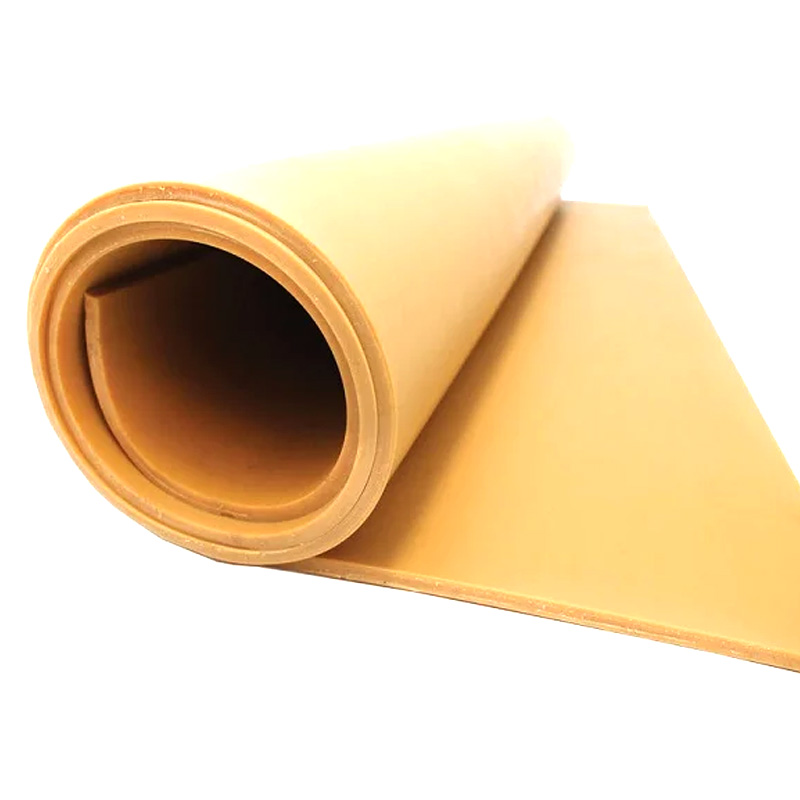 Natural Rubber Sheet for Sealing and Shock AbsorptionAfter explaining how latex is processed into sheets, this natural rubber sheet is a relevant example: it offers high elasticity, tear resistance, and stable performance for sealing, anti-slip, and lining uses between -50℃ and +70℃.View Product →
Its chemical weakness sits in the same double bond that gives it spring: ozone, UV light, and hydrocarbon oils attack that site readily, so untreated natural rubber cracks outdoors and swells in fuel. Those are the main reasons compounders add protectants or switch to synthetic alternatives.
Synthetic Rubber: Polymers Built from Petroleum
Synthetic rubbers are made by polymerizing monomers derived from crude oil and natural gas. They now account for roughly two-thirds of global rubber consumption, because each recipe can be tuned against a specific threat—oil, heat, ozone, abrasion, or flame. The monomers on the label predict the performance:
| Rubber type | Built from | Signature strength | Typical products |
|---|---|---|---|
| SBR | Styrene + butadiene | Abrasion resistance at low cost | Tires, SBR sheeting, belt covers |
| NBR | Acrylonitrile + butadiene | Oil and fuel resistance | Seals, hoses, oil-resistant sheet |
| EPDM | Ethylene, propylene, diene | Ozone, UV, and steam resistance | Outdoor gaskets, roofing, weather strips |
| CR (neoprene) | Chloroprene | Balanced flame, weather, and oil behavior | Gaskets, cable jackets |
| Silicone | Siloxane backbone | Elastic from about -60 to +230°C | Food-grade and high-temperature parts |
Nitrile (NBR) shows how directly monomers translate into properties: raising the acrylonitrile content from about 18 to 45 percent steadily improves oil resistance while trading away low-temperature flexibility. Buyers who skip that detail end up with seals that swell in the very fluid they were purchased to contain.
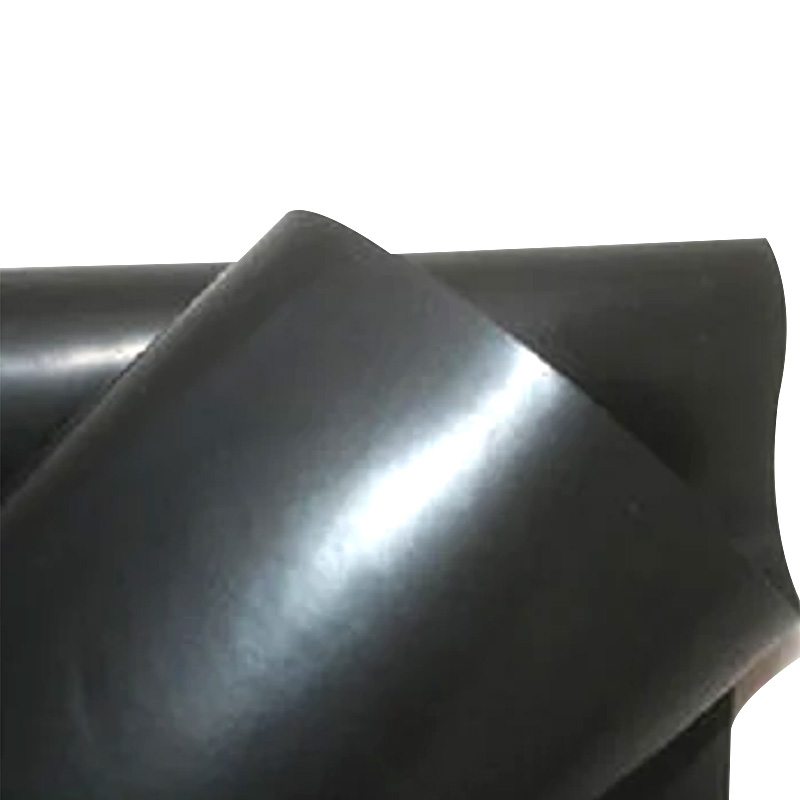 NBR Rubber Sheet with Tunable Oil ResistanceFollowing the discussion of acrylonitrile content and oil swelling, this nitrile rubber sheet illustrates the material choice: it suits oil-exposed sealing applications where fluid resistance matters more than low-temperature flexibility or ozone endurance.View Product →
EPDM makes the opposite trade. Its saturated backbone shrugs off ozone, sunlight, and water—hence its grip on outdoor gaskets and roofing—but the same chemistry gives it almost no resistance to hydrocarbon oils.
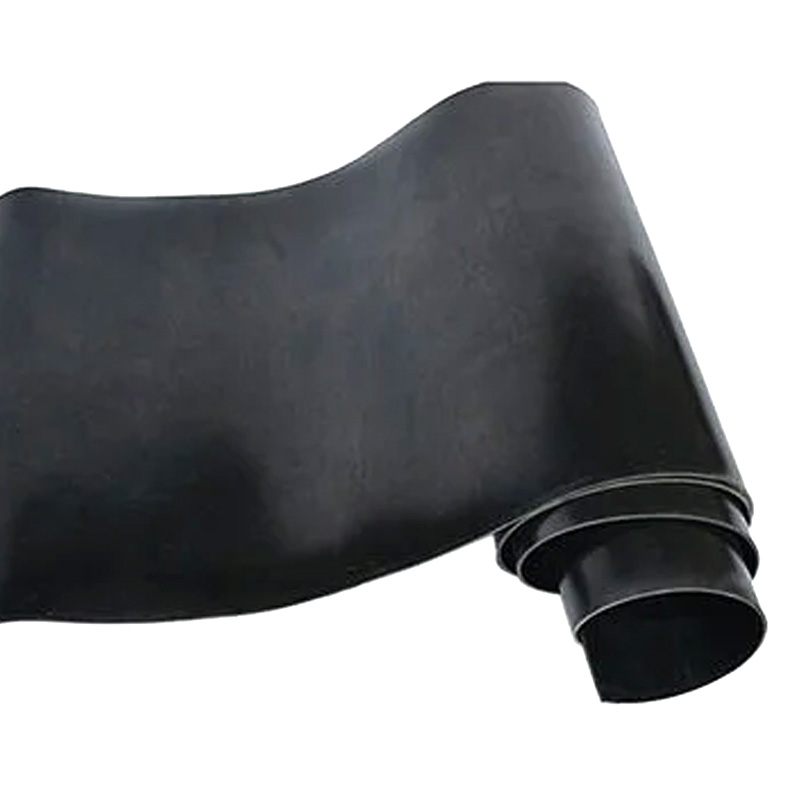 EPDM Rubber Sheet for Outdoor SealingRight after the note on EPDM's saturated backbone resisting ozone, sunlight, and water, this sheet fits outdoor gaskets, roofing, and insulation, with a working range of -40℃ to +150℃ though limited oil resistance.View Product →
What Else Goes into a Rubber Compound
Formulas are dosed in phr—parts per hundred rubber by weight. A typical black compound reads roughly like this:
- Sulfur, 1-3 phr: the crosslinker; too little leaves weak rubber, while far more turns it into hard ebonite.
- Accelerators, under 2 phr: chemicals that make sulfur cure fast at lower temperature.
- Zinc oxide, 3-5 phr, plus stearic acid, 1-2 phr: activators that let the accelerators work.
- Carbon black, 20-50 phr: the reason most industrial rubber is black, and a filler that can double tensile strength and wear life.
- Clay or chalk: low-cost fillers that adjust hardness and price in non-critical parts.
- Process oils, 5-20 phr: soften the mix for milling and calendering.
- Antioxidants, antiozonants, and waxes, 1-5 phr combined: slow aging and ozone cracking.
Move any line and the product moves with it: add wax and the sheet resists ozone; swap carbon black for silica and tear strength climbs along with price; raise sulfur and hardness rises on the Shore A scale. This is why two sheets with the same thickness spec can behave nothing alike.
Vulcanization: The Step That Locks the Chains Together
Unvulcanized rubber is a tangle of independent chains that slide past each other—tacky, weak, and shapeless on a hot day. In 1839, Charles Goodyear found that heating rubber with sulfur changes it permanently: sulfur atoms bridge neighboring chains at their reactive double bonds, welding thousands of loose strands into a single network.
The red links in the diagram are those sulfur bridges—the same reaction performed inside every vulcanizing press. The numbers are practical, not folklore: press curing typically runs at 140-180°C for a few minutes up to an hour depending on part thickness, and crosslink density sets the final hardness. Silicone and some EPDM grades skip sulfur and cure with peroxides or microwave hot-air lines instead, which is why silicone sheet stays flexible at temperatures that would degrade sulfur-cured rubber.
How Raw Polymer Becomes a Sheet, Mat, or Belt
The recipe only becomes a product through machinery, and the sequence is the same whether the output is a cow mat or a conveyor belt:
- Mixing—internal mixers (Banbury), kneaders, or open two-roll mills shear the polymer and disperse the fillers, oils, and chemicals; mixing temperature and energy decide how uniform the compound is.
- Shaping—calendering turns compound into continuous sheet, extruders form profiles, and presses mold parts under heat and pressure.
- Vulcanization—presses, autoclaves, Rotocure drums, or microwave lines lock in the final elastic properties.
The stages feed one another: a poorly dispersed filler never recovers at the calender, and an uneven roll gap reappears as thickness variation after cure. That is why processors treat mixing, shaping, and curing as one continuous chain, and our guide to choosing rubber mixers, calenders, and presses walks through that selection logic step by step.
So, what is the rubber made of? A polymer—natural isoprene chains from tree latex or synthetic chains from petroleum—plus a dosed formula of curatives, fillers, oils, and protectants, welded into one elastic network by vulcanization. Match the polymer to the exposure it will face: NBR for oil, EPDM for sun and weather, natural rubber or SBR for abrasion and cost, silicone for temperature extremes.
If you are sourcing sheets, mats, or belts, ask for the compound data sheet—polymer type, Shore A hardness, tensile strength, elongation—because those figures, not the word "rubber," predict how a part will age in your application. As a manufacturer of both rubber processing equipment and finished rubber products, we work at every point of that chain; see how the compounds map to real applications in our rubber products solutions.
 Previous