


 English
 中文简体
中文简体 русский
Content
- 1 Buna N, NBR and Nitrile: One Material, Three Labels
- 2 Acrylonitrile Content Sets Oil Resistance and Cold Flexibility
- 3 Where Buna N Works and Where It Fails
- 4 Compounding: Where the Specification Is Won or Lost
- 5 Shaping and Curing Buna N Parts
- 6 Specifying Buna N Sheet: A Short Checklist
- 7 Failure Patterns Worth Recognising Early
A maintenance crew at an injection moulding plant replaces the same nitrile O-ring in the hydraulic power unit every three weeks. The oil is mineral based, the sump temperature stays under 90 °C, and the seal is the correct size and cross-section. Nothing about the installation looks wrong. What was never written down is the acrylonitrile content of the compound, and that single omission explains the repeat failure.
Buna N is nitrile butadiene rubber, now almost always written as NBR. Nearly every performance question about it traces back to two decisions made long before the part is moulded: how much acrylonitrile is copolymerised into the chain, and which cure system the compounder selects. Choose both deliberately and Buna N becomes one of the cheapest reliable routes to oil resistance. Leave either to chance, and no amount of re-tightening, greasing or re-ordering will hold the seal.
Buna N, NBR and Nitrile: One Material, Three Labels
Buna is a contraction of butadiene and natrium, the sodium catalyst behind the emulsion polymerisation process commercialised in Germany during the 1930s. Buna S became today's SBR. Buna N became the nitrile family, made by copolymerising butadiene with acrylonitrile. The older name still appears on legacy drawings, defence specifications and European spare-part lists, which is why a single datasheet may carry both "Buna N" and "NBR" without any contradiction.
Chemically the two are identical. ISO 1629 designates the polymer NBR, while ASTM D2000 describes a finished compound through a line callout that encodes hardness, tensile strength, heat-aging limits and fluid resistance. The practical shorthand is simpler still: Buna N means a rubber whose backbone is unsaturated butadiene, whose polarity comes from nitrile groups, and whose oil resistance rises with the nitrile share of the chain.
Acrylonitrile Content Sets Oil Resistance and Cold Flexibility
Acrylonitrile, usually shortened to ACN, is the first number a buyer should ask about. Commercial grades run from roughly 18 to 50 percent ACN by weight. Raising ACN increases polarity, which pushes oil, fuel and solvent resistance upward and drags the glass transition temperature up with it. The same change generally hardens the compound, reduces rebound, and makes mixing and calendering more demanding on the line.
| ACN content | Oil and fuel resistance | Practical low-temperature limit | Typical applications |
|---|---|---|---|
| 18-20% | Fair | -50 °C | Low-temperature gaskets, general mechanical goods |
| 28-33% | Good | -40 °C | Hoses, seals, O-rings, roll covers |
| 36-41% | Very good | -25 °C | Fuel lines, oil seals, hydraulic components |
| 45-50% | Excellent | -15 °C | Refinery and fuel-system seals, solvent contact |
Two grades sitting at the same 70 Shore A hardness can behave completely differently in one sump if their ACN contents are 28 and 41 percent. That is why hardness alone is a weak purchasing specification for Buna N, and why a supplier who cannot state the ACN range is a supplier worth questioning.
Where Buna N Works and Where It Fails
Continuous service temperature for sulfur-cured Buna N runs from roughly -40 °C to +100 °C, with short excursions to 120 °C tolerable in air. Peroxide-cured grades exchange some processing flexibility for better heat aging and lower compression set, and can hold closer to 120 °C on a continuous basis. Below -25 °C, standard grades stiffen noticeably and seal energisation drops away.
The fluids that defeat Buna N are worth memorising, because they are common in plants that also use mineral oil:
- Ketones and esters, including MEK, acetone and ethyl acetate
- Phosphate-ester hydraulic fluids used in aircraft and some turbine systems
- Strong acids, concentrated oxidising agents and aromatic amines
- Ozone, ultraviolet light and prolonged direct sunlight
- High-concentration aromatic and chlorinated solvents
None of these limitations is exotic, but they are frequently discovered after installation rather than before purchase. For outdoor or ozone-exposed work, an NBR/PVC blend extends service life at some cost in compression set. Where the temperature window is wider or the chemical list is longer, switching polymer family is the honest engineering answer rather than forcing Buna N to do a job it was never formulated for.
Compounding: Where the Specification Is Won or Lost
Mixing is the stage that creates most Buna N failures. The unsaturated butadiene backbone shears readily, so mastication is short and over-mixing risks scorch. High-ACN grades absorb plasticiser and process oil quickly and turn tacky, while low-ACN grades take oil slowly and need longer cycles. Dump temperatures are normally held between 110 °C and 140 °C, and accelerators are added on a cool open mill rather than inside the internal mixer.
Internal mixers handle the masterbatch, open mills finalise it, and kneaders are often the better choice for heavily loaded or highly filled compounds. The mechanics behind that choice are covered in this practical guide to how rubber kneaders optimise mixing efficiency, which is worth reading before specifying cycle times for a high-ACN batch.
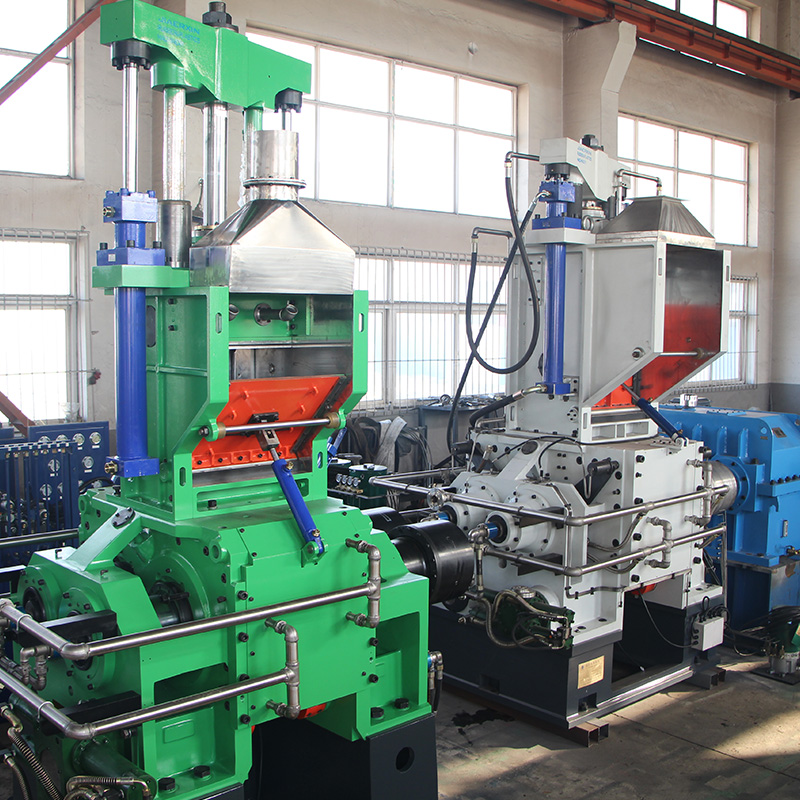 Rubber Banbury MachineIn the field of modern rubber and plastic processing, efficient, energy-saving, and environmentally friendly production equipment has become the key to improving the c...View Product →
The cure system matters just as much as the mixing. Sulfur with a sulfenamide accelerator gives good tear strength, good fatigue life and forgiving processing. Peroxide curing with a dialkyl peroxide produces carbon-carbon crosslinks that resist heat aging and hold compression set far better, at the price of poorer hot tear and a compound that must be mixed and stored with more care. For seals that sit under load at 100 °C or above, that trade is usually worth taking.
Shaping and Curing Buna N Parts
Once compounded, Buna N follows the usual rubber processing routes. Calenders produce sheet and skim stock, extruders produce hose liners, weather strips and profiles, and compression, transfer or injection moulding produce the seals and pads that most people associate with the material. Each route imposes its own limits: high-ACN compounds are stiffer during calendering and more prone to die swell during extrusion.
Vulcanisation is normally carried out between 150 °C and 170 °C. A working rule for thin sections is roughly one minute per millimetre of thickness plus two to three minutes of dwell at 160 °C, but the cure curve supplied with the batch always overrules a rule of thumb. Platen pressure needs to be high enough to close the mould and suppress porosity without squeezing the compound thin at the edges. Thick sections and large pads should be cured slowly, because the outside of a hot part can be fully cured while the core is still soft, and that gradient only shows up later as a compression set failure.
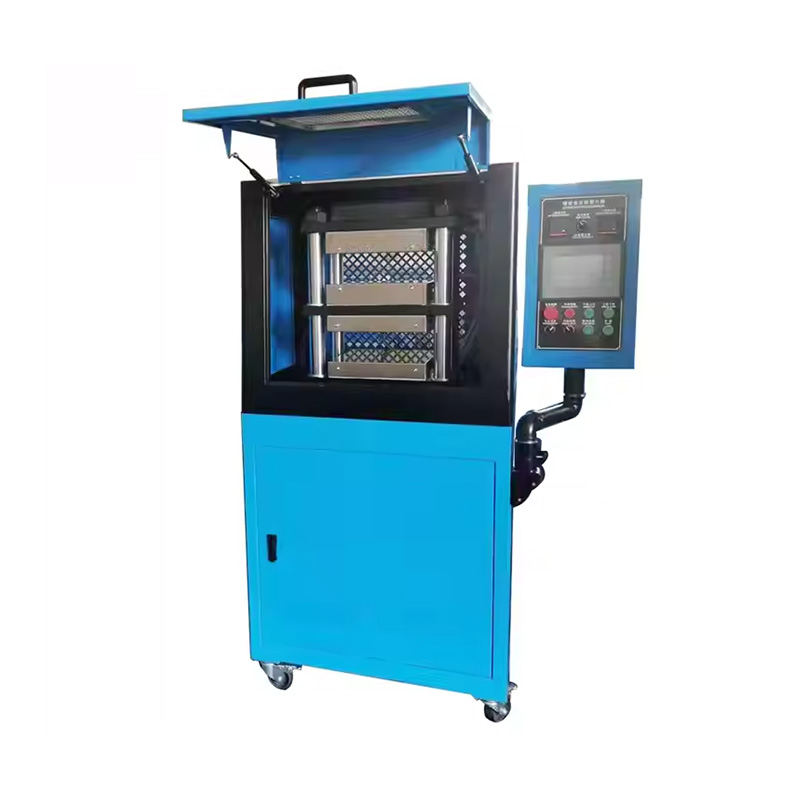 Rubber Plate Vulcanizing Press Machine SuppliersRubber Mixing MachineView Product →
For peroxide-cured parts, a staged post-cure in an oven removes volatile decomposition products and stabilises the network. Skipping it leaves a compound that smells, stains and continues to change hardness in service.
Specifying Buna N Sheet: A Short Checklist
Industrial rubber sheet is where vague specification costs the most money, because failures appear months after the material is cut and installed. Before confirming a purchase order, confirm every item below.
- ACN range, or an explicit oil-resistance target such as a volume swell limit after immersion testing
- An ASTM D2000 line callout rather than a trade description alone
- Hardness with a stated tolerance, normally plus or minus 5 Shore A
- Thickness and thickness tolerance, especially for gaskets cut from sheet
- Cure system, since it determines compression set and heat aging behaviour
- Compression set limit at the actual service temperature
- Surface finish, fabric insertion and backing requirements
The full range of sheet, mat and belting products built on this chemistry is described under the site's rubber products solutions, which is a useful reference for matching a compound to an application before placing an order.
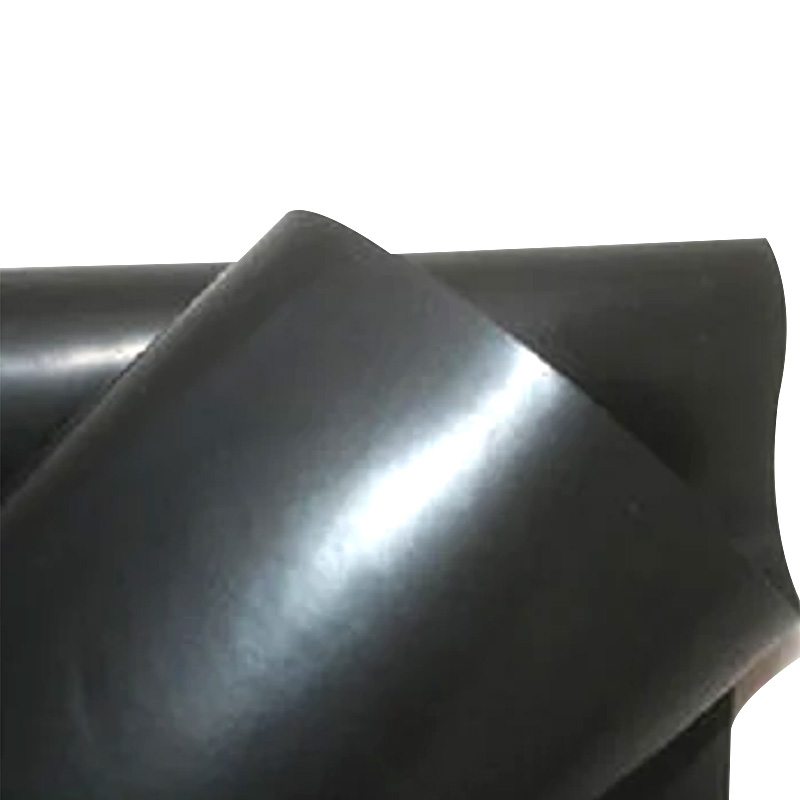 NBR Rubber SheetNeoprene Rubber Sheet is a high-performance rubber sheet made of chloroprene rubber (CR, Chloroprene Rubber) as the main raw material through calendering or molding vu...View Product →
Failure Patterns Worth Recognising Early
- Uniform swelling across the whole seal usually points to the wrong ACN grade for the fluid, not to a defective batch.
- Hardening and surface cracking over several months in an outdoor installation is ozone attack, and requires a blend or a different polymer.
- Permanent flattening on one face after weeks under load is high compression set from a sulfur cure where a peroxide cure was needed.
- Uneven hardness across a thick pad indicates an incomplete cure cycle or insufficient platen dwell time.
- Sticky, tacky sheet straight from the pallet often means over-plasticised stock rather than a storage problem.
Each of these symptoms can be traced back to a compounding or curing decision, which is why the equipment used to mix and press the compound belongs in the same conversation as the polymer selection itself.
Buna N rewards a buyer who asks two questions: what is the acrylonitrile content, and how is it cured? Those answers predict oil resistance, low-temperature behaviour and compression set more reliably than hardness, colour or price per kilogram. After that, the outcome depends on mixing discipline and cure control, because a perfect formulation pressed on an uncontrolled line still produces seals that come back three weeks later.
 Previous