


 English
 中文简体
 русский
Content
- 1 What Buna-N Rubber Actually Is
- 2 Acrylonitrile Content: The Number That Predicts Performance
- 3 Performance Trade-offs That Decide Real Applications
- 4 Compounding and Curing: Where the Specification Is Won
- 5 Specifying Buna-N Sheet, Gaskets and Molded Parts
- 6 Frequently Asked Questions About Buna-N Rubber
A drawing note reads "Buna-N, 70 Shore A, 33% ACN", and three questions follow immediately: will the part hold in hot oil, will it survive a cold start, and will next month's batch match this one. Those three questions cover most of what decides whether a nitrile part passes validation or comes back from the field.
Buna-N has been the default sealing elastomer for mineral oil, diesel and hydraulic fluid for decades. It is rarely the best at any single property, but it is predictable across a wide band of conditions and priced where high-volume parts still make sense. What follows is a practical read of the material: which grades exist, where the trade-offs actually sit, and what belongs on a purchase specification.
18-50%Acrylonitrile range across standard Buna-N grades
-30 to +100 CTypical continuous service window for most compounds
40-90Shore A hardness span for sheet and molded parts
What Buna-N Rubber Actually Is
Buna-N rubber is a copolymer of butadiene and acrylonitrile, sold today as NBR or nitrile rubber. The "Buna" prefix is a legacy of sodium-polymerized butadiene, and the "N" marks the nitrile monomer that makes the material oil resistant. Nothing in the chemistry changed when the name did, so a 1970s drawing and a current submittal can describe the same compound.
Buna-N, or NBR, is a nitrile-butadiene copolymer whose acrylonitrile share, usually 18% to 50%, sets the balance between oil resistance and cold flexibility. Butadiene segments supply elasticity; acrylonitrile segments block non-polar hydrocarbons from swelling the network.
The practical consequence is that "nitrile" alone is not a specification. Two nitrile compounds can differ by a factor of two in oil swell and by 20 C in low-temperature limit while both sit at 70 Shore A. Acrylonitrile content is what separates them, and it is the first value a buyer should demand in writing.
Acrylonitrile Content: The Number That Predicts Performance
Acrylonitrile content is the most reliable single predictor of Buna-N behaviour, ahead of hardness and tensile strength. It moves oil swell, gas permeability and cold flexibility in opposite directions, so every grade selection is a compromise rather than an upgrade.
| ACN content | Market label | Oil and fuel resistance | Cold flexibility | Typical service |
| 18-20% | Low nitrile | Limited, swells heavily in diesel | Best, brittle point below -45 C | Cold-room seals, low-temperature rollers |
| 27-30% | Medium low | Fair in light oils | Good to about -40 C | General gaskets, dust seals, matting |
| 33-35% | Medium | Good in hydraulic oil and grease | About -35 C | Hydraulic seals, hose liners, O-rings |
| 39-41% | High | Strong in fuels and aromatic oils | About -25 C | Fuel hose, oil seals, roller covers |
| 45-50% | Very high | Best, low swell in fuel blends | About -15 C | Fuel system diaphragms, refuelling seals |
Swell figures move quickly with temperature and oil type. In IRM 903 oil at 100 C, a 33% ACN compound commonly gains 20% to 30% in volume, a 40% ACN grade often lands between 10% and 15%, and a 19% grade can pass 35%. That spread is why a seal that works in one hydraulic circuit leaks in another, and why the grade belongs on the drawing instead of the word "nitrile".
Performance Trade-offs That Decide Real Applications
Buna-N is strong against non-polar media, weak against polar solvents and ozone, and its temperature ceiling depends at least as much on the cure system as on the polymer itself. Reading those limits before the design freeze is cheaper than reading them in a failure report.
Where Buna-N wins
- Mineral oils, hydraulic fluid, diesel and grease, with low swell at high ACN
- Water and air service, where it stays stable and cheap
- Abrasion and tear resistance that suits dynamic seals and rollers
- Bonding to metal inserts through standard nitrile bonding agents
Where it loses
- Ozone, UV and weathering, where butadiene double bonds crack first
- Ketones, esters, glycol brake fluid and strong acids
- Cold service below -30 C with high-ACN grades
- Sustained air temperatures above roughly 110 C
Ozone is the failure mode most often misdiagnosed as oil attack. A nitrile gasket that crazes on the weather-exposed face while staying intact on the oil side is not reacting to the medium; it is reacting to ozone, usually because antiozonant and wax levels were trimmed to cut cost. A wider comparison of synthetic rubber families is useful when the duty cycle mixes oil contact with outdoor exposure.
Compounding and Curing: Where the Specification Is Won
Two compounds with identical ACN content and identical hardness can behave differently in service, because the cure system decides how the network responds to heat and compression. Cure choice is a design decision, not a supplier preference.
Sulfur cure
Highest tensile and tear strength with the best flex fatigue, at the lowest compound cost. Compression set becomes the weak point from about 100 C upward, so it suits static seals and general sheet rather than hot-running dynamic parts.
Low-sulfur donor
The usual choice for seals running continuously near 100 C. Heat aging and compression set improve without sacrificing the tear strength that sulfur networks provide, and cure temperatures stay in the familiar 150 to 170 C band.
Peroxide cure
Best heat aging and the lowest compression set, which is why it dominates above 110 C and in contact with aggressive additive packages. It needs a co-agent and gives up some tear and flex fatigue, so dynamic parts must be re-checked.
Compounding happens upstream of the press. Carbon black dispersion, plasticizer absorption and batch temperature are settled in the mixer, and a poorly dispersed batch shows up later as scatter in tensile strength, hardness and set that no cure cycle can recover.
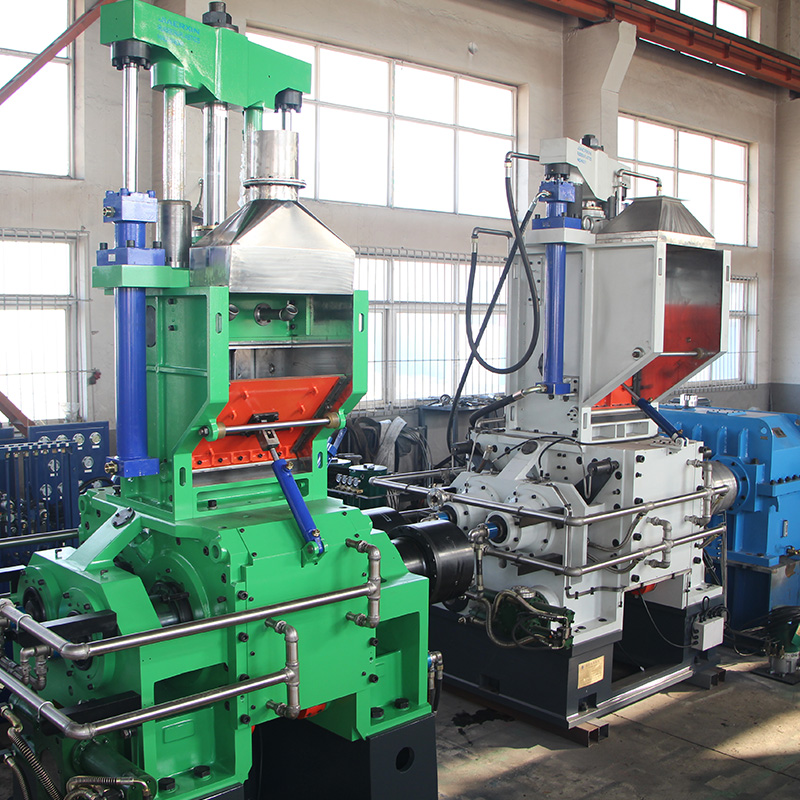 Rubber Banbury Machine for Uniform Compound MixingHydraulic-controlled internal mixer with optimized rotor geometry for even shear and dispersion, supporting consistent batch quality before curing.View Product →
Post-cure is the other half of the story. A four-hour air step at about 150 C drives off residual cure volatiles and tightens compression set, particularly in peroxide-cured Buna-N, and a supplier who skips it will look competitive on price until the parts are aged in the field.
Specifying Buna-N Sheet, Gaskets and Molded Parts
When buying Buna-N in sheet or molded form, four values decide whether the part works: ACN grade, hardness with its tolerance, compression set after the stated aging, and the oil temperature the part will actually see. Everything else is secondary.
- Name the acrylonitrile grade as a percentage, not as "nitrile" or "oil resistant".
- State hardness as a range with a tolerance, for example 70 plus or minus 5 Shore A.
- Quote compression set to a defined method, such as 22 hours at 100 C, and give a limit.
- Declare the cure system and whether a post-cure step is included.
- For sheet stock, confirm storage conditions, shelf life and cut-edge quality for gaskets.
Sheeting is where most of the small-quantity demand sits, and the differences that matter are visible: surface finish, thickness tolerance, fabric insertion and whether the sheet is press-cured or rotocured. A reliable
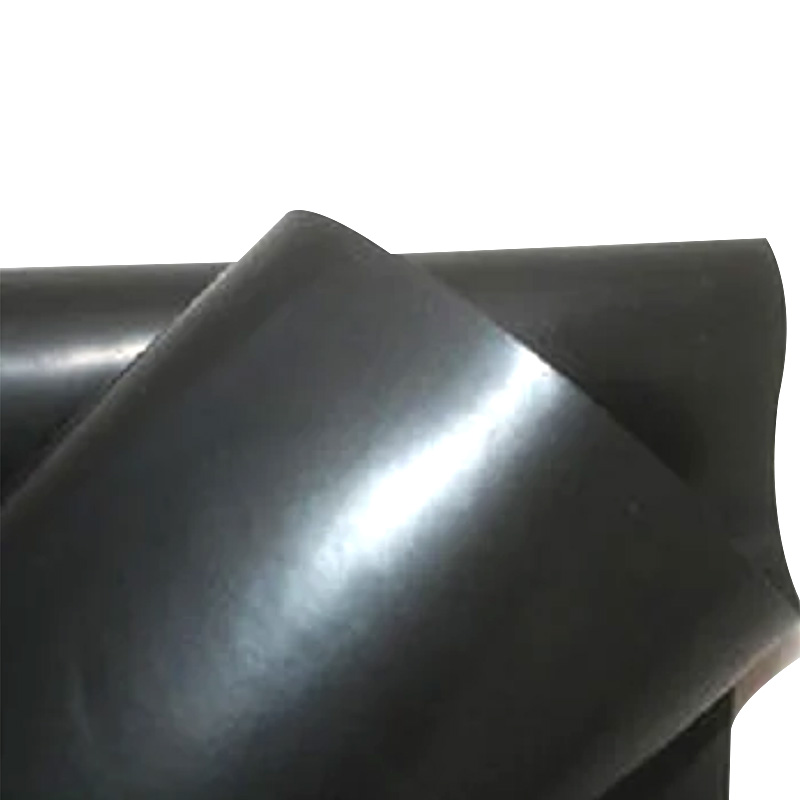 NBR Rubber Sheet for Oil-Resistant Seals and GasketsNitrile sheet available in 1–50 mm thickness and 50–90 Shore A, suited to oil-resistant seals, rings and electronic placement applications.View Product →
A purchase order that says only "nitrile sheet, 3 mm, 70 Shore A" leaves the most expensive variable in the part, the polymer grade, open to whatever the supplier has on the floor. It also removes any basis for a claim when the gasket swells after three months in service.
Frequently Asked Questions About Buna-N Rubber
Is Buna-N the same as NBR?
Yes. Buna-N, NBR and nitrile rubber describe the same butadiene-acrylonitrile copolymer. "Buna-N" is a legacy trade name, while NBR is the abbreviation used in standard material designations and on most modern data sheets.
What temperature range can Buna-N handle?
Most compounds run continuously from about -30 C to +100 C. Low-ACN grades stay flexible below -40 C, and peroxide-cured high-ACN grades hold air service near 110 to 120 C for shorter periods. Above that, another elastomer family is the realistic answer.
Does Buna-N resist brake fluid and other polar fluids?
No. Nitrile is built for non-polar oils and fuels, so glycol brake fluid, ketones, esters and strong acids attack it quickly. Parts that see brake fluid are normally specified in EPDM rather than in any nitrile grade.
How does Buna-N compare with EPDM for outdoor use?
Poorly. EPDM has a saturated backbone and shrugs off ozone and UV, while the butadiene double bonds in nitrile are attacked by both. Nitrile sheet used outdoors needs antiozonant protection, and even then it will crack long before an EPDM part of the same hardness.
Buna-N is neither the most heat-resistant nor the most weather-resistant elastomer on the shelf, but it remains the most cost-effective answer for parts that live in mineral oil, diesel or hydraulic fluid at moderate temperature. Pick the ACN grade first, then the cure system, then the hardness; reversing that order is how most nitrile failures begin. For buyers matching compound to finished part, the rubber products range shows how the same material logic carries from sheet and matting through to molded components.
 Previous
