


 English
 中文简体
 русский
Content
Ask three people what rubber is and you get three different answers: a tree in Southeast Asia, the tyre on a car, and a line on a drawing that says 70 Shore A, black. All three are correct, and the gap between them is where most sourcing arguments begin.
What Rubber Actually Is
Rubber is an elastomer: a polymer network that deforms under load and springs back almost completely once the load is removed. That recoverable stretch is the defining property. Colour, hardness and price all follow from the chemistry underneath it.
Natural rubber is cis-1,4-polyisoprene harvested from Hevea brasiliensis. Synthetic rubber is polymerised from monomers such as butadiene, styrene, isoprene, chloroprene, ethylene and propylene, with fluorine or silicon in speciality grades. Both routes end at the same place: a raw polymer with a Mooney viscosity and almost no useful strength until it is compounded and cured.
400 to 700%
Elongation at break for typical general-purpose compounds
40 to 90
Shore A hardness band covering most seals, mats and tyres
-40 to 120 C
Working window for general grades; speciality grades run wider
Elastomer: a polymer that can be stretched repeatedly to at least twice its relaxed length at room temperature and returns to that length when the force is released. Rubber is the everyday name; elastomer is the engineering one.
The practical consequence is that rubber is a family, not a material. Two parts both described as black rubber can differ by 60 points of hardness, by 150 C of heat resistance, and by a factor of four in price per kilogram.
Natural Rubber: From Latex to Bale
Natural rubber begins as latex, a milky suspension of roughly 30 to 40 percent rubber hydrocarbon tapped from the bark of mature Hevea trees. The latex is coagulated with formic or acetic acid, pressed into sheets or crumb, and dried before it is baled.
How that grading is done decides what you actually receive. Ribbed smoked sheet grades keep high green strength and building tack, which matters for building large parts by hand. Technically specified rubber grades, such as TSR 10 or TSR 20, are sold against limits on dirt, ash, nitrogen and volatile matter, and against a Mooney viscosity window.
- Mooney viscosity and, more importantly, the lot-to-lot spread around it
- Dirt and ash content, both of which disturb carbon black dispersion
- Volatile matter, which shifts weighing accuracy on small ingredients
- Plasticity retention index, a fast indicator of ageing resistance
Natural rubber earns its place through tensile strength, tear resistance, fatigue life and tack. Its limits are equally clear: it swells in oils and fuels, cracks under ozone, and ages quickly above roughly 90 C in continuous service.
Synthetic Rubber: Choose the Chemistry First
Synthetic rubber is produced by polymerising petroleum-derived monomers, and that control is the whole point: you can specify oil resistance, ozone resistance, or a 200 C service temperature that natural rubber will never reach.
| Family | Main strength | Service range | Oil resistance |
| SBR | Abrasion resistance, cost | -50 C to 100 C | Poor |
| NBR | Oil, fuel and grease resistance | -30 C to 120 C | Excellent |
| EPDM | Ozone, weather, steam and water | -50 C to 150 C | Poor |
| CR | Flame resistance, weather ageing | -40 C to 120 C | Good |
| FKM | Heat and aggressive chemicals | -20 C to 200 C | Excellent |
| VMQ | Wide temperature band, inertness | -60 C to 200 C | Fair |
Within a family, the grade is a dial. In NBR, acrylonitrile content decides the balance: around 18 percent keeps flexibility at low temperature, while 45 percent maximises oil resistance at the cost of cold performance. Specify the ACN band, not just the word nitrile.
EPDM is a good illustration of how chemistry translates into a stock item. The same polymer that seals a car door also ships as a weather-facing sheet for roofing, pond liners and industrial matting.
 EPDM Rubber Sheet for Outdoor Sealing and ProtectionWeather-, ozone- and aging-resistant rubber sheet suited to roofing, pond liners, seals and protective pads where long outdoor exposure is expected.View Product →
Natural rubber
- Highest tensile and tear strength of the general families
- Excellent tack for building and lining work
- Weak against oil, ozone and continuous heat above 90 C
Synthetic rubber
- Property tuned by monomer choice and ratio
- Consistent supply and more predictable cure behaviour
- Usually dearer per kilogram, lower tack, narrower green strength
Match the environment first, the mechanical duty second, and price third. Reversing that order is how a cheap seal becomes an expensive warranty claim eighteen months later.
For a data-level comparison of oil, heat, weather and abrasion performance across these families, this breakdown of synthetic rubber properties is a useful reference point before you fix a compound.
The Process Chain: Mix, Shape, Cure
Every rubber part, from a 2 mm O-ring to a 15 mm conveyor belt cover, passes through three stages: mix the compound, shape it, then cure it. Most quality problems are decided in the first stage and only discovered in the third.
Mixing
An internal mixer or open mill blends polymer, carbon black, process oil, activator and curatives. Cycle times of 2 to 4 minutes and discharge temperatures of 110 C to 160 C are typical, and carbon black dispersion is the number that predicts the rest.
Shaping
Calendering produces sheet from about 0.2 mm upward with thickness held inside a tolerance; extrusion produces profiles, hoses and tread sections. Both depend on compound viscosity staying stable from lot to lot.
Curing
Heat and pressure convert the shaped blank into a cross-linked part, whether in a platen press, on a rotocure drum, or through a continuous vulcanisation line.
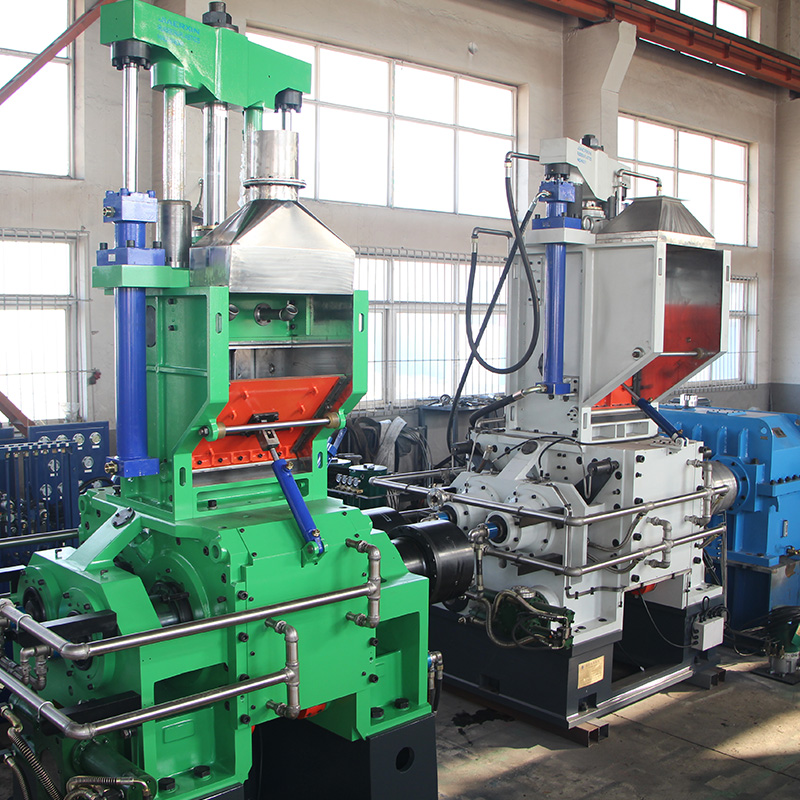 Rubber Banbury Machine for Uniform Compound MixingHydraulic-controlled mixer with optimized rotors for dispersing rubber compounds, suited to tire, hose, seal and shoe production where consistent mixing supports downstream processing.View Product →
In sheet production, the forming step is where thickness tolerance and surface finish are won. A three-roll calender gives a more stable sheet than a two-roll unit when the compound is stiff, because the extra pass irons out gauge variation before the sheet leaves the last nip.
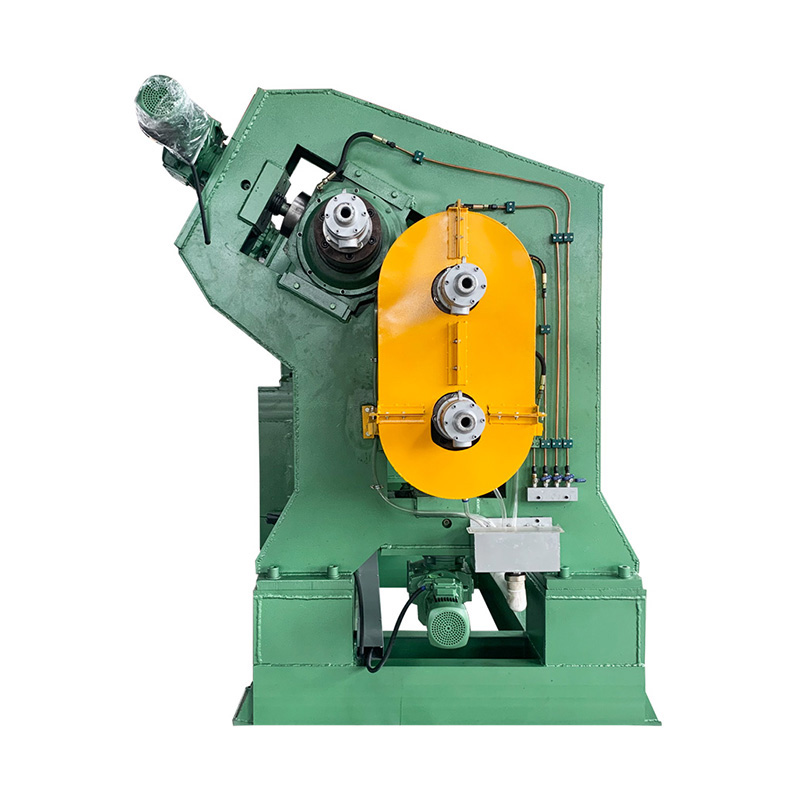 Three-Roll Rubber Calender for Sheet CoatingPLC-controlled calender with drilled rolls for continuous rubber sheet coating and pure sheet calendering, where stable gauge and surface finish matter.View Product →
A compound that leaves the mixer at 145 C instead of 120 C has already started to scorch. Drop-temperature logging on the mixer costs far less than a rejected batch of moulded parts.
Reading a Rubber Specification Without Getting Fooled
A rubber specification is only meaningful when hardness, tensile strength, elongation, compression set and the test standard appear together. Any single number can be met by a compound that fails in service.
| Property | Typical value | What it controls | Common trap |
| Hardness | 40 to 90 Shore A | Sealing force and fit | Quoted without tolerance; five points of drift visibly changes stiffness |
| Tensile strength | 12 to 25 MPa | Resistance to tearing under load | Sold as durability, yet it says little about fatigue life |
| Elongation at break | 200 to 700% | Flexibility margin | Measured on a new part, never on an aged one |
| Compression set | 15 to 35% after 22 h at 70 C | Sealing after long static load | Tested at a temperature colder than the application |
| Tear strength | 20 to 60 kN/m | Cut growth resistance | Compared across different test methods |
Ask for the standard, the specimen thickness and the conditioning time. A hardness figure without those three details is a marketing statement, not a specification.
Line callouts help close that gap. A designation in the style of ASTM D2000 or ISO 3302 ties hardness, tensile strength and heat ageing into one code, so a supplier cannot quietly substitute a 60 Shore A blend for the 70 Shore A NBR you approved.
Matching Rubber to the Application
Start with the environment the part will live in, then the mechanical duty, then the price. That order prevents the most common outcome: a compound that is cheap, easy to mould, and fails at month eight.
- Temperature, both continuous and peak, including cleaning cycles
- Contact media: oil, fuel, water, steam, ozone, food, disinfectants
- Static or dynamic duty, and the number of cycles expected over life
- Load and compression, plus the set that can be tolerated
- Regulatory limits: flame, electrical, food contact, restricted substances
Failure modes point straight back to the compound decision. Hardening and fine cracking usually mean heat ageing. Surface crazing on an unstressed outdoor part usually means ozone. Swelling, softening and strength loss usually mean the oil resistance was wrong. A seal that stays flat after the load is removed is showing compression set, not a moulding defect.
Buy the environment, not the price list. A compound selected for cost per kilogram will eventually be judged on cost per year.
Where the application is flooring, matting or general sheeting rather than a moulded seal, the compound usually arrives as a finished sheet and the buying decision is about surface pattern and thickness. The rubber products range shows how those grades are grouped by industry, which is a faster starting point than a polymer name.
Frequently Asked Questions
Is rubber a plastic?
No. Plastics are usually thermoplastic, so they soften and flow again when heated. Rubber is cross-linked during vulcanisation, so it will not melt and reflow; pushed far enough it degrades instead. Thermoplastic elastomers behave like rubber and process like plastic, but ordinary cured rubber is a different material class.
What is the difference between natural and synthetic rubber?
Natural rubber comes from Hevea latex and offers high tensile strength, tear resistance and building tack, but poor oil and ozone resistance. Synthetic rubber is polymerised from monomers and can be engineered for oil, heat, ozone or chemical resistance, usually at a higher price per kilogram and with lower tack.
How hard can rubber be?
Most industrial compounds sit between 40 and 90 Shore A. Below 40 Shore A the material behaves like a soft gel or sponge; above 90 Shore A, polyurethane or an engineering plastic is usually the better answer. Ebonite, a heavily cross-linked hard rubber, is measured on the Shore D scale.
Why does a rubber part fail before its rated life?
In most cases the compound was acceptable but the environment was under-specified: an oil splash, a cleaning agent, an ozone-rich corner of the plant, or a higher continuous temperature than the data sheet assumed. Confirm the real service temperature and contact media, then re-check compression set and tensile retention after ageing.
Still deciding? Write down the service temperature, the contact media and the expected cycle life. Those three lines usually narrow a rubber selection to two or three candidate compounds.
 Previous
