


 English
 中文简体
 русский
Content
- 1 What the Density of Rubber Actually Measures
- 2 Rubber Density Chart: Typical Values by Elastomer
- 3 What Pushes Rubber Density Up or Down
- 4 How to Measure Density of Rubber Compound
- 5 Density and Hardness Are Not the Same Number
- 6 Where a Density Figure Changes the Production Line
- 7 Frequently Asked Questions
A cubic metre of pure gum natural rubber weighs about 920 kg. Fill that same cubic metre with a carbon-black nitrile compound and it can reach 1,250 kg; switch to a fluoroelastomer compound and it passes 1,900 kg.
Rubber is one of the few material families where a single density number is close to meaningless without the compound behind it. Mixer operators, calender hands, costing engineers and buyers all work from the same figure, but they spend it in different currencies: batch weight, kilograms per square metre, kilograms per running metre, container payload.
What follows is a working reference: what the density of rubber actually measures, typical values by elastomer, how fillers and plasticizers move the number, how to test it, and where a 0.1 g/cm3 error turns into real money on a production line.
What the Density of Rubber Actually Measures
Density of rubber is the mass of a unit volume of the finished compound, quoted in grams per cubic centimetre (g/cm3) or kilograms per cubic metre (kg/m3). It describes the compounded, vulcanized material, not the raw polymer on its own.
Density = mass divided by volume. A density figure is only honest when it carries three things with it: the compound it belongs to, the cure state, and the test temperature. 23 C is the industry reference point.
Specific gravity is the same number wearing a different label. It is density divided by the density of water at 4 C, which is 1.000 g/cm3, so a compound measuring 1.15 g/cm3 has a specific gravity of 1.15. Only the unit changes, never the value.
- 1 g/cm3 = 1,000 kg/m3 = 1.0 Mg/m3
- 1 g/cm3 = 62.4 lb/ft3
- 1 kg/m3 = 0.001 g/cm3
- 1.20 g/cm3 = 1,200 kg/m3 = specific gravity 1.20
0.91-0.93Pure gum natural rubber, g/cm3
1.10-1.25Typical black-filled compound, g/cm3
1.85-2.00FKM fluoroelastomer compound, g/cm3
0.06-0.25Sponge and foam rubber, g/cm3
Rubber Density Chart: Typical Values by Elastomer
Most solid rubber compounds land between 0.9 and 1.4 g/cm3; only heavily filled, halogenated or metal-oxide-loaded compounds climb above 1.5.
| Rubber type | Base polymer, g/cm3 | Compound, g/cm3 | What drives the value |
| Natural rubber (NR) | 0.91-0.93 | 1.05-1.25 | Lightest of the general purpose elastomers |
| SBR | 0.93-0.95 | 1.10-1.25 | Carbon black loading dominates |
| NBR | 0.98-1.00 | 1.15-1.30 | Rises slightly with acrylonitrile content |
| EPDM | 0.86-0.87 | 1.05-1.20 | Lowest base polymer, accepts high filler loads |
| CR (neoprene) | 1.23 | 1.30-1.45 | Chlorine content lifts the baseline |
| Butyl (IIR) | 0.92-0.94 | 1.10-1.25 | Low filler structure, moderate oil |
| Silicone (VMQ) | 0.97-1.00 | 1.10-1.25 | Silica filler sets the final figure |
| FKM | 1.80-1.85 | 1.85-2.00 | Fluorine content, heaviest common elastomer |
| Sponge and foam | Not applicable | 0.06-0.25 | Blowing agent and cell structure |
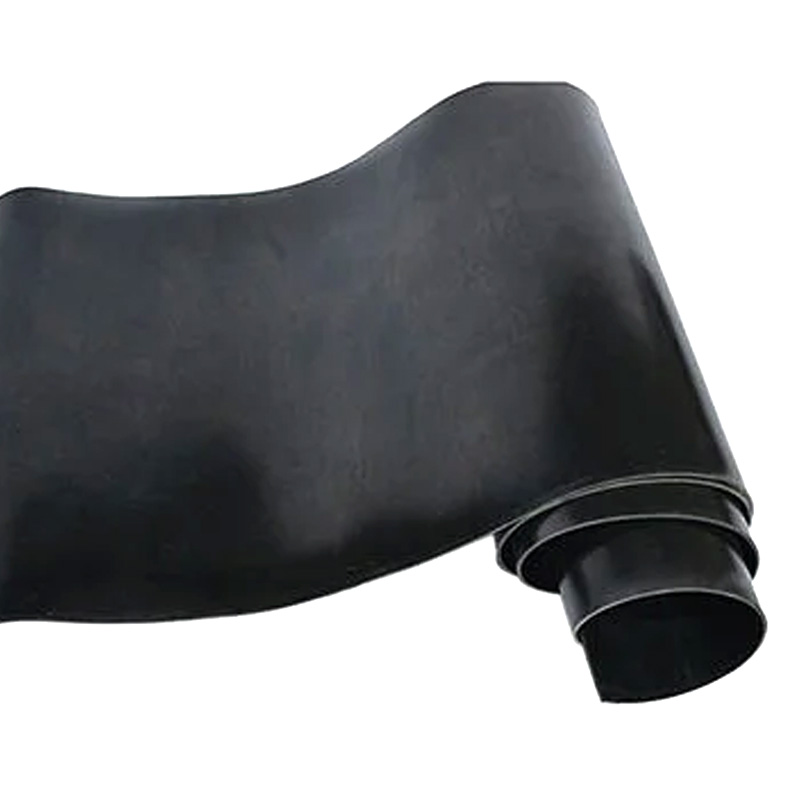 EPDM Rubber Sheet for Outdoor Sealing and ProtectionEPDM rubber sheet is suited to outdoor sealing and protection, and its compound density fits the solid-rubber range discussed nearby.View Product →
Two columns matter here. The base polymer column tells a compounder where the formulation starts before any filler goes in. The compound column is what a buyer, a freight forwarder and a costing sheet actually deal with. A 0.15 g/cm3 spread inside one grade is normal between suppliers, because black grade, oil type and cure system all move the final value.
Compound choice also decides heat, oil and abrasion behaviour, which is a separate decision from weight; comparing synthetic rubber properties side by side is the practical way to balance the two.
Rule of thumb: an EPDM compound sits near 1.10-1.20 g/cm3, an NBR compound near 1.15-1.30 g/cm3, and an FKM compound at 1.85 g/cm3 or higher. If a quoted figure falls outside its band, ask for the test method before you argue about the price.
What Pushes Rubber Density Up or Down
Fillers raise compound density, plasticizers and process oils lower it, and a blowing agent cuts it by an order of magnitude.
Carbon black sits near 1.8 g/cm3, precipitated silica near 2.2, calcium carbonate near 2.7, hard clay near 2.6 and zinc oxide at 5.6. Every one of them is heavier than the polymer phase, so each extra 10 phr of carbon black adds roughly 0.03 g/cm3 to the compound. Paraffinic and aromatic oils sit at 0.85-0.95 g/cm3, which means trading 15 phr of black for 15 phr of oil pulls density back down by about 0.05.
Values above assume a 0.95 g/cm3 base polymer and N330 black, no oil. They are indicative, not a substitute for a weighed sample.
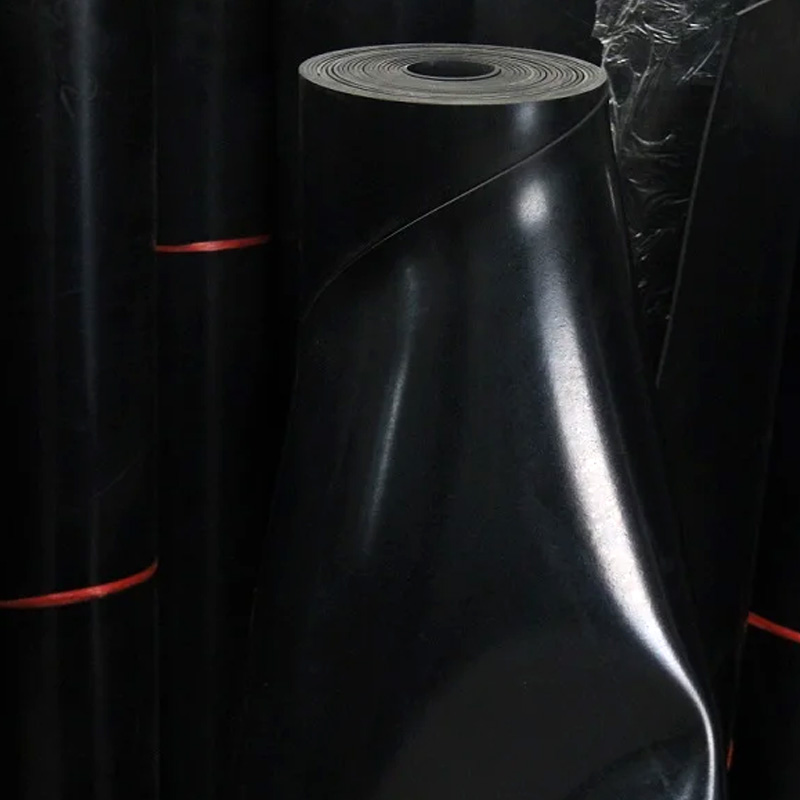 FKM/Viton Rubber Sheet for High-Temperature Chemical SealingFKM sheet targets high-temperature, oil- and chemical-resistant sealing, and its fluorine-based density explains the heavier compound values noted nearby.View Product →
Fluorine explains why FKM compounds are the heaviest of the common elastomers: the polymer itself starts at 1.80 g/cm3, so even a lightly filled compound cannot drop below about 1.85. Silicone sits at the other end of the specialty range, with compounds usually between 1.10 and 1.25 g/cm3.
Foam rewrites the arithmetic. A closed-cell sponge at 0.15 g/cm3 holds only about one-seventh of the material in a solid compound of the same volume, and that gap shows up directly in freight cost and in how the part behaves under compression.
Two compounds can both measure 70 Shore A and still differ by 0.30 g/cm3. Specify density and hardness as separate requirements, or the compounder will optimise only the one you actually named.
How to Measure Density of Rubber Compound
For vulcanized rubber the reference method is hydrostatic weighing under ISO 2781; for a flat slab or gasket, mass divided by geometric volume is close enough for incoming inspection.
- Cut a void-free specimen of 1-5 g, trimmed of flash, fabric and mould release residue.
- Condition it at 23 C for at least 30 minutes and record the mass in air (m1).
- Weigh the same specimen fully immersed in distilled water with a wetting agent (m2), on a balance readable to 0.1 mg.
- Divide m1 by the difference between the two masses, then multiply by the water density at the measured temperature.
- Run three specimens and report the mean; a spread above 0.02 g/cm3 points to trapped air or uneven filler dispersion.
Density = m1 / (m1 - m2) x water density
ASTM D297 covers the chemical and physical analysis of rubber products and includes a density procedure; ASTM D792 is the parallel method for plastics and is often applied to rubber-modified parts. Whichever standard appears on the report, the temperature and the method belong on the report too, because differences between 0.02 and 0.05 g/cm3 usually come from procedure rather than material.
Density and Hardness Are Not the Same Number
Density tells you how much mass a volume of rubber contains; hardness tells you how the surface resists indentation. One can move while the other stays flat.
Density
- Mass per unit volume, in g/cm3
- Set by polymer, filler loading, oil and porosity
- Governs batch weight, sheet mass and freight
Hardness
- Indentation resistance, in Shore A or IRHD
- Set by filler structure, crosslink density and plasticizer
- Governs sealing force, grip and deflection
A soft, heavily filled compound can weigh more than a hard, lightly filled one. Sponge seals regularly measure 20 Shore A or softer while sitting below 0.4 g/cm3. Treating density as a hardness proxy produces rejected batches that met every real requirement.
Never accept a density value as evidence of hardness, and never accept a Shore A figure as evidence of compound weight. The two numbers answer different questions.
Where a Density Figure Changes the Production Line
Density converts volume into weight, and a rubber plant batches, prices and ships in both currencies at the same time.
Inside an internal mixer the chamber volume is fixed, so the batch is charged by fill factor, normally 0.7-0.85 of chamber volume. Moving from a 1.10 to a 1.25 g/cm3 compound puts roughly 14 percent more material by weight into the same chamber, while ram pressure and mixing time do not follow automatically. That is why a compound change deserves a fresh mixing trial instead of a recalculated batch card.
5 mm sheet at 1.20 g/cm36.0 kg per square metre
- Calendering: sheet mass per square metre is thickness times density. A 5 mm sheet at 1.45 g/cm3 runs 7.25 kg/m2, which changes winder tension, roll crown and handling equipment.
- Extrusion: output quoted in kg/h converts to m/min only after density is fixed. A profile at 1.35 g/cm3 yields about 12 percent fewer metres per hour than the same kg/h on a 1.20 g/cm3 compound.
- Conveyor belting: mass per running metre sets drive power, idler load and splice strength, so density belongs in the belt specification next to cover grade and tensile strength.
- Freight: dense sheet goods hit a container payload limit before a volume limit, so density quietly decides how many rolls actually ship.
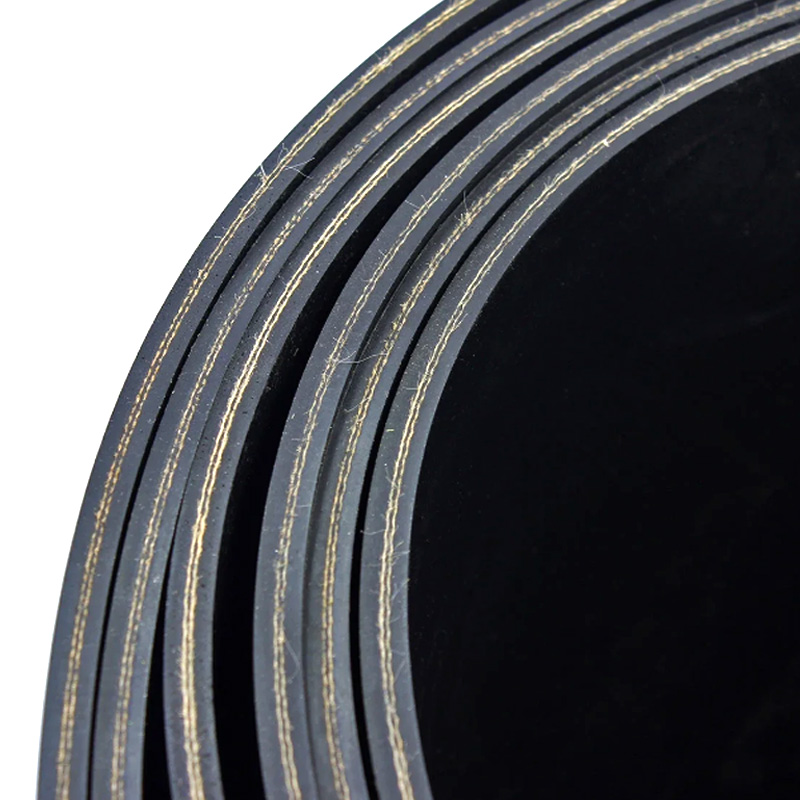 Rubber Conveyor Belts for Mining and Bulk Material HandlingRubber conveyor belts combine wear-resistant rubber with fiber fabric for bulk conveying, fitting the weight-by-area and length purchasing pattern described nearby.View Product →
Sheet, mat and belt goods are where the numbers become visible on a purchase order, because those products are bought by area or length and paid for by weight; the wider rubber products range shows how one compound family ends up in very different finished weights.
Frequently Asked Questions
What is the density of natural rubber?
Pure gum natural rubber measures about 0.91-0.94 g/cm3. A practical natural rubber compound with 40-60 phr carbon black usually lands between 1.05 and 1.25 g/cm3, depending on filler grade and oil content.
Is rubber density given in kg/m3 or g/cm3?
Both are used. Multiply g/cm3 by 1,000 to get kg/m3, so 1.15 g/cm3 equals 1,150 kg/m3. Specific gravity uses the same number as g/cm3 with no unit at all.
Why is my compound heavier than the datasheet value?
Filler dosing tolerance, oil loss during mixing and cure volatiles all shift the result. A spread of 0.03 g/cm3 either side is normal; beyond 0.05 g/cm3 usually means a weighing error or a substituted filler.
Does higher density rubber wear longer?
Not by itself. Abrasion resistance comes from the polymer, the filler system and the cure state. A dense compound can wear faster than a lighter one if its crosslink network is wrong, so treat density as a weight and cost parameter rather than a durability rating.
Practical summary: quote density with the compound name, test at 23 C, keep the method on the report, and convert to kilograms before the purchase order is signed.
 Previous
