


 English
 中文简体
中文简体 русский
Content
Picture a plant that has just installed a high-precision four-roll calender. The roll face is ground to a mirror finish, but the rubber compound coming from the upstream mixer varies in viscosity from batch to batch. Sheet thickness drifts by 0.05 mm, and the calender gets all the blame. In reality, the problem started earlier in the line.
Rubber processing machinery is a chain, not a collection of standalone tools. Mastication, mixing, forming, and curing must work with the same viscosity, temperature range, and cycle discipline. If you evaluate machines only from individual spec sheets, you risk bottlenecks, defects, and longer-than-planned commissioning.
This guide focuses on the equipment groups that define a rubber processing line, the technical parameters that matter in daily operation, and the buying practices that separate a smooth launch from a costly one. Common mistakes include oversized mixers that force calenders to wait, or undersized presses that create backlogs. A balanced line starts with the compound and the final part tolerance, not with the biggest machine available.
Start With a Consistent Mix: Internal Mixers and Mills
The first major process step is mixing. An internal mixer with interlocking rotors shears the rubber and disperses carbon black, oils, and curing agents in a controlled way. Reproducible cycle times, discharge temperature, and rotor speed are more important than sheer capacity. Many compound quality problems appear only at the calender or press, but they originate here.
When you compare mixing equipment, look at:
- Batch size and fill factor, matched to the rest of the line.
- Rotor geometry and friction ratio, which affect dispersion.
- Cooling or heating control, because viscosity changes quickly with temperature.
- Discharge system, especially a drop door for shorter cycles.
A reliable Banbury internal mixer with accurate temperature control can keep viscosity drift below the threshold that causes downstream thickness variations. For lower volumes, a rubber kneader machine is an alternative to a high-shear internal mixer. It uses a different rotor shape and lower rotor speed; it is easier to clean but often has longer cycle times. If you mostly run dark masterbatches, a Banbury machine remains the industry default.
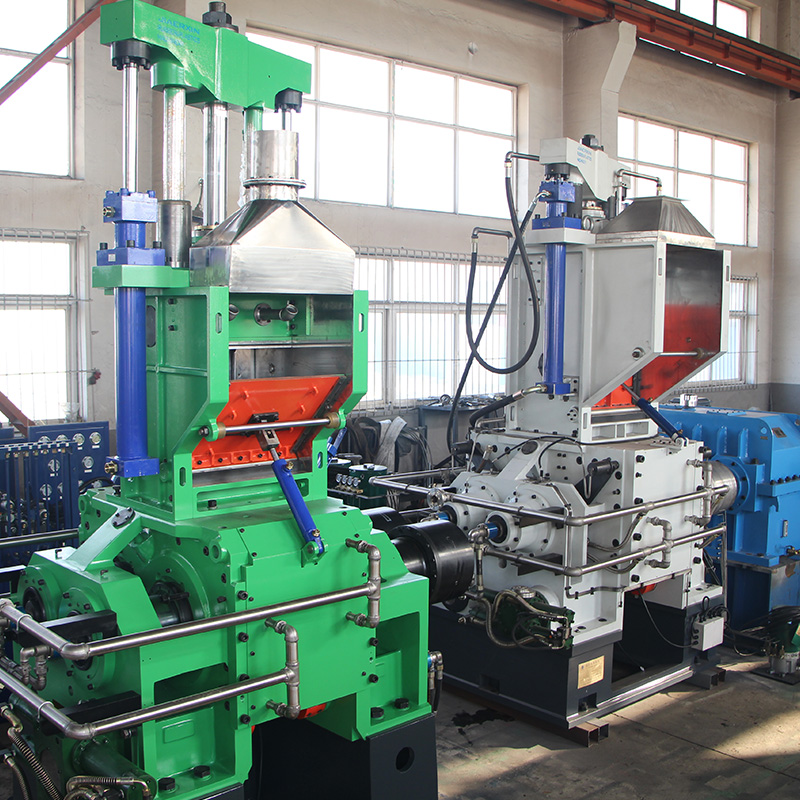 Rubber Banbury Machine Suppliers, Company - Anhui Sincere Machinery Co., Ltd.As top Rubber Banbury Machine Suppliers and Company in China, Sincere Machinery offer Custom Rubber Banbury Machine for sale, In the fiel...View Product →
Move to Uniform Sheets: Calender Roll Configuration
Once the compound is mixed, many rubber products are formed into sheets. The calender controls thickness and surface quality, but only if the compound arrives as a consistent mass. The number of rolls determines how many nips the material passes through, which directly affects tolerance control.
- A two-roll calender is adequate for frictioning or simple sheeting where thickness tolerance is relaxed.
- A three-roll calender gives the material a more controlled final nip and is the most common configuration for general rubber sheets.
- A four-roll calender adds an additional smoothing pass, which helps for thin films and coated fabrics, but at a higher cost and complexity.
For many producers, a three-roll rubber calender gives the best balance of tolerance and operating cost. If you need thinner films or very tight tolerances, a four-roll machine may be justified. Before choosing, look at roll diameter, face width, nip adjustment accuracy, and roll surface finish. Roll surface hardness also matters: hardened rolls resist scratches and require less frequent re-grinding, which reduces downtime in the long run. A more detailed calender roll configuration guide can help you map product thickness to the number of rolls.
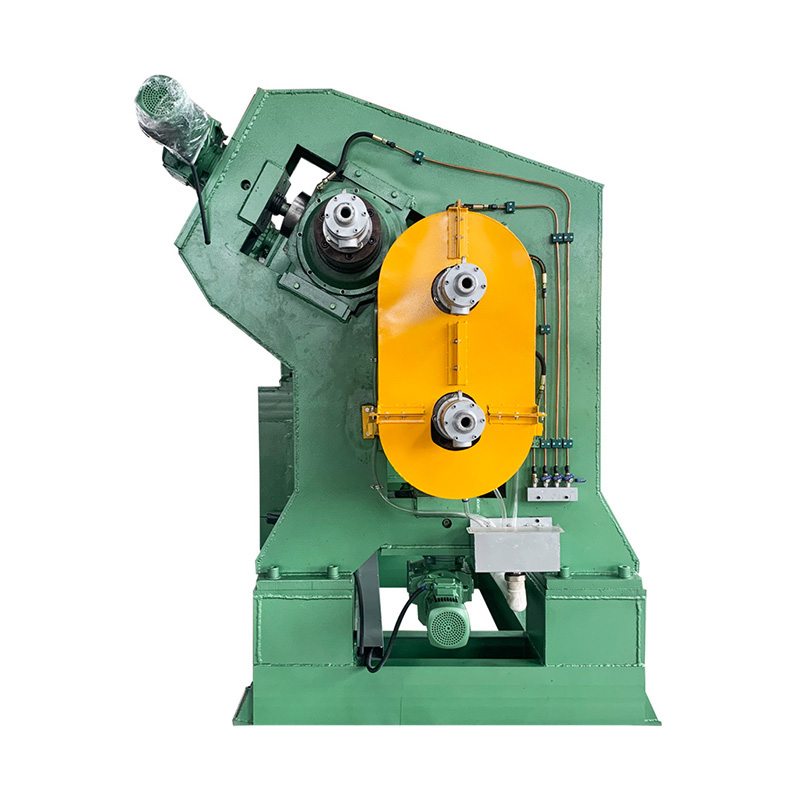 3 Rolls Rubber Calender Machine Suppliers, Company - Anhui Sincere Machinery Co.As top 3 Rolls Rubber Calender Machine Suppliers and Company in China, Sincere Machinery offer Custom 3 Rolls Rubber Calender Machine for...View Product →
Shape and Cross-Link: Extrusion and Vulcanizing
After calendering, some products move to extrusion, where a screw forces rubber through a die to create profiles, hoses, and seals. Cold-feed extruders are easier to operate because they accept mixed strip directly; hot-feed extruders work at higher output for large volumes. Both need tight temperature control along the barrel to avoid scorch.
For molded products, the vulcanizing press applies heat and pressure to cure the rubber into its final shape. Pay attention to platen parallelism, heating uniformity, and closing force. If the platens vary by more than a few degrees across the surface, cure time and hardness will vary across the part. Ask for heat-up and recovery time data when you compare quotes.
For rubber parts with deep cavities or a tendency to trap air, a vacuum moulding press is a practical upgrade. The vacuum chamber reduces porosity and shortens production time because fewer parts need reworking.
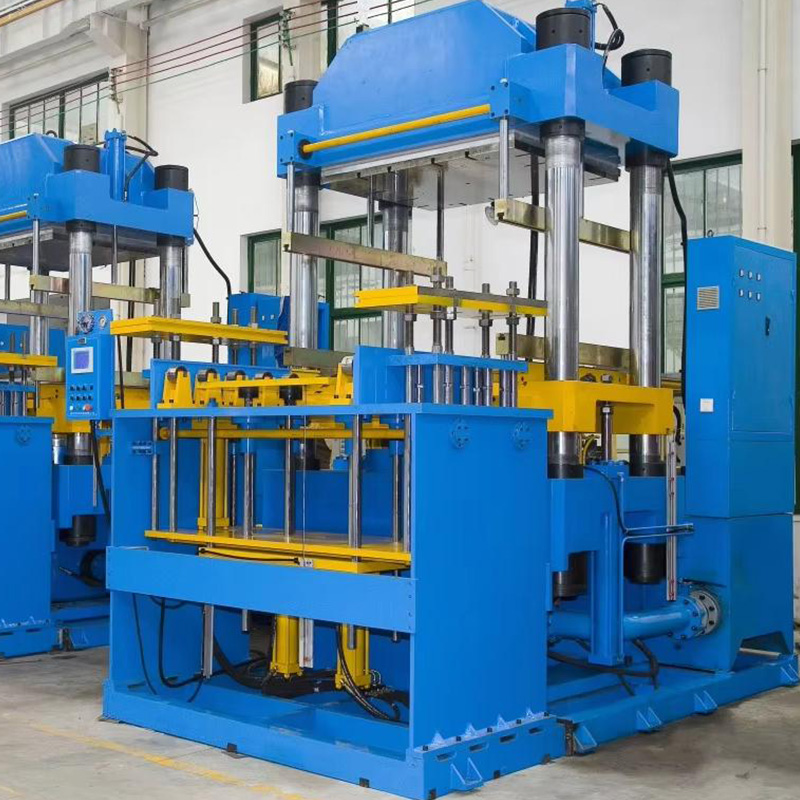 Vacuum Moulding Press Suppliers, Company - Anhui Sincere Machinery Co., Ltd.As top Vacuum Moulding Press Suppliers and Company in China, Sincere Machinery offer Custom Vacuum Moulding Press for sale, Brief Introdu...View Product →
Compare Machine Quotes With a Structured Table
To avoid vague comparisons, put the key process values into a table before you negotiate with suppliers. This helps you compare machines beyond the brochure and prevents unexpected mismatches between consecutive stages.
| Criterion | Mixing | Calendering | Curing |
|---|---|---|---|
| Throughput | kg per batch and cycles per hour | meters per minute and sheet width | cycles per hour, number of cavities |
| Temperature uniformity | within 3 degrees C from batch to batch | roll surface temperature profile across the face | platen temperature profile across the surface |
| Precision | dispersion rating and batch-to-batch viscosity | thickness tolerance in mm | flash thickness and part hardness repeatability |
| Automation | recipe management and automatic discharge | automatic nip adjustment and fault alarms | cure time counters, data logging |
| Maintenance | rotor seal life and wearing part replacement | roll re-grinding interval | platen leveling and heater element access |
If a quote does not state these values in numbers, ask for them. A supplier that cannot specify temperature uniformity or thickness tolerance will have a hard time delivering a repeatable process.
Why a Supplier That Also Makes Rubber Goods Is a Better Partner
Machinery buyers often rely on independent suppliers who have never run the equipment for their own products. Working with a manufacturer that also produces rubber sheets, mats, and technical goods changes the conversation. The supplier already knows the process pitfalls: how a mixer discharge temperature affects calender bite, how roll finish changes surface defects, and how platen temperature gradients appear in molded parts.
Because we build and operate the equipment in our own factory, we can validate your compound, recommend settings, and train your operators based on real production data. Our rubber processing solutions cover the complete line, from mixing to final curing, and reduce the integration risk that often appears when machines come from different vendors. You also get spare parts and service advice that reflects actual operating conditions rather than theoretical use cases.
The Bottom Line
Do not buy rubber processing machinery from brochures alone. Start with the compound and the part tolerance, then select an internal mixer, calender, extruder, and press that operate as one balanced line. Compare quantitative values for temperature control, precision, and automation.
At Anhui Sincere Machinery, our equipment is used daily in our own rubber products, which is why we understand the weak points and how to eliminate them. If you are planning a new line or upgrading an existing one, ask for process data, not just prices.
 Previous