


 English
 中文简体
 русский
Content
Styrene-butadiene rubber sits behind more of the objects in a rubber factory than any other single polymer: roughly half of the world's synthetic rubber output is SBR, and about 70 percent of that volume ends up in tires, with the balance going into belting, hose, footwear, mats and molded parts. What a plant engineer usually needs is not a chemistry lecture but a clear answer on which grade to buy, how it mixes, and what it changes in the curing cycle.
~50% Share of global synthetic rubber output accounted for by SBR
23.5% Bound styrene in the standard cold emulsion grade SBR 1500
0.94 Specific gravity of raw SBR, in grams per cubic centimetre
What Styrene-Butadiene Rubber Is
Styrene-butadiene rubber is a synthetic copolymer of styrene and butadiene, delivered as bales, crumbs or latex and vulcanized with sulfur on the same lines used for natural rubber.
SBR is an unsaturated copolymer in which the butadiene segments supply the double bonds used by sulfur crosslinking, while the styrene segments stiffen the chain, raise the glass transition temperature and improve wet grip. Shift the ratio of the two monomers and both the processing behaviour and the final properties move with it.
Two production routes cover almost the entire market. Emulsion SBR is polymerized in water at 5 C or 50 C and dried into bales; solution SBR is polymerized in a hydrocarbon solvent and then stripped. The practical difference is chain architecture rather than chemistry, and it shows up in tack, filler acceptance and heat build-up.
| Property | Emulsion SBR | Solution SBR |
| Polymerization | Water-based emulsion at 5 C or 50 C | Anionic polymerization in hydrocarbon solvent |
| Typical bound styrene | 23.5 percent in grades such as 1500 and 1502 | 20 to 25 percent, adjustable inside the reactor |
| Molecular weight distribution | Broad, with a measurable gel fraction | Narrow and tightly controlled |
| Mixing behaviour | Higher tack, accepts heavy black and oil loading | Needs closer temperature control, disperses filler well |
| Heat build-up | Higher hysteresis under cyclic load | Lower hysteresis, preferred for low rolling resistance |
| Typical use | Tire carcass and tread, belt, hose, general molded goods | Performance tread, footwear, technical compounds |
Grades are numbered rather than named. SBR 1500 is the standard cold emulsion grade, 1502 is the light-colored non-staining version, and 1712 is oil extended with 37.5 phr of aromatic oil. That last figure matters in the formula room: an oil-extended bale already carries roughly a third of its own weight in plasticizer, so the oil added on the mill has to come down accordingly.
Property Profile and Grade Selection
A carbon-black reinforced SBR compound typically reaches 18 to 25 MPa tensile strength, 400 to 600 percent elongation at break and 55 to 70 Shore A hardness once it is properly cured.
18-25 MPa tensile strength, black filled
400-600 Percent elongation at break
55-70 Shore A hardness band
-50 Degrees Celsius, plasticized low-temperature limit
Where SBR earns its place
- Abrasion resistance that matches or beats natural rubber in tread compounds.
- Better heat aging and ozone resistance than NR, because the residual double bonds are less reactive.
- Stable pricing tied to oil refining rather than to a harvest season.
- Reliable low-temperature flexibility when the plasticizer package is chosen properly.
Where it gives ground
- Low green strength and poor tack, so plies need a tackifier or solvent wipe.
- Tear strength and cut growth resistance below natural rubber.
- Slower cure, which means more accelerator or a longer cycle.
- No oil resistance; that requirement belongs to NBR, not SBR.
Cure systems stay conventional: sulfur with a sulfenamide accelerator, usually at 150 to 160 C, with zinc oxide and stearic acid as activators. Because SBR cures more slowly than NR, most factories tune the accelerator-to-sulfur ratio rather than pushing the press temperature, which protects thick sections from scorch.
How SBR Moves Through Mixing, Calendering and Curing
SBR runs on the same equipment as natural rubber, but it wants a hotter dump, tighter dispersion control and a tackifier to hold the compound together.
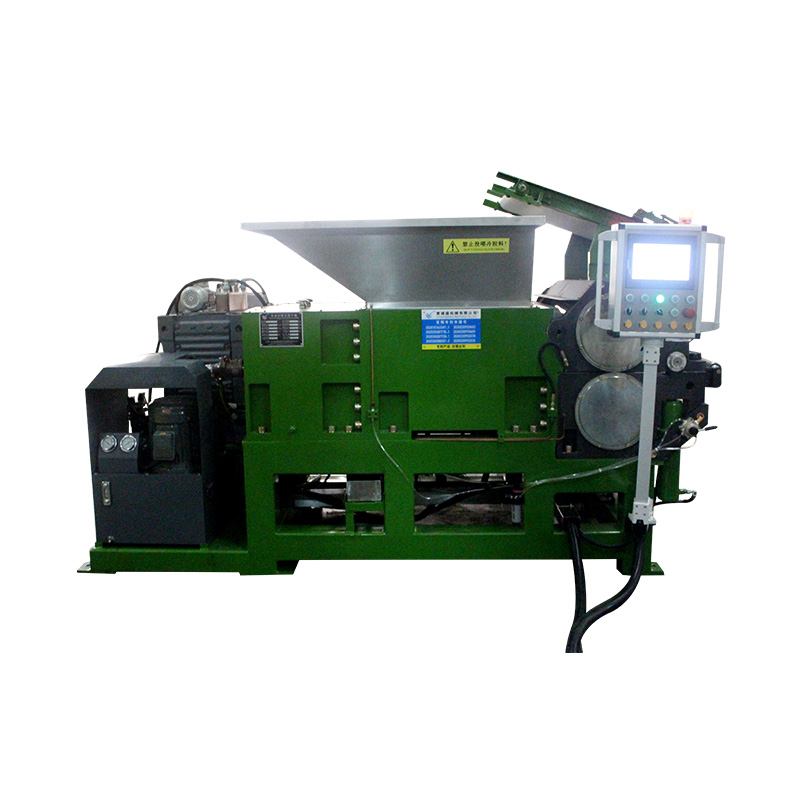 Rubber Banbury Mixer for Compound MixingPositioned before forming, this Banbury mixer offers hydraulic control, optimized rotors and drop discharge for uniform dispersion in SBR compound preparation.View Product →
- Weighing and feeding. Carbon black at 50 to 55 phr for tread grades, plus oil, zinc oxide, stearic acid and antioxidant. Small errors in black weight show up later as hardness scatter.
- First-stage mixing. Internal mixer with ram pressure and rotor speed set for the batch size. Dump temperature usually lands between 140 and 155 C, higher than a typical NR masterbatch.
- Second stage. Accelerator and sulfur go in below 100 C so the compound does not scorch on the mill.
- Sheeting out and cooling. Open mill or extruder dump, then strip cooling before the batch is stacked.
- Forming and curing. Calender for sheet, extruder for profiles, press or continuous line for vulcanization.
Forming is where SBR punishes loose settings. On a calender, sheet thickness is governed by roll gap, roll temperature and bank size together, and a drifting bank will show up as thickness variation across the width long before it shows up in a tensile test. Extruded profiles need die swell allowances of 8 to 15 percent depending on stock hardness.
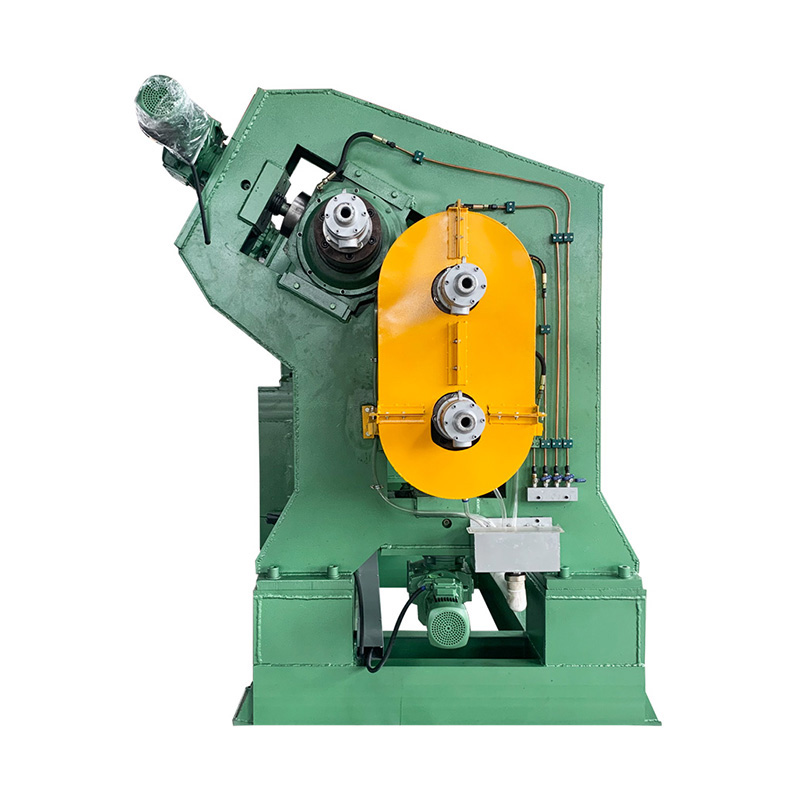 Three-Roll Rubber Calender for Sheet CoatingFor forming SBR sheets, this calender uses drilled rolls, adjustable spacing and PLC control to coat woven materials and calendered rubber at controlled thickness.View Product →
What to Check Before You Accept an SBR Batch
Bound styrene, Mooney viscosity, volatile matter and ash are the four numbers that decide whether a new batch mixes like the last one.
- Bound styrene within one percentage point of the agreed value, otherwise hardness and grip both drift.
- Mooney viscosity ML(1+4) at 100 C, commonly 45 to 55 units for a 1500 grade. A five-unit swing changes mixing energy noticeably.
- Volatile matter at or below 0.75 percent, since moisture drives porosity in thick sections.
- Ash at or below 1.0 percent, a quick indicator of contamination or residual emulsifier.
- Oil type and oil content for extended grades, because aromatic and naphthenic oils behave differently in low-temperature service.
- Gel content and visible contamination for light-colored 1502 grades used in sheeting.
A ten-point Mooney shift is not a paperwork issue. Recalculate the mixing energy, re-check the dump temperature and run a cure rheometer before the batch reaches the calender, because the same recipe on a stiffer polymer will under-disperse and overheat.
Where a compound has to survive oil, heat or prolonged weathering, it helps to compare how the candidate polymer behaves against other elastomers before locking the specification; this overview of synthetic rubber resistance profiles covers the usual trade-offs in one pass.
From Bale to Vulcanized Sheet and Mat
Most buyers meet SBR twice: as a bale of compound, and as a finished vulcanized sheet with a stated hardness, tensile and surface pattern.
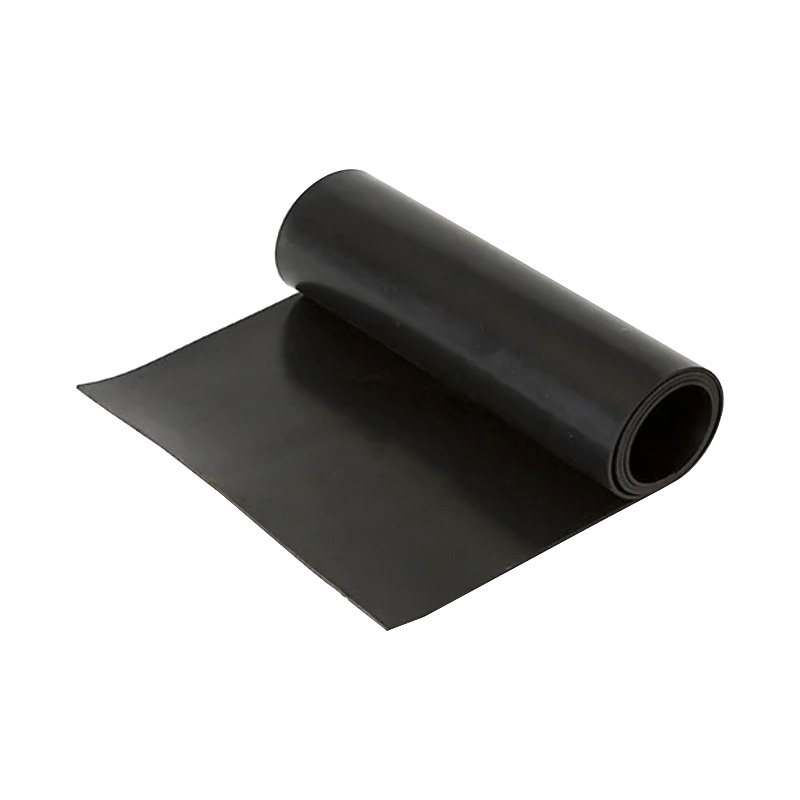 SBR Rubber Sheet for Industrial ApplicationsA general-purpose synthetic rubber sheet with hardness, thickness and color options, suited to sealing, shock absorption and anti-skid uses where oil resistance is not required.View Product →
Industrial SBR sheet is normally supplied between 55 and 70 Shore A, with tensile strength around 4 to 6 MPa for general-purpose grades and elongation above 300 percent. Thickness tolerance is the specification that causes the most arguments on delivery, so agree a figure in millimetres with a measurement method attached, not just a nominal value.
SBR sheet
- Heat aging and ozone resistance: good
- Tear and cut growth: moderate
- Cost stability: high, oil-linked
- Best fit: flooring, gaskets, general matting
Natural rubber sheet
- Heat aging and ozone resistance: fair
- Tear and cut growth: high
- Cost stability: low, crop-linked
- Best fit: dynamic parts, heavy abuse surfaces
For anti-slip matting, livestock matting and belting, the polymer choice is only half the decision; surface pattern, backing and fabric insertion decide how the part behaves in service. The rubber products solutions overview shows how those finished parts are grouped by application rather than by compound.
Frequently Asked Questions
Is SBR the same thing as synthetic rubber?
No. SBR is one class inside the synthetic rubber family, alongside EPDM, NBR, CR and silicone. It happens to be the largest single class by volume, which is why the two terms are often used loosely in purchasing documents.
Can SBR replace natural rubber one for one?
Rarely without a formula change. Tack, cure rate and tear strength all differ, so expect to add tackifier, adjust the accelerator level and accept lower tear resistance in exchange for better heat aging and a more stable price.
Why does an SBR compound tear more easily than NR?
Natural rubber strain-crystallizes under load, which blunts crack tips. SBR does not crystallize to the same degree, so once a cut starts it grows faster. Higher black loading and a reinforcing resin help, but they do not close the gap entirely.
What is SBR latex used for?
Mainly paper coating, carpet backing, tire cord dipping and water-based adhesives, where a stable aqueous dispersion is easier to handle than a solid bale.
Consistency beats headline properties. A plant that locks bound styrene, Mooney viscosity and dump temperature into its incoming inspection will get more out of a standard 1500 grade than a plant chasing a premium polymer with an uncontrolled mixing cycle.
 Previous
