


 English
 中文简体
中文简体 русский
Content
Picture this: you have just taken delivery of a new extruder, the die is shaped, and the compound is warming on the mill. Ten minutes into the run, the profile comes out rough, over-cured at the edges and under-filled in the middle. The screw does not match the compound, the temperature zones are not balanced, and the line speed cannot be stabilised. The machine was not wrong on paper. The choice was wrong in practice.
That scenario is common enough in rubber processing plants. A rubber extruder machine is not a single-purpose device that either works or does not work. It is a system built around a screw, a barrel, a temperature control unit and a die, and each part must match the compound and profile you actually run. Before you compare prices, it pays to compare feed methods, screw geometry, temperature control and downstream curing equipment. Get these four factors right, and extrusion becomes one of the most repeatable processes on your shop floor.
Main Types of Rubber Extruder Machines
If you are new to extrusion, the first decision is the feed method. Three main designs are used in the rubber industry today: hot feed, cold feed and ram feed. Each one suits a different process layout and compound behaviour.
Hot Feed Rubber Extruders
Hot feed machines receive compound that has already been warmed and plasticised on a mixing mill or a warm-up mill. The screw only has to push the warm stock through the die, so the screw can be short, typically 4:1 to 6:1 L/D. This makes the machine compact, comparatively inexpensive and simple to maintain. The trade-off is that you need a mill or a warm-up conveyor directly upstream, plus an operator to manage the feed.
Hot feed is still the preferred solution for large profiles, hoses and products that demand high output rates. When you already run an open mill in the line, adding a hot feed rubber extruder is a logical step because it keeps material handling simple.
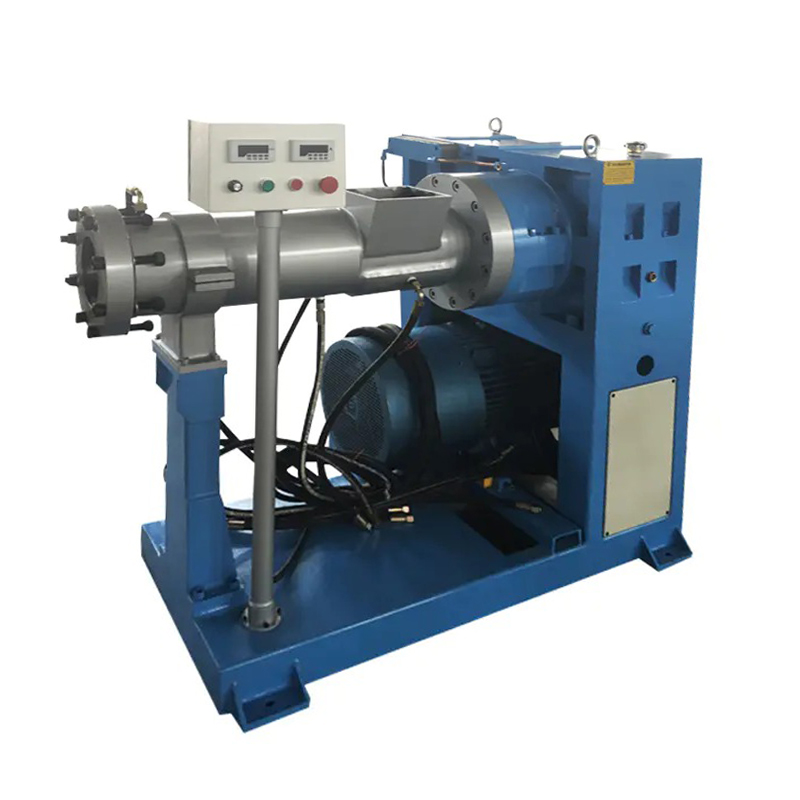 Hot Feed Extruder Suppliers, Hot Feed Rubber Extruder CompanySincere Machinery offer Custom Hot Feed Extruder for NR, SBR, EPDM. We are Hot Feed Extruder Suppliers and Hot Feed Rubber Extruder Compa...View Product →
Cold Feed Rubber Extruders
Cold feed machines take room-temperature strip from a batching line or directly from an internal mixer. The screw is longer, normally 8:1 to 16:1 L/D, with a deeper metering section that must soften and homogenise the rubber inside the barrel before it reaches the die. There is no need for a warm-up mill, so the line is shorter, cleaner and easier to automate. Temperature control becomes more demanding because the entire barrel has to do the plasticising work.
For most modern plants making EPDM seals, silicone profiles, tubes and strips, a cold feed rubber extruder is the default choice because it removes the mill crew and improves batch-to-batch consistency.
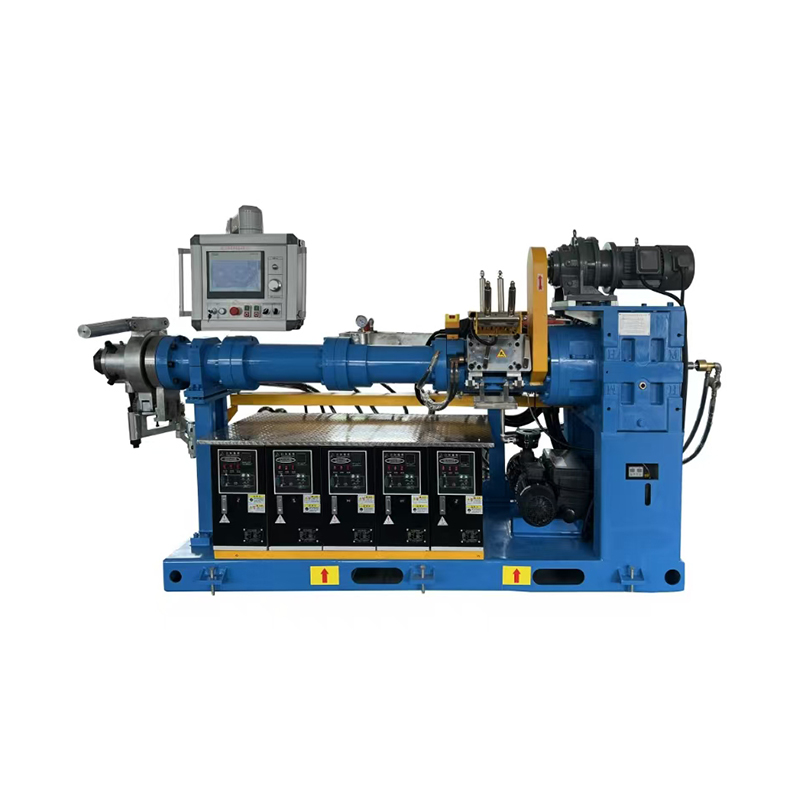 Cold Feed Rubber Extruder Machine Suppliers, CompanyChina Cold Feed Extruder Suppliers and Cold Feed Rubber Extruder Company, Sincere Machinery offer Cold Feed Rubber Extruder Machine, Cust...View Product →
Ram and Piston Extruders
Ram extruders push a pre-heated block or cartridge of rubber through the die using hydraulic pressure instead of a rotating screw. The output is cyclical rather than continuous, so ram machines are best suited to preforms, strainer screens and short runs of very stiff compound, not to long profile production.
How a Rubber Extruder Machine Processes Compound
Regardless of the feed method, every rubber extruder has the same core components: a hopper or feed roller, a barrel, a screw, a head, a die and a temperature control system. Understanding what each part does will help you read any specification sheet with more confidence.
| Component | Function | Why it matters |
|---|---|---|
| Feed section | Pulls strip or slab into the screw | Poor feed design causes air entrapment and surging |
| Barrel | Houses the screw; transfers heat to or from the compound | Wear resistance and temperature zones determine profile consistency |
| Screw | Conveys, compresses, kneads and pushes the compound | L/D and compression ratio must match compound hardness and viscosity |
| Head and die | Shapes the melt into the profile cross-section | Die design controls swell, surface finish and dimensional tolerance |
| Temperature control | Heats or cools barrel and screw zones | Prevents scorch and keeps viscosity stable at line speed |
| Vacuum zone | Removes trapped air and volatiles before the die | Eliminates porosity in dense and sponge profiles |
In a single-screw cold feed extruder, the most common design, the screw performs three jobs. In the feed zone it pulls the strip in, in the compression zone it squeezes air back out of the compound, and in the metering zone it evens out pressure and flow. Compound that is too hard for the screw, or a screw that is too short for the compound, produces pulsating output that shows up as wavy edges on the profile.
Key Specifications to Compare Before You Buy
Once you know the feed type, the next level of comparison happens between machines of the same category. The specifications below separate a production-capable machine from a demonstration unit.
| Specification | What it tells you | Typical range |
|---|---|---|
| Screw diameter | Maximum profile cross-section and output rate | 30 mm to 250 mm for cold feed |
| L/D ratio | Plasticising capacity and achievable head pressure | Hot feed 4:1–6:1; cold feed 8:1–16:1 |
| Compression ratio | Ability to handle hard or low-plasticity compounds | 1.2:1 to 1.8:1 |
| Motor power | Torque available at high screw speed | Depends on screw diameter, roughly 7.5–250 kW |
| Heating/cooling zones | Precision of temperature control along the barrel | 3–6 independent zones |
| Vacuum | Porosity removal for dense profiles | Optional but strongly recommended |
| Head type | Straight, angled or multiple die holders | Depends on downstream line layout |
Do not compare machines by output alone. Two extruders with the same screw diameter can differ by 30% in motor torque and by a wider margin in temperature accuracy. If you run silicone or fluoroelastomer, pay extra attention to the temperature control range and the number of zones, because these compounds scorch quickly when the barrel runs hot.
Building a Complete Rubber Extrusion Line
An extruder alone does not make a product. The profile has to be cured, cooled and cut, and the curing method influences which extruder and which haul-off system you choose.
The most common setup for silicone and EPDM profiles is the continuous hot air or microwave curing line. The extruder feeds the profile directly into a microwave tunnel where the compound is heated from the inside, then into a hot air section that finishes vulcanisation. This layout is ideal for sponge seals, dense weather-stripping and small tubes because it runs at a constant speed with no manual handling between stages. A microwave hot air curing line also solves a practical problem: it leaves no salt or dust residue, so the profile moves straight to the cutting station and packing.
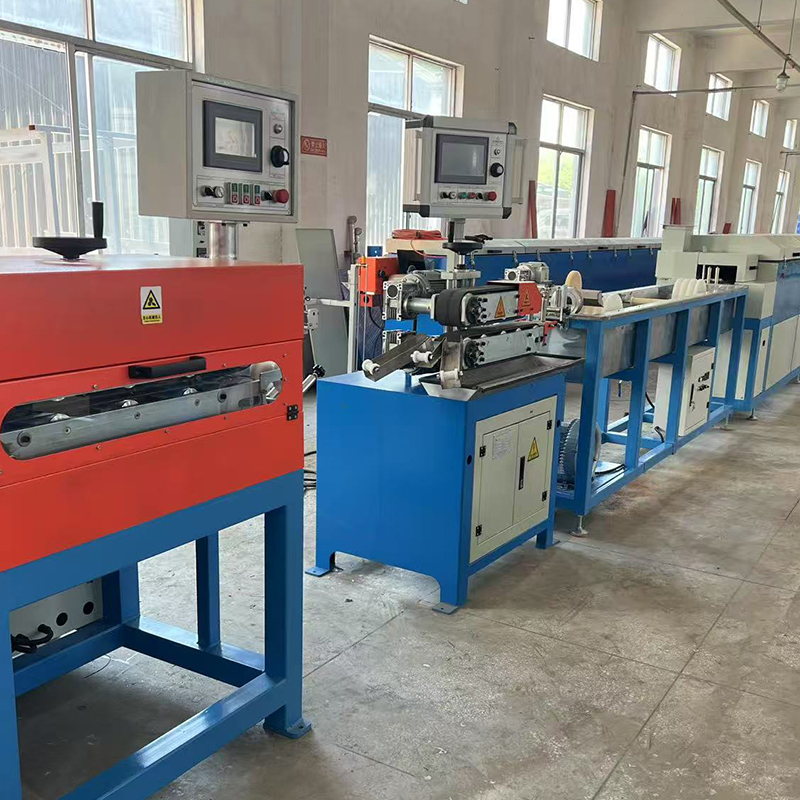 Microwave Hot Air Curing Line Suppliers, Company - Anhui Sincere Machinery Co., As top Microwave Hot Air Curing Line Suppliers and Company in China, Sincere Machinery offer Custom Microwave Hot Air Curing Line for sal...View Product →
If you produce short hose lengths or moulded preforms, a straight extruder feeding a cutting unit is usually enough. For reinforced hoses, you will need a separate pass for the cover tube and a curing system that can handle the braided layer.
It is also worth thinking about the process step before extrusion. The consistency of the strip feed determines how stable the extruder runs. Many plants add a rubber products manufacturing line that starts with a kneader, an internal mixer or a calender so the extrusion department receives compound with the same viscosity every day. Some processors also place a twin-screw feeding extruder between the internal mixer and the profile extruder to plasticise and strain the compound first.
Practical Buying Considerations and Common Mistakes
Several patterns repeat themselves when rubber processors choose extrusion equipment. These are the points that separate a smooth installation from a year of troubleshooting.
- Compound type first. A general-purpose rubber extruder can run many compounds, but it will not run them all well. Silicone and fluoroelastomer need a screw with a larger volume and less compression than EPDM. Define your compound list before you define the machine.
- Check the die flow. Wall thickness, corner radius and swell rate change how the head and die are designed. A machine that works for a solid rectangular strip will not produce the same surface quality on a hollow sponge seal.
- Plan the floor space honestly. Cold feed lines need room for the strip feeder at the inlet and a long cooling bath or curing tunnel at the outlet. Measure the whole line, not just the extruder footprint.
- Ask about the vacuum zone. If your products are dense profiles, a machine without vacuum will trap micro air bubbles. Retrofitting a vacuum section later costs more than ordering it from the start.
- Look at access for cleaning. Compound changes require screw and barrel cleaning. A machine with a swing head and a removable screw reduces changeover time from hours to minutes.
You can read a more detailed walkthrough of types and specifications in our rubber extruder selection guide. If you are planning the whole process, from mixing to vulcanising, our machine-building and process support team can help you match the extruder to the rest of the line.
The right rubber extruder machine is the one that matches your compound, your profile cross-section and your downstream equipment. Start with the feed method, then compare the screw, the temperature control and the vacuum system. A cold feed machine is the easier route to automation; a hot feed machine makes sense when a mill is already in the line. And a curing system that fits the extruder turns a capable machine into a reliable production line.
 Previous