


 English
 中文简体
 русский
Content
- 1 What Nitrile Rubber Is Made Of
- 2 How Acrylonitrile Content Changes Performance
- 3 Strengths and Limits of Nitrile Rubber
- 4 Nitrile Grades, Cure Systems and Compound Design
- 5 How Nitrile Rubber Parts Are Made
- 6 Where Nitrile Rubber Is Used
- 7 How to Specify Nitrile Rubber Without Guesswork
- 8 Frequently Asked Questions
A nitrile seal that swells about 12 percent after a week in hydraulic oil is not automatically a bad seal. It is usually a compound whose acrylonitrile level sits one step too low for that fluid. Nitrile rubber, written NBR or sold under the Buna-N name, is not one fixed material but a family of oil-resistant elastomers, and almost every specification argument about it comes back to the same two variables: acrylonitrile content and cure system.
Definition
Nitrile rubber (NBR) is a synthetic elastomer made by copolymerizing butadiene with acrylonitrile; the acrylonitrile share, normally 18 to 50 percent, sets the balance between resistance to petroleum fluids and flexibility at low temperature.
That definition is short, yet it drives real purchasing decisions. A plant buying nitrile sheet for oil pan gaskets and a plant buying nitrile gloves are working with the same polymer family on very different compound recipes. A supplier who quotes only the word nitrile, without naming the acrylonitrile band or the cure system, has left the specification half finished.
What Nitrile Rubber Is Made Of
Nitrile rubber is made from two monomers: butadiene, which gives the compound its elastic backbone, and acrylonitrile, which introduces polar nitrile groups that repel non-polar oils, greases and fuels.
18-50 %Acrylonitrile content
-40 to 120 CPractical service window
7-25 MPaTensile strength range
40-90Shore A hardness range
Production begins with emulsion polymerization in water. The latex is coagulated, washed, dried and baled, and the acrylonitrile ratio is locked in at that recipe stage. Every property buyers argue about later, from oil swell to compression set, traces back to the polymer that left that reactor.
Compounding comes after the polymer
Compounders then add carbon black for strength, ester plasticizers for flexibility, antioxidants for ageing and a cure system for elastic memory. A 70 Shore A nitrile seal and a 55 Shore A nitrile mat can share the same base polymer and behave nothing alike in service.
No additive introduced on the mixing line turns a 28 percent acrylonitrile bale into a 41 percent one. Grade selection is a purchasing decision, not a compounding one.
How Acrylonitrile Content Changes Performance
Raising acrylonitrile content improves resistance to petroleum oils and fuels and lowers gas permeability, but it stiffens the compound at low temperature. That trade-off, not the brand name, decides which grade fits a job.
| ACN band | Oil resistance | Low-temperature flexibility | Typical applications |
| 18-24 percent | Moderate | Best, to about -50 C | Cold-store seals, flexible gaskets, general molded goods |
| 28-33 percent | Good | About -40 C | Hydraulic seals, O-rings, hose covers, rollers |
| 36-41 percent | Very good | About -25 C | Fuel hose, oil seals, diaphragms, printing rollers |
| 45-50 percent | Excellent | About -15 C | Solvent-contact parts, fuel diaphragms, high-exposure seals |
The pattern holds across suppliers. A seal for a cold-room hydraulic unit belongs in the low band, while a fuel-line diaphragm needs the high band even though it will feel stiffer at start-up.
Each extra point of acrylonitrile buys oil resistance and costs low-temperature flexibility. No single grade maximizes both ends of that curve.
Buyers comparing quotations should request the acrylonitrile band and the cure system in writing. A focused Buna-N grades and cure systems reference explains how those two choices shift swelling and compression set once the part is in service.
Strengths and Limits of Nitrile Rubber
Nitrile rubber earns its place through oil resistance and mechanical toughness at moderate cost, and it loses to ozone, heat and polar solvents.
Where NBR performs
- Resistance to mineral oils, greases and diesel
- Good tensile and tear strength with carbon black loading
- Low compression set when peroxide cured
- Strong bonding to metal inserts and fabric
- Lower cost per kilogram than FKM or HNBR
Where NBR fails
- Cracks under sunlight and ozone without protection
- Hardens above roughly 120 C in air
- Swells in ketones, esters and glycol brake fluid
- Stiffens quickly below -30 C in standard grades
- Burns readily unless flame retardants are added
A quick screening rule: if the part touches petroleum-based oil, grease or diesel and stays below about 100 C in continuous service, NBR is normally the first compound to price. If it faces outdoor weather or ozone from an electric motor, add an antiozonant and a protective cover, or move to EPDM.
Nitrile Grades, Cure Systems and Compound Design
Nitrile rubber is sold as raw polymer, pre-compounded sheet and finished parts, and the cure system shifts heat resistance as much as the polymer grade does.
The main nitrile variants
| Variant | Heat ceiling in oil | Oil resistance | Notes |
| NBR | About 100 C | Good to excellent | General seals, hose, sheet, mats |
| HNBR | 130 to 150 C | Good | Engine seals, timing belts, downhole parts |
| XNBR | Similar to NBR | Good, better abrasion | Rollers and abrasion-resistant parts |
| NBR with PVC blend | About 105 C | Good | Cable jackets, hose covers, ozone-exposed parts |
Sulfur versus peroxide curing
Sulfur-cured NBR gives good flex life and tear strength at the lowest cost, which is why mats, hose covers and general molded goods usually start there. Peroxide curing, typically between 160 and 180 C, creates shorter and more stable crosslinks: compression set drops and continuous service temperature moves toward 120 C. The cost difference is small next to the cost of a leaking seal.
Fillers and plasticizers
Heavy carbon black loading raises hardness and tensile strength but also builds heat in dynamic parts. Ester plasticizers restore low-temperature flexibility, yet they can be extracted by the very oil the part is meant to resist. A compound that feels soft on the bench may harden in service, so always ask for oil-resistance data after ageing rather than on the original sample.
How Nitrile Rubber Parts Are Made
Nitrile parts move through four stages, and each one shifts final properties more than most buyers expect.
- Mixing. Carbon black, plasticizers, activators and curatives are combined in an internal mixer, then sheeted on an open mill and cooled. Temperature control matters, because scorched compound cannot be recovered.
- Shaping. Compression molding, injection molding, extrusion or calendering brings the compound to near-final form. Calendered nitrile sheet commonly leaves the rolls at 0.5 to 8 mm before cure.
- Vulcanizing. Press curing between 150 and 180 C locks the crosslink network. Cure time follows thickness, roughly one minute per millimeter in a typical press cure plus a safety margin.
- Finishing. Trimming, deflashing and testing follow. Hardness, tensile strength, elongation at break and compression set catch most compound errors before shipment.
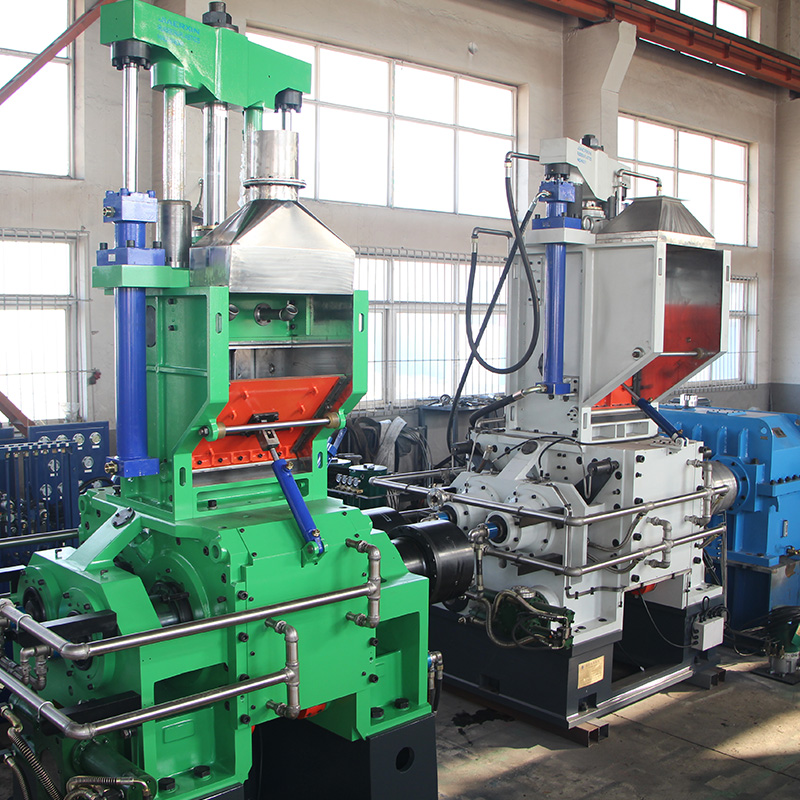 Rubber Banbury Mixer for NBR Compound ProductionHydraulic-controlled internal mixer with optimized rotor for uniform shearing and dispersion in nitrile compound production.View Product →
For black-filled NBR, the internal mixer is where the compound is won or lost. Poor dispersion rarely shows up at the mixing stage; it appears months later as a weak spot in a molded seal.
Where Nitrile Rubber Is Used
Nitrile rubber appears wherever petroleum fluids meet a flexible part, from engine seals to workshop flooring.
Automotive
Oil seals, gaskets, fuel and air hose, vacuum diaphragms and transmission components.
Industrial
Hydraulic O-rings, pump diaphragms, printing rollers, conveyor belting and oil-resistant hose.
General
Nitrile sheet and mat, protective gloves, lab tubing, anti-fatigue matting and fuel equipment gaskets.
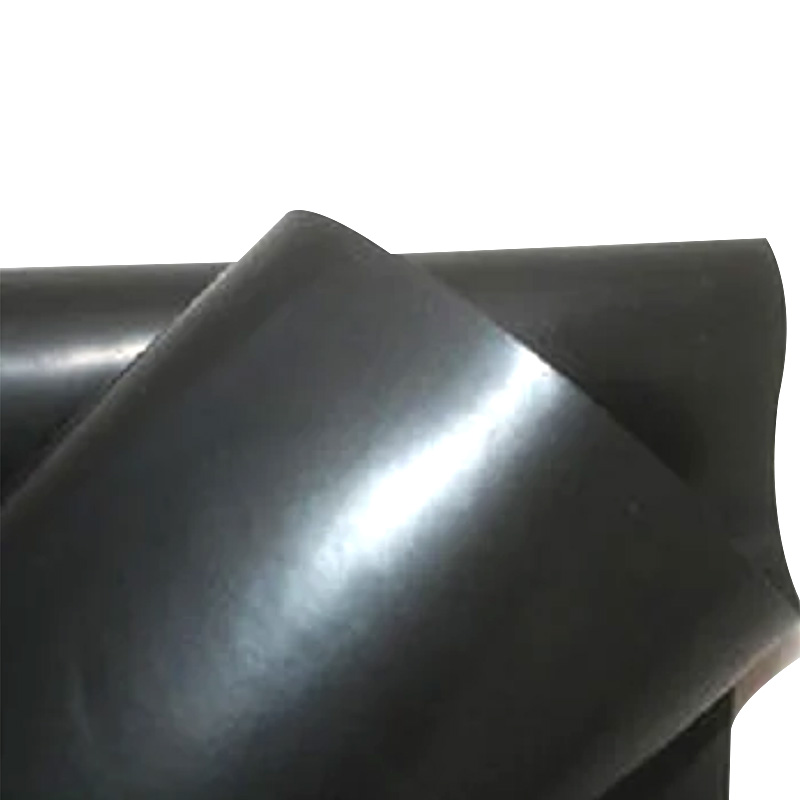 NBR Rubber Sheet for Seals and GasketsNitrile sheet available in multiple thicknesses, hardnesses and colors for oil-resistant seals, gaskets and industrial cut-to-size applications.View Product →
Sheet and mat formats are specified by thickness, hardness and surface pattern. A 3 mm nitrile sheet for gasket cutting, a 6 mm sheet for pump flanges and a 12 mm mat for a workshop aisle belong to the same polymer family with different compound targets. Standard industrial sheet typically runs from 1 to 20 mm thick, and buyers can request rubber products for automotive and industrial programs cut to size.
Nitrile sheet is often judged by one number on a datasheet. In practice hardness, oil swell after ageing and compression set together predict whether the part survives a full maintenance interval.
How to Specify Nitrile Rubber Without Guesswork
Specify nitrile rubber by fluid, temperature, hardness and test method, not by the word nitrile alone.
- Name the fluid the part will contact, including cleaning agents and occasional splash exposure.
- State the full temperature window, from cold start-up to peak cleaning cycles.
- Give hardness with a tolerance, typically 70 plus or minus 5 Shore A or IRHD.
- Ask which cure system is used, since it changes compression set and the heat ceiling.
- Require acceptance tests and the ageing condition they were run under.
| Property | Typical test | Common acceptance range |
| Hardness | IRHD or Shore A | 70 plus or minus 5 points |
| Tensile strength | ASTM D412 | 10 MPa minimum |
| Elongation at break | ASTM D412 | 200 percent minimum |
| Compression set | 70 hours at 100 C | 25 percent maximum |
| Oil swell | IRM 903 oil, 70 hours at 100 C | 5 to 20 percent by ACN band |
Two suppliers can both quote 70 Shore A nitrile and still deliver different parts. The cure system and the ageing data separate them, and both cost nothing to request before an order is placed.
Frequently Asked Questions
Is nitrile rubber the same as Buna-N?
Yes. Buna-N is a trade name for nitrile butadiene rubber, and NBR is the standard abbreviation. Both describe the same butadiene-acrylonitrile copolymer, so a datasheet labelled Buna-N can be compared directly with one labelled NBR.
What temperature can nitrile rubber handle?
Standard NBR compounds work from about -40 C to 120 C, with continuous service in oil usually quoted nearer 100 C. Peroxide-cured and hydrogenated grades push higher, while low-acrylonitrile grades hold flexibility at the cold end.
Does nitrile rubber resist brake fluid?
No. Glycol-ether brake fluid swells and softens NBR badly. EPDM is the usual choice for brake-system seals, while nitrile stays with mineral oils, greases and diesel.
When should HNBR replace standard NBR?
Switch to HNBR when the part must survive 130 to 150 C in air, long ozone exposure, or heavy dynamic flexing at elevated temperature. Below 100 C in ordinary hydraulic and grease contact, NBR delivers similar sealing at a much lower cost.
 Previous
