


 English
 中文简体
 русский
Content
- 1 Where Does Synthetic Rubber Come From? The Direct Answer
- 2 From Crude Oil and Natural Gas to Reactive Monomers
- 3 Polymerization: How Monomers Become Rubber
- 4 The Main Synthetic Rubber Families and Their Feedstocks
- 5 Compounding: Where Polymer Becomes a Product
- 6 What This Means When You Buy
- 7 Frequently Asked Questions
Synthetic rubber comes from petroleum and natural gas, not from rubber trees. Crude oil is refined and steam cracked into small reactive molecules such as butadiene and styrene, and those molecules are then joined into long polymer chains inside a chemical plant. Everything downstream, from the bale to the finished seal, is a variation on that same route.
Roughly six of every ten kilograms of rubber used worldwide today are synthetic, and the share keeps creeping up as tyre makers and industrial buyers chase consistent properties and stable supply. If you buy rubber sheeting, mats, belts or the machinery that makes them, the feedstock path matters, because that path decides how the finished part behaves under oil, heat, ozone and repeated flexing.
About 60%share of global rubber consumption supplied by synthetic grades rather than plantation latex
2 streamsnaphtha from crude oil and ethane or propane from natural gas
6 monomersbutadiene, styrene, isoprene, acrylonitrile, ethylene and propylene cover most general grades
Where Does Synthetic Rubber Come From? The Direct Answer
Synthetic rubber comes from petrochemical feedstock that is cracked into monomers and then polymerized in a reactor, with no tree and no latex tapping anywhere in the chain.
Two raw streams feed almost the whole industry. Refineries turn crude oil into naphtha, and naphtha crackers break that naphtha into a C4 and C5 rich stream where butadiene and isoprene sit. Gas processors strip ethane and propane out of natural gas, and those become ethylene and propylene. Styrene arrives through a separate step, ethylbenzene dehydrogenation, and acrylonitrile through propylene ammoxidation.
Synthetic rubber is any elastomer produced by polymerizing petroleum or gas derived monomers such as butadiene, styrene, isoprene, acrylonitrile, ethylene or propylene. Natural rubber, by contrast, is cis-1,4-polyisoprene harvested as latex from Hevea brasiliensis.
That definition matters for buyers because it explains the failure modes you inherit. Petroleum based chains are cleaner and more uniform than plantation latex, but they carry different unsaturation levels, and that is what decides whether a part survives a hydraulic oil bath or cracks after two summers outdoors.
From Crude Oil and Natural Gas to Reactive Monomers
The conversion from raw hydrocarbon to usable monomer runs through steam cracking, where large molecules are broken into small unsaturated ones at roughly 800 to 870 degrees Celsius with a residence time measured in milliseconds.
Cracking severity is a commercial lever, not just a process detail. Push the furnace hotter and you get more ethylene and less butadiene. Run it softer and the C4 cut grows. That is one reason butadiene pricing swings independently of ethylene pricing, and why compounders sometimes reformulate when the spread gets wide.
Oil route
Crude oil becomes naphtha, then enters the steam cracker. Yields butadiene, isoprene and the benzene that becomes styrene, which is the backbone of SBR, BR and NBR production.
Gas route
Natural gas becomes ethane and propane, then ethylene and propylene. Feeds EPDM directly, and through intermediate steps supplies butyl and several specialty grades.
Cracking is the narrow gate every synthetic rubber molecule passes through. Whatever the final grade is called, its carbon almost certainly entered the chain as a cracked naphtha or gas liquid fraction.
Polymerization: How Monomers Become Rubber
Monomers become rubber when they are linked into chains with molecular weights typically between 100,000 and 500,000, using either a free radical initiator in water or a transition metal catalyst in solvent.
The reaction chemistry decides microstructure, and microstructure decides property. Emulsion SBR gives a broad molecular weight distribution and easy processing. Solution SBR with a coupling agent gives lower hysteresis and better rolling resistance. EPDM needs a diene such as ENB built into the chain so sulfur can still crosslink it later.
- Feed purification. Monomers are washed and distilled to remove inhibitors and oxygen, which would otherwise poison the catalyst or broaden the chain distribution.
- Reaction. Emulsion systems run cold at about 5 to 50 degrees Celsius, while solution systems run hotter with catalyst. Conversion is usually stopped at 60 to 70% to keep chain structure under control.
- Monomer stripping. Unreacted monomer is flashed off and recycled, which is where a plant's energy efficiency and emission performance are really decided.
- Coagulation and dewatering. Latex or cement is steam stripped into crumb, then squeezed through dewatering rolls.
- Drying and baling. Crumb passes a tunnel dryer, is weighed, and is pressed into 25 kg or 33.3 kg bales wrapped in polyethylene film.
Specification check: for a standard SBR 1500 or 1502 grade, Mooney viscosity (ML 1+4 at 100 degrees Celsius) usually lands between 45 and 60, volatile matter stays under 1% and ash under 1.5%. Readings outside those windows point to a stripping or drying problem at the plant, not a formulation mistake at yours.
The Main Synthetic Rubber Families and Their Feedstocks
Each family is defined by the monomers that go into the reactor, so the grade number is really shorthand for chemical composition and expected service environment.
| Family | Monomers | Feedstock origin | Typical service |
| SBR | Butadiene, styrene at about 23.5% | Oil naphtha | Tyre tread, conveyor covers, moulded goods |
| BR | Butadiene only | Oil naphtha C4 cut | Tyre sidewalls, low temperature flex |
| EPDM | Ethylene, propylene, plus a diene such as ENB | Natural gas liquids | Weather strip, roofing sheet, hose covers |
| NBR | Butadiene, acrylonitrile | Oil and gas | Oil resistant seals, gaskets, fuel hose lining |
| Butyl (IIR) | Isobutylene with 1 to 2% isoprene | Oil and gas | Inner tubes, curing bladders |
| CR | Chloroprene made from butadiene | Oil | Flame resistant belting, weather resistant covers |
Property differences between these grades are not cosmetic. If you need to compare them on oil, heat, weather and abrasion before committing to a compound, a side by side look at how synthetic grades perform in service beats a generic data sheet comparison.
For buyers working in sheet form rather than bale form, general purpose SBR sheet covers flooring, padding and mechanical goods where cost per square metre dominates.
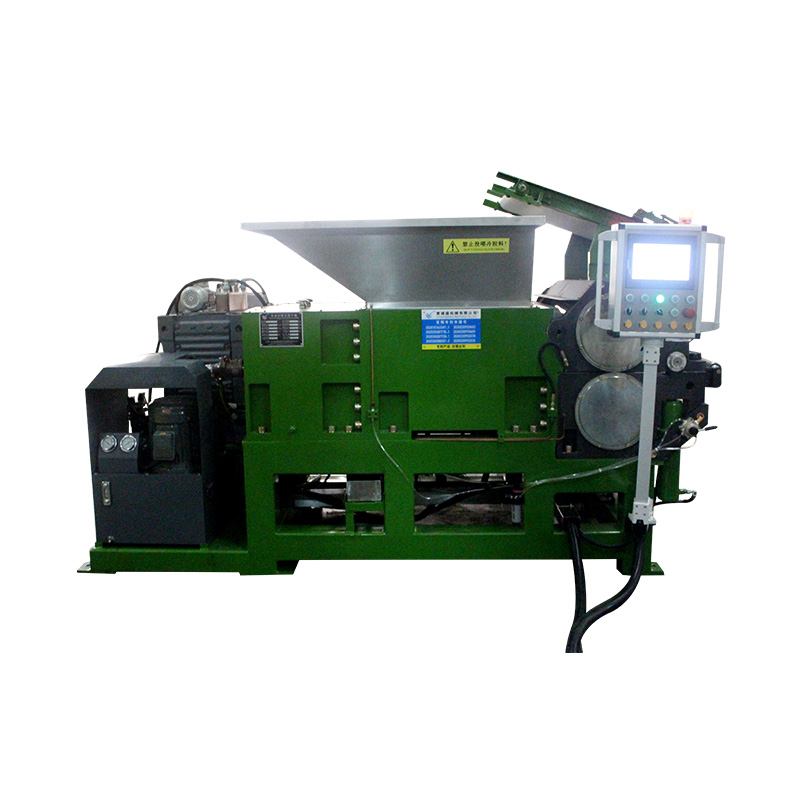 General Purpose SBR Rubber SheetCost-effective sheet for flooring, padding and mechanical goods, with good wear resistance and elasticity; not recommended for oil-contact use.View Product →
Where the part spends its life outdoors, EPDM sheet is the usual answer, because its saturated backbone resists ozone and UV without the heavy antiozonant loading a diene rubber needs.
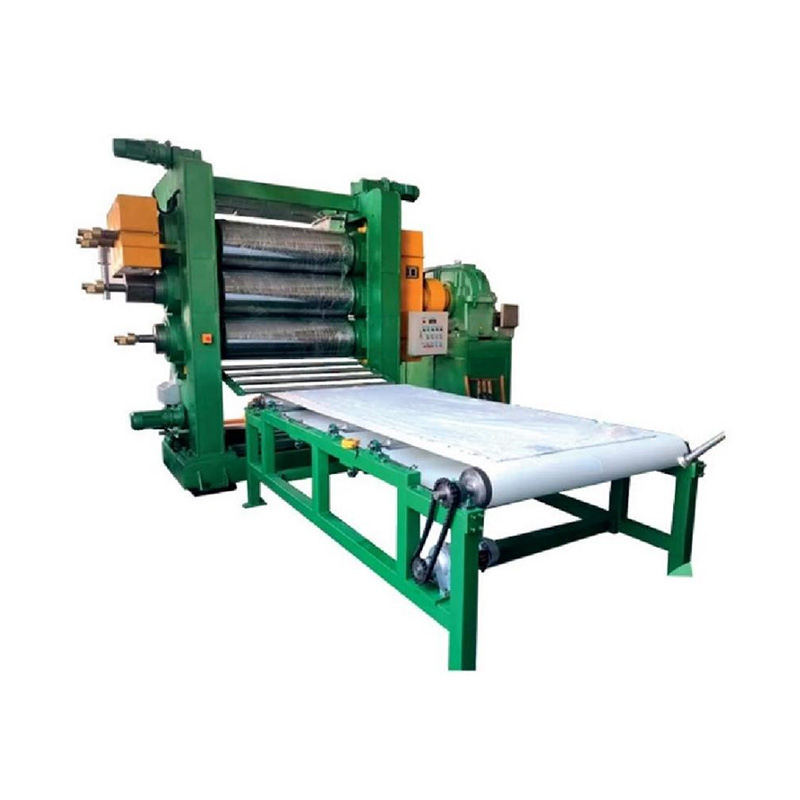 Outdoor and Ozone-Resistant EPDM Rubber SheetFor sealing and protection exposed to sunlight, ozone and weather, offering acid/alkali resistance, electrical insulation and durable aging performance.View Product →
Compounding: Where Polymer Becomes a Product
Raw polymer is almost never used alone. It is mixed with fillers, oils and cure agents in an internal mixer, and that mixing step often shapes performance more than the polymer grade does.
A typical SBR tread compound is roughly one third polymer by mass. The rest is carbon black for strength, process oil for softness and mixing, plus activators, antioxidants and the sulfur system that makes the part elastic rather than plastic.
Mixing is where batch variation is created or prevented. A mixer that discharges at the wrong temperature will scorch part of the compound, and that scorch shows up months later as a surface defect nobody can trace back to a batch record.
This is why the mixer, not the reactor, is often the bottleneck that decides whether a plant can hold tolerance on a thick moulded part.
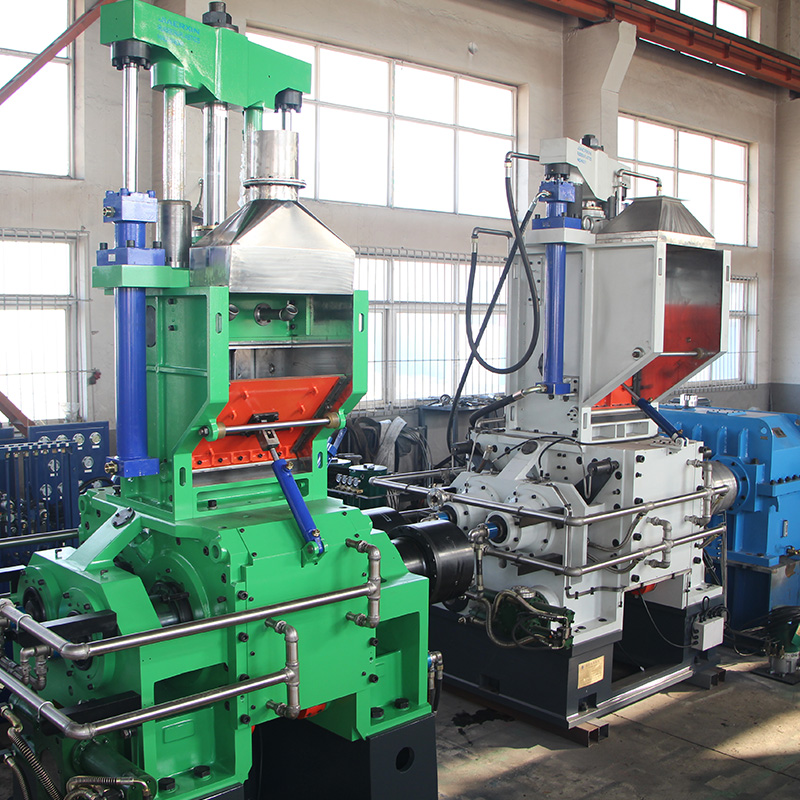 Industrial Rubber Banbury Mixing MachineHigh-performance mixer for uniform dispersion of rubber compounds, with hydraulic control, temperature monitoring and drop-type discharge for large-scale production.View Product →
What This Means When You Buy
Origin matters commercially because feedstock, reactor and mixer each leave a fingerprint in the certificate of analysis that arrives with the bale or the roll.
- Volatile matter above 1% usually means the dryer was pushed, and it reappears as porosity in vulcanized parts.
- Gel content above roughly 5% points to a stalled reaction or poor stripping, and it will not disperse no matter how long you mix.
- Ash content that drifts upward suggests contamination during coagulation or washing, common when a plant runs hard and skips a wash cycle.
- Price tracks butadiene rather than rubber demand, so a monomer spike can move a compound quote even when your own order volume is unchanged.
Ask for the feedstock route and the polymerization type on the data sheet, not just the grade number. Emulsion and solution SBR with the same nominal Mooney value still process differently, and the difference shows on a calender or extruder long before it shows on a tensile test.
For teams specifying finished goods rather than raw polymer, the same logic applies to rubber product selection: match the polymer family to the service environment first, then lock the dimensions.
Frequently Asked Questions
Where does synthetic rubber come from?
It comes from petrochemical feedstock. Crude oil is refined into naphtha and steam cracked into monomers such as butadiene and styrene, while natural gas supplies ethylene and propylene. Those monomers are polymerized in a reactor, stripped, dried and baled.
Is synthetic rubber made from oil or from natural gas?
Both. Naphtha cracking supplies most butadiene and the benzene used for styrene, while gas liquids supply most ethylene and propylene. Many plants run a mix, so the exact split depends on regional feedstock economics rather than on the grade itself.
How is synthetic rubber different from natural rubber at the source?
Natural rubber is tapped as latex and is essentially cis-1,4-polyisoprene carrying proteins and resins. Synthetic rubber is built from purified monomers, so molecular weight, branching and impurity profile are set by process parameters instead of by season and clone.
Can synthetic rubber be made without petroleum?
Partly. Bio-based butadiene from ethanol and bio-based isoprene from sugars both exist in commercial or pilot volumes, and reclaimed rubber from end-of-life tyres re-enters the chain as a blend component. Volumes remain small, and pricing still follows the fossil alternative.
In one line: synthetic rubber comes from cracked petroleum or gas fractions, is polymerized into long chains, then compounded into the material you actually buy. The feedstock route explains the chemistry, and the compounding step explains the batch in front of you.
 Previous
