


 English
 中文简体
中文简体 русский
Content
Why the Mixing Stage Defines Your Product
Laboratory tests consistently show that over 60% of compound defects can be traced back to an inadequate mixing process. The dispersion of fillers, the breakdown of polymer chains, and the homogeneous distribution of curatives all happen inside the mixing chamber. If you get this stage wrong, no downstream molding or extrusion operation can save the batch.
This is why selecting the right rubber mixing machine is not a peripheral decision; it is the most capital-intensive choice that dictates your plant’s quality ceiling. Understanding its variants, sizing, and control parameters separates a profitable operation from a chronic scrap producer.
Types of Rubber Mixing Machines
Three fundamental designs dominate modern rubber compounding. Each serves a distinct niche based on viscosity, batch size, and shearing requirements.
Two-Roll Open Mixing Mill
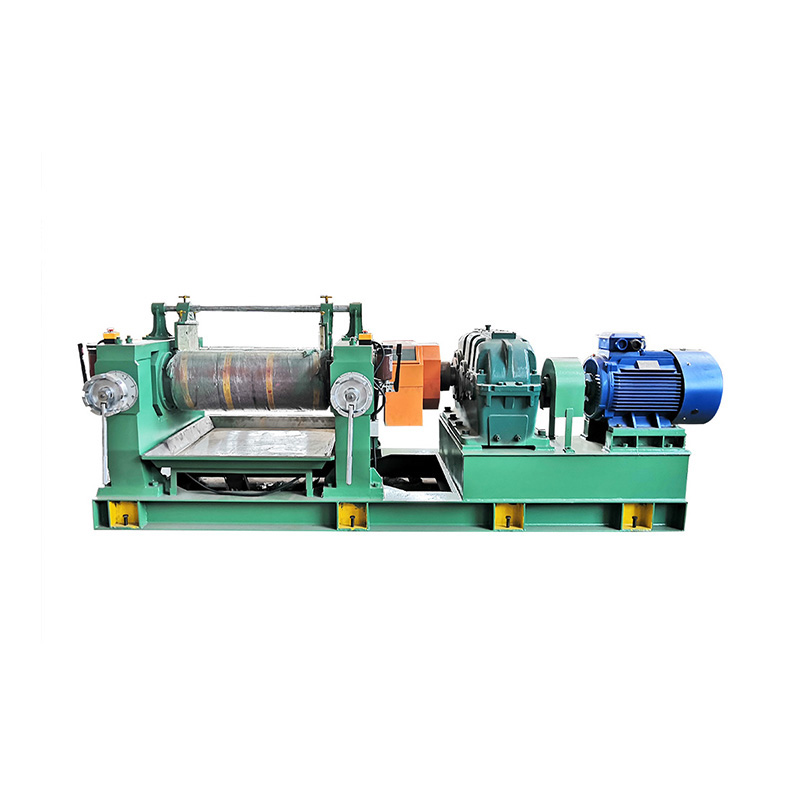
The two-roll open mixing mill remains irreplaceable for color changes, small batches, and blending operations where visual inspection is critical. Its open nip design allows operators to manually cut, fold, and manipulate the band while monitoring temperature directly. Typical batch capacities range from 5 to 80 kg, with roll diameters between 150 and 660 mm. The open mill excels at additive dispersion for FKM and silicone compounds, where heat history must be minimized. However, its dependence on operator skill and lower throughput make it less suited for high-volume black masterbatch production.
Internal Mixer (Banbury Type)
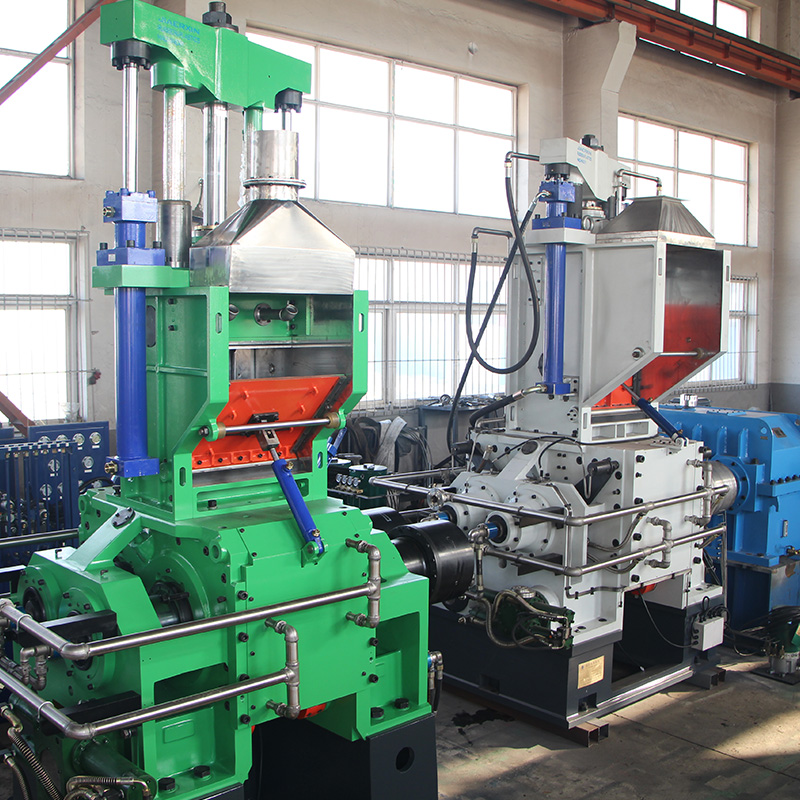
For high-volume compounding, the Banbury internal mixer delivers unmatched consistency. The tangential or intermeshing rotor design can process batches from 35 to 270 liters, mixing carbon black into natural rubber in under four minutes. Key advantages include dust-free operation, precise temperature control via jacket cooling, and automated ram pressure. The downside is capital cost and the need for a downstream dump mill or twin-screw sheeter to homogenize the drop. Today’s smart internal mixers incorporate real-time torque and energy integration to hit target dispersion with minimal factory variability.
Kneader Mixer
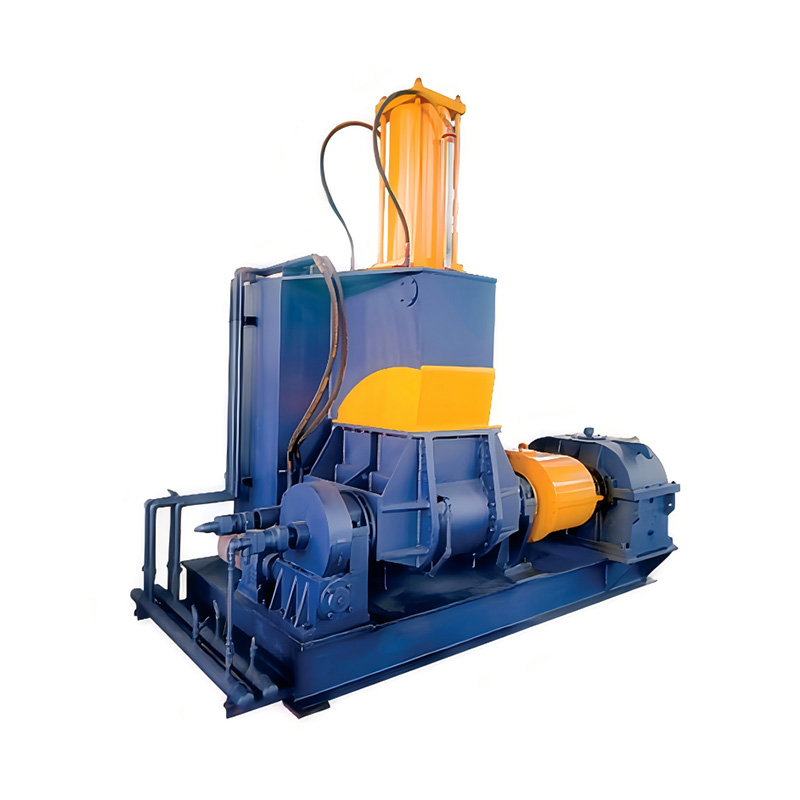
Bridging the gap between batch and continuous mixing, the kneader mixer offers a single-stage solution for medium-viscosity compounds. With a large feed throat and slow-rotating blades, it handles fluffy reclaimed rubber, adhesive tapes, and butyl-based compounds without degradation. Kneaders typically run semi-continuously, discharging through a bottom slide or tilting chamber. They are especially popular for damping materials and butyl compounds where gel prevention is critical. However, they cannot match the peak shear rates of an internal mixer for dispersion-critical tire treads.
| Feature | Open Mill | Internal Mixer | Kneader |
|---|---|---|---|
| Typical Batch Size | 5–80 kg | 35–270 L | 50–300 L |
| Shear Intensity | Moderate | High | Low–Moderate |
| Operator Dependency | High | Low | Medium |
| Best For | Color changes, FKM | Black masterbatch, high volume | Butyl, reclaimed rubber |
| Capital Cost | Low | High | Medium |
Selecting the Right Machine: Beyond the Spec Sheet
A machine’s chamber volume or roll face width tells only part of the story. The true performance metric is specific energy input (kWh/kg), not just motor size. Compound viscosity under shear, filler loading, and the required dispersion index all dictate which design will hit cycle-time targets without scorching the batch.
Match the machine to your most demanding recipe, not the average one. If you run 80- duro EPDM profiles alongside soft silicone seals, a dual-station approach with an open mill for the silicone and a tangential internal mixer for the EPDM often reduces contamination risk and improves overall equipment effectiveness. Factory layout also matters: a kneader that discharges directly into a strainer eliminates a transfer step, while an internal mixer line needs space for an anti-tack dip and festoon cooler.
Process Optimization and Maintenance
Even the best machine underperforms without tight control of fill factor, ram pressure, and temperature. Maintaining a fill factor between 70% and 80% of chamber volume maximizes both dispersive and distributive mixing. Start ram engagement early, and use mixer optimization curves (power vs. time) to detect when carbon black incorporation is complete. A two-degree deviation in drop-door temperature can shift Mooney viscosity by 5 units, so calibrate thermocouples weekly.
Rotor and chamber wear are silent profit killers. Hard-faced rotors resurfaced every 8,000 batches maintain the tip clearance that drives shear. For open mills, worn roll nips produce thicker bands and poor dispersion—a simple nip-gap gauge should be part of every shift check. Predictive maintenance tied to real-time torque data flags bearing degradation before it forces a line stop.
Ultimately, the rubber mixing machine you choose must become the governed center of a disciplined process. Document baseline energy curves for every recipe and audit them monthly. When those curves drift, you know the machine or the raw material has changed, and you can act before bad product reaches the vulcanization press.
 Previous